

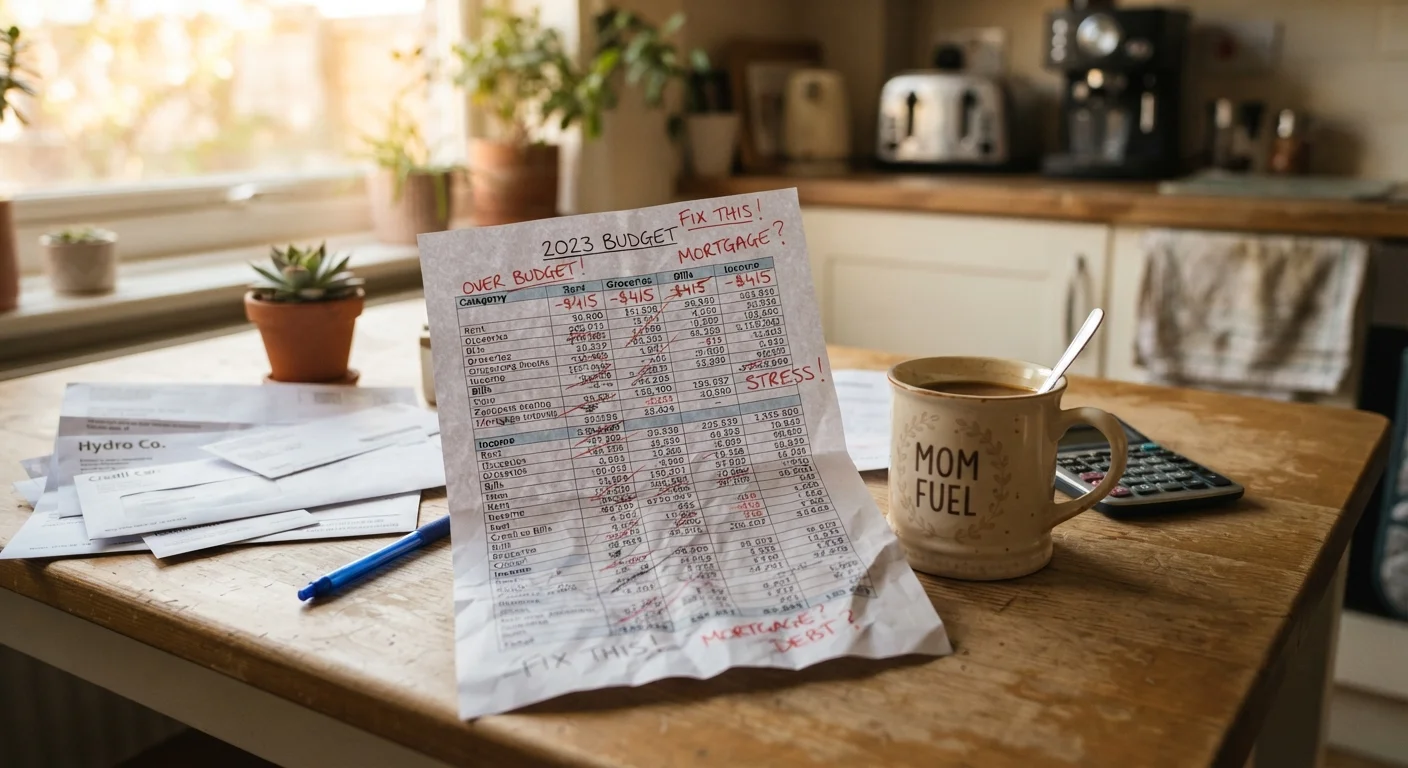
The Real Reason Month Two Falls Apart
Month one of a new budget usually goes reasonably well. You're motivated, you're paying attention, and the numbers mostly add up. Then month two arrives — and the whole system quietly collapses. A car repair pops up. The grocery bill runs over. A forgotten annual subscription hits the account. Suddenly the budget feels less like a tool and more like a source of stress.
The frustrating truth is that most budget failures have nothing to do with willpower. They're the result of a handful of predictable planning errors that are easy to fix once you can name them. If you're carrying the myth that budgeting requires perfect discipline, it's worth setting that aside first. The framework matters far more than the motivation.
Budgeting Is General Education, Not Personal Advice
This article provides general financial information and education. It is not personalized financial, tax, or legal advice. Every household's financial situation is different. Consider consulting a licensed financial professional before making significant changes to your spending or saving strategy.
The Most Common Budgeting Mistakes — and How to Fix Them
The mistakes below appear again and again across households at every income level. Recognizing them is the first step toward a budget that actually survives past the first 30 days.
Only budgeting for monthly recurring bills while ignoring irregular expenses.
Why it happens: Irregular costs — car registration, dental co-pays, back-to-school shopping — don't appear on last month's bank statement, so they feel invisible during planning.
Setting spending limits so tight that one small slip derails the whole plan.
Why it happens: First-time budgeters often model their ideal spending rather than their realistic spending, creating targets that feel motivating but are practically impossible to sustain.
Treating the budget as a one-time document rather than a living system.
Why it happens: Many people spend significant effort building their first budget, then assume it should run on autopilot. Life changes — income shifts, a new subscription, a higher utility bill — and the budget quietly becomes outdated.
Underestimating variable spending categories like groceries, gas, and dining.
Why it happens: People recall their best spending weeks when estimating these numbers, not their average or worst weeks. The result is a chronic gap between budgeted and actual amounts.
Failing to account for a second person's or household member's spending habits.
Why it happens: Budgets are often built by one partner and silently assumed to apply to the whole household, without a shared conversation about priorities or individual spending patterns.
~65%
Americans without a formal monthly budget
Surveys conducted by the National Financial Educators Council and similar organizations have consistently found that a majority of U.S. adults do not follow a written or tracked monthly budget.
$400
Median unexpected expense most households struggle to cover
Federal Reserve research on household economic well-being has repeatedly found that a significant share of American adults would have difficulty covering an unexpected $400 expense without borrowing or selling something.
If you're starting from scratch, the seven-step budget framework offers a structured way to build a more realistic plan from the beginning — one that accounts for the pitfalls above before they can do damage.
Building a Budget That Holds Up Over Time
A budget isn't a punishment — it's a decision-making tool. The goal isn't to track every dollar perfectly; it's to make sure your spending reflects your actual priorities. When a budget is built on real numbers, includes a buffer for irregular costs, and gets reviewed regularly, it becomes something you can rely on rather than dread.
If you've never built a budget before or want to start fresh with a cleaner system, this ground-up budgeting guide for new savers walks through income tracking, expense categories, and the habits that help savings goals stick.
Don't Confuse a Tight Budget With a Good Budget
Cutting every discretionary category to zero may look impressive on paper, but it creates a plan no one can realistically follow. A budget that's slightly generous and consistently honored will outperform a perfect budget that's abandoned by week three. Build in small allowances for enjoyment — they're not a luxury, they're what makes the system sustainable.
This article is for general informational and educational purposes only. It does not constitute personalized financial advice. Consult a qualified financial professional for guidance specific to your situation.
The content on this site is for informational purposes only and is not a substitute for professional advice. Always consult a qualified professional for guidance specific to your situation.