

Why the Label Matters — and Where It Comes From
The idea that debt can be "good" or "bad" didn't emerge from any single financial theory — it grew from decades of personal finance education aimed at helping everyday households think more deliberately about borrowing. The core insight is simple: not all debt has the same effect on your financial position over time.
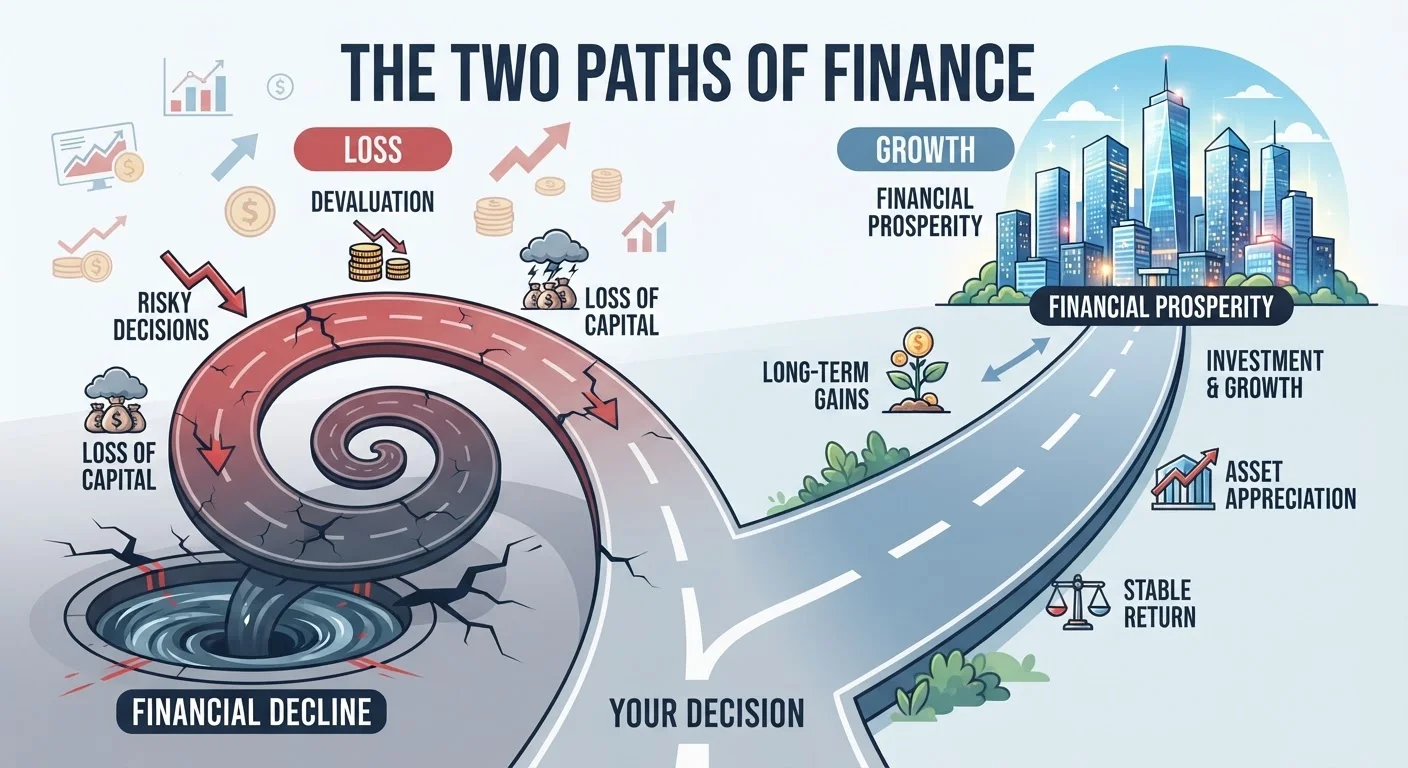
When you borrow to fund something that grows in value or expands your earning capacity, the debt can pay for itself and then some. When you borrow to fund something that loses value immediately — or simply to cover consumption — the cost of interest works entirely against you.
This framework is most useful as a thinking tool, not a rigid rule. It encourages you to ask: What am I financing, and will it be worth more or less than what I'll pay in interest by the time I'm done? That question applies whether you're considering a car loan, a home equity line, or a graduate degree.
A Framework, Not a Financial Plan
The good debt vs. bad debt distinction is a useful lens, but it simplifies complex decisions. A mortgage can become a financial burden if the payment strains your budget; a student loan can produce a strong return or a lasting hardship depending on field and outcome. Use this framework as a starting point for asking better questions, not as a substitute for evaluating your individual circumstances. Consider speaking with a licensed financial advisor for guidance tailored to your situation.
What Qualifies as Good Debt
Financial educators generally point to a few categories of borrowing as potentially productive:
- Mortgages: Real property has historically appreciated over long periods, and monthly mortgage payments build equity — ownership stake — in an asset you control.
- Student loans (in the right context): A degree that reliably leads to higher lifetime earnings can justify the upfront borrowing cost, though the math varies significantly by field and institution.
- Small business loans: Borrowing to launch or grow a business that generates revenue can produce returns that exceed the interest cost — though business outcomes are never guaranteed.
The common thread is that the thing being financed has the potential to return more value than the interest paid. That potential is never certain, but it distinguishes these from purely consumptive borrowing.
“Debt is not inherently good or bad — it's a tool. Like any tool, its value depends entirely on how it's used and whether the person using it can afford the cost.”
— Consumer Financial Protection Bureau, U.S. federal agency for consumer financial education and protection
What Qualifies as Bad Debt
Bad debt is typically characterized by high interest rates applied to purchases that decline in value the moment they're made. The clearest examples include:
- High-rate credit card balances: Carrying a revolving balance at rates often exceeding 20% APR means you're paying significantly more for everything you buy on credit.
- Payday loans and cash advances: These products carry some of the highest effective interest rates available to consumers, and they're typically used for immediate expenses that produce no financial return.
- Financing depreciating goods: Borrowing at high rates to buy electronics, furniture, or luxury items that immediately lose value adds cost without building any financial position.
It's worth noting that even "bad" debt sometimes reflects necessity rather than poor judgment. Many households carry high-rate debt not through carelessness but because cash flow leaves no alternative. The goal of this framework isn't to assign blame — it's to help you recognize where to focus your payoff energy first. Our article on common debt payoff myths addresses some of the misconceptions that can keep people stuck.
~$1.14T
Total U.S. credit card debt outstanding
According to Federal Reserve data, revolving consumer credit — primarily credit card balances — exceeded $1 trillion, underscoring the scale of high-rate borrowing in American households.
20%+
Average credit card interest rate
The Federal Reserve has tracked average credit card interest rates above 20% APR in recent periods, making unpaid balances among the most expensive common forms of consumer debt.
$37,000+
Average federal student loan balance per borrower
The Education Data Initiative estimates that the average federal student loan borrower carries more than $37,000 in debt — a figure that underscores why the "good debt" label for student loans depends heavily on context.
Applying the Framework to Real Decisions
Understanding the distinction between good and bad debt becomes most useful when you're deciding how to allocate limited dollars. If you're choosing between aggressively paying down a 4% mortgage versus a 22% credit card balance, the math clearly favors eliminating the high-rate debt first.
But the framework also informs borrowing decisions before you take on new debt. Asking whether a loan finances something that appreciates, generates income, or builds a lasting skill is a practical checkpoint — one that can prevent impulsive borrowing from compounding over time.
For households working through multiple debts simultaneously, it helps to map out what you owe, at what rates, and in what order to attack it. Our step-by-step debt payoff planning guide walks through exactly that process. And if your monthly payments feel unmanageable, debt consolidation may be worth examining — with its trade-offs clearly understood.
For broader context on how debt fits into your overall financial picture, including the interplay with savings and retirement goals, visit our Saving & Credit hub.
This article is for general informational and educational purposes only and does not constitute personalized financial or legal advice. Consult a qualified financial professional before making decisions about your specific debt or financial situation.
Frequently Asked Questions
A mortgage is widely cited as good debt because real estate tends to appreciate over time and interest may be tax-deductible. However, borrowing more than you can comfortably repay, or buying in an unstable market, can flip that calculus. The affordability of the payment matters as much as the asset's potential.
Credit card debt is generally considered bad debt because average interest rates are high and the purchases funded often depreciate immediately. That said, if you pay your full balance each month and avoid interest, using a credit card isn't harmful. The problem is carrying a revolving balance at high rates.
Student loans can fall into either category depending on the degree, field, and total amount borrowed relative to expected earnings. Borrowing heavily for a credential with limited earning potential may produce debt that's difficult to justify financially, regardless of the label.
Yes. Critics note that the framework can oversimplify real decisions, particularly for lower-income households where any debt creates cash-flow strain. The distinction is a useful starting point, not a complete picture of debt management.
High-interest debt, like credit card balances, generally deserves priority because the cost compounds quickly. Structured approaches like the debt avalanche or debt snowball method can give you a clear plan. See our <a href="/finance/debt-and-planning/the-debt-avalanche-and-debt-snowball-explained">guide to the debt avalanche and snowball methods</a> for a full comparison.
A broader overview that connects debt management to retirement planning, interest math, and budgeting is available in our <a href="/finance/debt-and-planning/debt-and-long-term-planning-a-comprehensive-overview">comprehensive debt and long-term planning guide</a>.
The content on this site is for informational purposes only and is not a substitute for professional advice. Always consult a qualified professional for guidance specific to your situation.