

Why Desk Workers Need to Think Beyond the Gym
Research consistently shows that sitting for extended, unbroken periods is associated with increased risk of cardiovascular issues, metabolic disruption, and musculoskeletal discomfort — even in people who meet general physical activity guidelines through exercise outside work hours. This phenomenon, sometimes described as the hazard of prolonged sedentary behavior, suggests that how often you interrupt sitting matters independently of whether you work out.
The good news: you don't need a gym membership, a lunch-hour run, or expensive equipment to counteract desk-job inactivity. Strategic, low-effort movement woven into your existing workday can make a real difference. If you're just beginning to reintroduce physical activity into your life, our guide to restarting exercise after a long break offers a complementary starting point.
What you will need
How to Sneak More Movement Into Your Workday
The strategies below are designed to layer movement into transitions, habits, and routines you already have — so they take minimal decision-making to maintain. Start with one or two, build consistency, then add more.
Set a Recurring Movement Reminder
Use your phone's alarm, a calendar app, or a dedicated reminder tool to prompt a short break every 45 to 60 minutes. When the alert fires, stand up — that simple act is the entry point for everything else. Linking the reminder to a fixed cue (e.g., every time you finish a task block) makes it more reliable than watching the clock.
Take Walking Meetings When Possible
Any phone call or one-on-one meeting that doesn't require you to look at a screen is a candidate for a walking meeting. Pace your office hallway, step outside if weather allows, or simply stand and move in place. Even a five-minute call spent walking rather than sitting adds meaningful daily step count over weeks.
Replace Short Trips With Intentional Ones
Choose the restroom on a different floor. Refill your water bottle at a tap further from your desk. Deliver a brief message in person instead of by email. These micro-decisions cost almost no extra time but accumulate into several hundred extra steps per day without requiring a single formal exercise session.
Perform Desk-Side Stretches During Natural Pauses
While waiting for a file to upload, a document to print, or a video to buffer, use that idle time for targeted stretches. Key areas to address after prolonged sitting include the hip flexors (gentle standing lunge hold), the thoracic spine (seated rotation), and the neck (slow side tilts). Hold each for about 20–30 seconds — long enough to feel a mild, comfortable release.
Use a Standing or Active Position for Part of Your Day
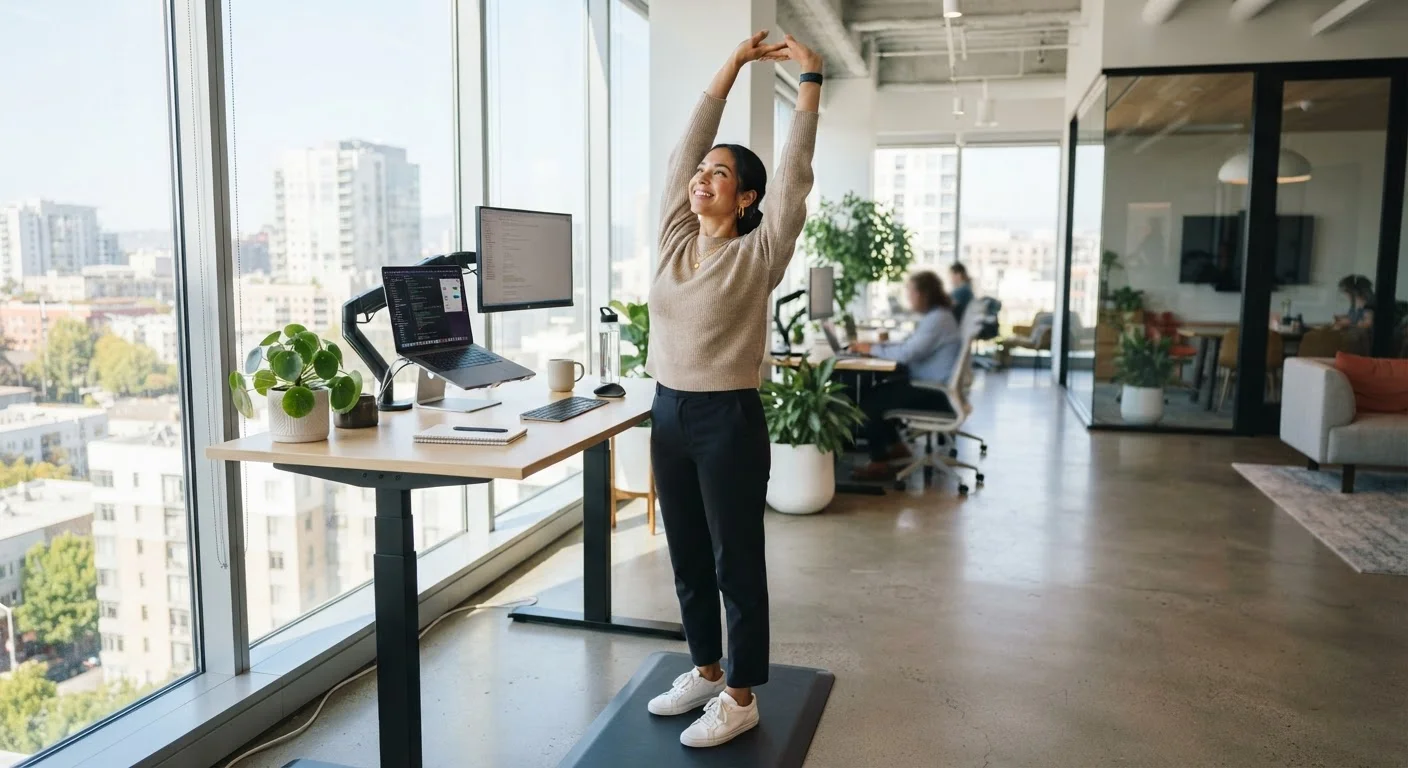
If a height-adjustable desk is available to you, alternate between sitting and standing in roughly equal intervals rather than standing all day, which can cause its own fatigue. If a sit-stand desk isn't an option, try placing your laptop on a stable stack to work standing for a portion of the day. A balance board or anti-fatigue mat can make standing more comfortable but aren't necessary to start.
Anchor Bodyweight Exercises to Existing Habits
Attach a small set of bodyweight movements to something you already do. Before your first cup of coffee: ten wall push-ups. After lunch: ten standing calf raises. Before you sit back down from any break: five squats. These habit stacks don't require motivation each time — the trigger habit carries you into the movement automatically, and they compound meaningfully over a full workweek.
Consistency Beats Intensity at the Desk
You don't need any single break to be long or vigorous to see benefit. Public health researchers broadly agree that accumulating movement in short bouts throughout the day is a valid strategy for reducing sedentary time. Aim to never sit uninterrupted for more than an hour, and let the small actions add up rather than saving everything for one big effort.
For those thinking about long-term mobility beyond a single job, these habits also align with the evidence-informed practices covered in our article on movement habits that hold up over decades.
This article is for general informational purposes only and does not constitute medical advice. Speak with a qualified healthcare provider before making changes to your physical activity routine, particularly if you have any underlying health conditions.
The content on this site is for informational purposes only and is not a substitute for professional advice. Always consult a qualified professional for guidance specific to your situation.