

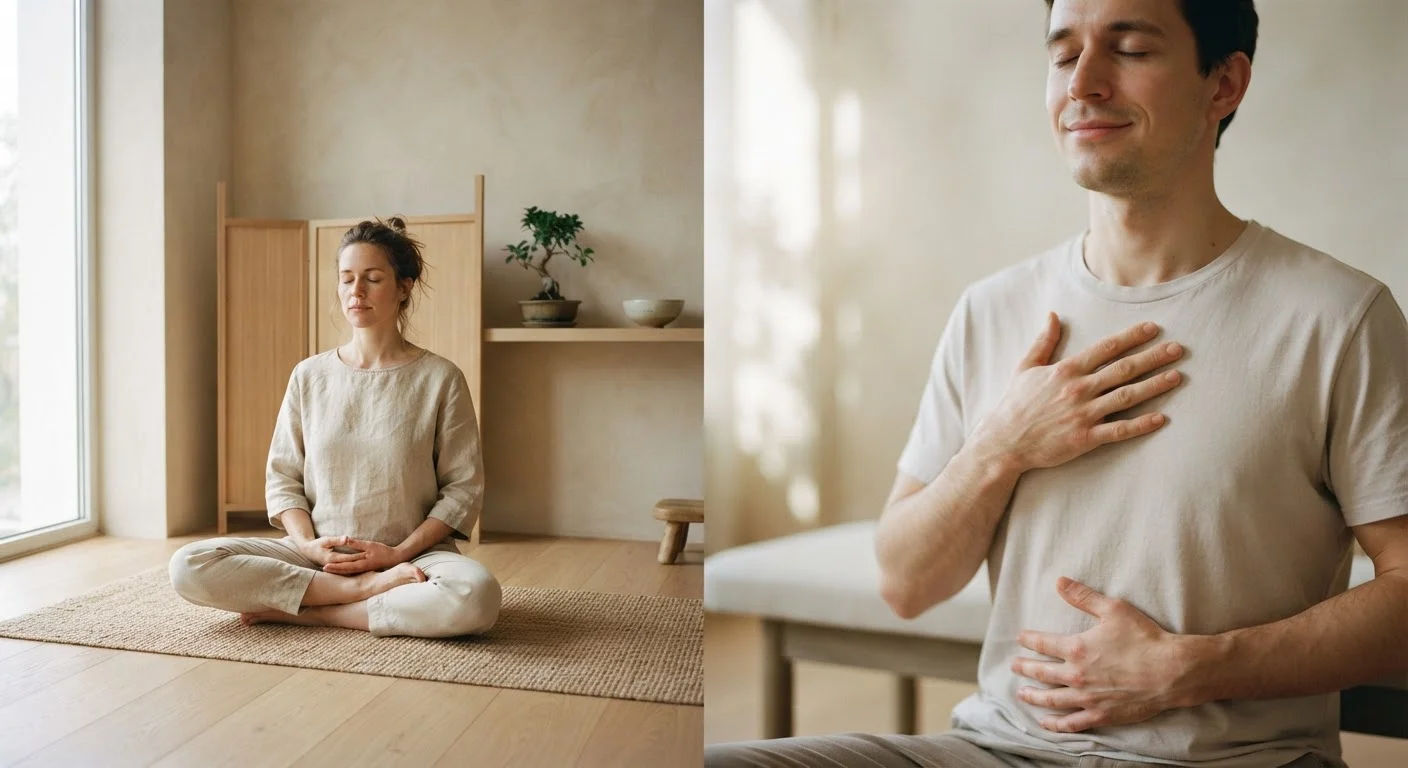
Option A
Meditation
The sustained, mind-training practice.
Best for: People seeking long-term emotional regulation and a deeper relationship with their thought patterns.
Option B
Deep Breathing
The immediate, physiology-first technique.
Best for: Anyone needing fast, portable relief from acute anxiety or stress in the moment.
How Each Approach Works on Anxiety
Anxiety triggers the body's sympathetic nervous system — the so-called fight-or-flight response — releasing stress hormones and raising heart rate. Both meditation and deep breathing aim to interrupt this cycle, but they do so through different pathways.
Deep breathing works primarily through the body. Slow, deliberate breaths stimulate the vagus nerve, which signals the parasympathetic nervous system to activate a rest-and-digest state. This produces measurable physiological effects — lower heart rate, reduced blood pressure, and a drop in cortisol — often within a few minutes. Techniques such as diaphragmatic breathing and the 4-7-8 pattern are commonly studied in this context.
Meditation, particularly mindfulness-based practices, works more through sustained cognitive retraining. Rather than immediately altering body chemistry, it teaches practitioners to observe anxious thoughts without reacting to them. Over weeks of consistent practice, research suggests meditation may reduce the reactivity of the amygdala — the brain region central to fear and stress responses — leading to more durable emotional regulation.
| Criterion | Meditation | Deep Breathing |
|---|---|---|
| Speed of effect | Gradual (weeks of practice) | Rapid (minutes) |
| Primary mechanism | Cognitive retraining, amygdala regulation | Vagus nerve, parasympathetic activation |
| Learning curve | Moderate — benefits from guidance | Low — accessible immediately |
| Portability | Requires quiet time and focus | Usable almost anywhere |
| Long-term resilience | Strong evidence over time | Less studied long-term |
| Acute anxiety relief | Limited in the moment | Strong, well-documented |
| Evidence quality | Robust but variable study quality | Solid, especially for autonomic effects |
What the Research Actually Shows
The evidence base for both practices is genuinely encouraging, though it comes with important nuances.
A widely cited analysis published in JAMA Internal Medicine found that mindfulness meditation programs led to moderate reductions in anxiety, depression, and pain. However, the researchers noted that many studies are limited by small sample sizes and variable methodology. Meditation's benefits tend to accumulate gradually — most research protocols run eight weeks or longer before measuring significant change.
Deep breathing research is harder to isolate because breathing exercises are often studied as part of broader relaxation or yoga programs. That said, several trials focused specifically on slow-paced breathing have documented reductions in self-reported anxiety and measurable autonomic nervous system shifts. Critically, these effects appear quickly — sometimes in a single session.
8 weeks
Typical duration before measurable meditation benefits
Most clinical trials on mindfulness-based stress reduction run for eight weeks before assessing significant changes in anxiety symptoms.
~5 min
Time for slow breathing to shift autonomic tone
Several controlled studies have documented measurable heart-rate variability improvements within a single short session of slow-paced breathing.
38%
Reduction in anxiety symptoms with mindfulness programs
A meta-analysis in JAMA Internal Medicine reported approximately a 38% improvement in anxiety measures across mindfulness meditation program participants.
One important consideration: most studies examine non-clinical populations. If you live with a diagnosed anxiety disorder, these techniques may complement — but should not replace — evidence-based treatments like cognitive behavioural therapy (CBT) or prescribed medication. Always consult a qualified healthcare professional for personalised guidance.
For a broader look at which wellness strategies hold up under scientific scrutiny, see mental wellness strategies that research actually supports.
Practical Considerations: Time, Access, and Consistency
The best anxiety-management tool is one a person will actually use. On that front, the two approaches differ meaningfully.
Deep breathing has a near-zero learning curve. Anyone can begin a slow breathing pattern without instruction, equipment, or a quiet room — making it genuinely accessible during a commute, before a difficult conversation, or mid-workday. Its portability is a real advantage.
Meditation requires more initial investment. Apps, guided audio, classes, and structured programs like Mindfulness-Based Stress Reduction (MBSR) can all help beginners build a consistent habit. The payoff, however, is a self-reinforcing skill: the more regularly someone meditates, the less cognitive effort the practice demands and the more automatic calm responses become.
Combining Both Practices
Meditation and deep breathing are not mutually exclusive. Many structured mindfulness programs incorporate breath awareness as a core technique, effectively delivering both benefits simultaneously. Starting a meditation session with a few minutes of intentional breathing can help quiet the body before turning attention inward — a combination many practitioners find more effective than either approach alone.
It's also worth recognising that anxiety and sleep are closely linked. If stress is affecting your sleep quality, the calming effects of both practices may extend into better rest — something explored in depth in our piece on how poor sleep fuels anxiety and low mood.
This article is for general informational purposes only and does not constitute medical advice. If you are experiencing significant anxiety or a mental health condition, please consult a qualified healthcare professional.
The content on this site is for informational purposes only and is not a substitute for professional advice. Always consult a qualified professional for guidance specific to your situation.