

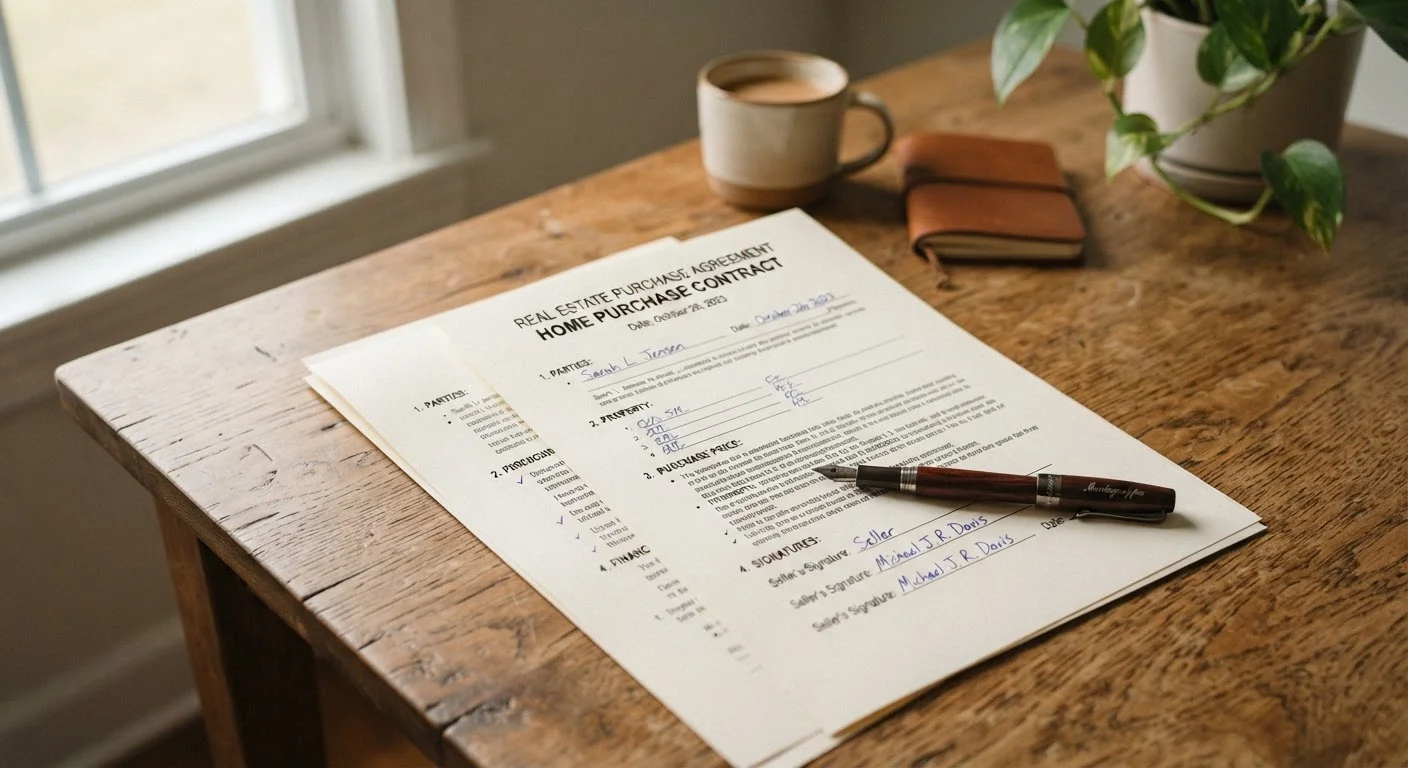
Why Contingencies Exist
Buying a home is one of the largest financial commitments most Americans will ever make. Contingencies exist because a lot can go wrong between the day you sign a purchase agreement and the day you get the keys. Hidden structural damage, a lender denial, or an inflated asking price can each derail a purchase — and leave you out of pocket if you're not protected.
Think of contingencies as off-ramps built into the contract. They define specific circumstances under which you can exit the deal legally and recover your earnest money. Without them, walking away likely means forfeiting that deposit — often 1–3% of the purchase price. For a $400,000 home, that's $4,000 to $12,000 at stake.
For a broader look at how contingencies fit into the overall timeline, see The Home-Buying Process, From Offer to Closing.
1–3%
Typical earnest money deposit as a share of purchase price
Industry practice across U.S. residential real estate transactions; exact amounts vary by market and negotiation.
7–14 days
Common inspection contingency window
Standard timeframes in most U.S. residential contracts, though local customs and negotiated terms can vary significantly.
21–30 days
Typical financing contingency period
Reflects average lender underwriting timelines; some markets or loan types may require longer windows.
The Three Core Contingencies Explained
Inspection Contingency
This gives the buyer a set window — typically 7–14 days — to have the property professionally inspected. If the inspection reveals significant problems, the buyer can request repairs, ask for a price reduction, or cancel the contract entirely. Without this protection, you're accepting the home in whatever condition it turns out to be in.
Financing Contingency
Also called a mortgage contingency, this protects buyers who need a loan to close. If the lender ultimately denies the loan — due to an appraisal, a change in the buyer's credit, or other underwriting issues — the buyer can exit without penalty. It's important to note that a pre-approval letter is not a guarantee of final loan approval; a lot of review happens after the offer is accepted.
Appraisal Contingency
Lenders will only loan up to the appraised value of a property, not necessarily the agreed sale price. An appraisal contingency lets the buyer renegotiate or walk away if the appraised value comes in below the purchase price. Without it, the buyer must either cover the gap in cash or lose their deposit.
Waiving Contingencies: The Tradeoffs
In a competitive market, some buyers waive one or more contingencies to make their offer more attractive. Sellers understandably prefer offers with fewer conditions — fewer chances for the deal to fall through. But waiving a contingency is not a technicality; it's a binding legal decision with real financial consequences.
Talk to Your Agent Before Waiving Anything
Before removing any contingency, ask your buyer's agent to walk you through the specific dollar risk you're accepting. In some markets, sellers are open to shorter contingency windows rather than full waivers — a compromise that can strengthen your offer without eliminating your protections entirely.
Waiving the inspection contingency doesn't mean you can't have an inspection — it means you lose the contractual right to use the findings as grounds for cancellation or negotiation. Some buyers opt for a pre-offer inspection to gather information without making the sale contingent on the outcome, though this depends on seller access and market timing.
Waiving the financing contingency is particularly risky for buyers who aren't paying cash. If your loan falls through after you've waived this protection, you'll likely lose your earnest money. Only buyers with extremely strong, fully underwritten pre-approvals should consider this step — and even then, in consultation with their agent and attorney.
For more on navigating competitive situations, see Making an Offer in a Competitive Market and Why Buyers Lose Homes They Love — and How to Avoid It.
Deadlines Are Not Suggestions
Each contingency has a contractual deadline. Missing it — even accidentally — can be treated as a waiver in many states. Work with your agent to calendar every contingency deadline the moment your offer is accepted, and communicate proactively if you need more time.
How to Approach Contingencies Strategically
The goal isn't to load your offer with every possible protection or strip it bare to beat other buyers — it's to understand exactly what each contingency covers and make an informed decision about the risk you're accepting. That requires a candid conversation with your buyer's agent and, when appropriate, a real estate attorney.
Your agent can advise on local customs, typical contingency periods in your market, and how sellers have responded to contingent offers on comparable properties. See Working With a Real Estate Agent: What Buyers Should Understand for guidance on what to expect from that relationship.
Also review Your Pre-Purchase Checklist: What to Verify Before Making an Offer before you submit — thorough due diligence before the offer stage can reduce how many contingencies you feel you need to include. For definitions of related financial terms, Earnest Money, Escrow, and Closing Costs: A Plain-Language Glossary is a useful companion resource.
This article is for general informational purposes only and does not constitute legal or financial advice. Consult a licensed real estate professional or attorney regarding your specific situation and local laws.
“Contingencies are not a sign of weakness in an offer — they're a sign of a buyer who understands what they're agreeing to. The risk of waiving them should always be weighed against the financial exposure, not just the competitive pressure.”
— National Association of Realtors, Professional trade association representing U.S. real estate practitioners
Frequently Asked Questions
If a contingency condition isn't satisfied within its deadline, the buyer generally has the right to cancel the contract and receive their earnest money back. However, the buyer must formally invoke the contingency — simply walking away without doing so can forfeit that deposit.
It carries real risk. Without an inspection contingency, you lose the right to negotiate repairs or exit penalty-free if serious defects are found. Some buyers mitigate this by scheduling a pre-offer inspection, though that option depends on seller cooperation and market conditions.
Yes. Sellers can accept, reject, or counter any offer. In competitive markets, offers with fewer contingencies are often viewed as stronger, though sellers generally prefer a certain sale over a risky all-cash offer with no protections for either side.
An appraisal gap occurs when the home's appraised value comes in below the agreed purchase price. With an appraisal contingency, the buyer can renegotiate or walk away. Without one, the buyer must cover the difference in cash or lose their earnest money.
Inspection contingencies commonly run 7–14 days; financing contingencies often extend 21–30 days. Timelines vary by state, local custom, and what's negotiated between buyer and seller — always confirm deadlines with your agent and attorney.
The content on this site is for informational purposes only and is not a substitute for professional advice. Always consult a qualified professional for guidance specific to your situation.