

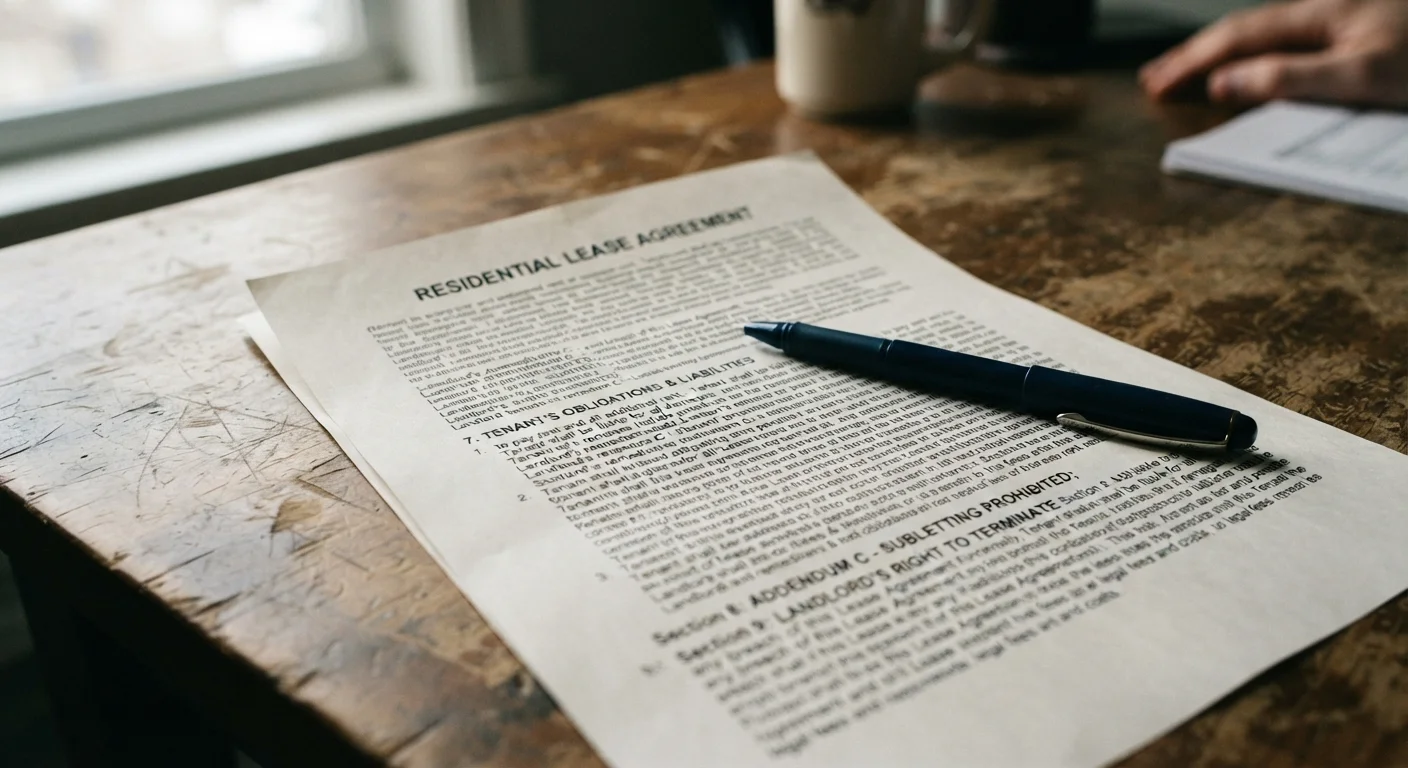
Why Standard Leases Are Rarely as Neutral as They Look
Most rental agreements are drafted by landlords or their attorneys, which means the default language tends to protect the property owner — not the tenant. A lease labeled "standard" doesn't mean it's balanced. It means it's a template, and those templates often contain clauses that renters gloss over in the excitement of securing a new home.
The consequences of signing without reading can range from annoying to genuinely expensive: forfeited security deposits, automatic rent increases, limited recourse when something breaks. Understanding where leases typically hide their sharpest edges is the first step toward signing something you won't regret. For a broader orientation to the renting process, see our complete renting guide.
Skipping the auto-renewal clause and missing the notice deadline.
Why it happens: Renters focus on the move-in terms and don't track renewal language buried in the middle of a long document. The notice deadline often arrives before they realize the window is even open.
Accepting vague move-out damage language without requesting clarification or a written move-in inspection.
Why it happens: Renters assume "normal wear and tear" is a universally understood legal standard, when in practice it varies by landlord and jurisdiction and is rarely defined in the lease itself.
Signing a lease that grants the landlord unrestricted entry rights.
Why it happens: Renters often assume state law automatically overrides overly broad entry language, or they don't realize the clause exists until an unexpected visit occurs.
Overlooking utility and fee addenda attached to the main lease.
Why it happens: Addenda are often presented as routine attachments after the primary agreement, leading renters to sign without reading them with the same scrutiny as the main document.
Misunderstanding guest and occupant policies, leading to lease violations.
Why it happens: Renters assume having a guest stay for a few weeks is a personal matter, unaware that many leases define an occupant threshold and treat extended guests as unauthorized tenants.
Signing a lease with a subletting prohibition without knowing its full scope.
Why it happens: Renters either overlook the subletting clause entirely or assume it only applies to formal subletting arrangements — not short-term rental platforms or temporary room shares.
The Clauses Most Likely to Cost You Money
Beyond the individual mistakes renters make, certain lease sections deserve extra scrutiny because they appear in nearly every agreement yet are routinely misunderstood.
~52%
Renters who experienced a security deposit dispute
A survey by Nolo found roughly half of renters reported some disagreement with their landlord over security deposit deductions at move-out.
24–48 hrs
Typical advance notice landlords must give before entry
Most U.S. states require landlords to provide at least 24 hours' written notice before entering a rented unit, except in emergencies, though the exact standard varies by state law.
Auto-renewal provisions are among the most financially damaging. Many leases convert to a new fixed term — sometimes a full year — if written notice isn't submitted within a specific window, often 30 to 60 days before the current term ends. Miss that window and you're committed again. Before signing, compare the implications of fixed-term vs. month-to-month arrangements so you understand what automatic renewal actually means for your flexibility.
Move-out and damage clauses that use terms like "tenant responsible for any damage beyond normal wear and tear" sound reasonable but often lack definitions. What qualifies as normal wear? Scuffed baseboards? A nail hole? When these terms go undefined, disputes become subjective. The rules governing security deposits vary by state, and knowing them before you sign — not after you move out — gives you a meaningful advantage.
Landlord entry language is another area where lease text and state law may conflict. Many boilerplate leases state the landlord may enter "at any time" or "with reasonable notice" — but most states mandate a specific notice period, commonly 24 to 48 hours, except in emergencies. If your lease contains language that appears to waive those protections, review common myths about renter rights and consider asking for a written amendment before signing.
Time Pressure Is a Lease Negotiation Risk
Landlords sometimes present a lease the same day as a showing and encourage same-day signing. Feeling rushed is a significant risk factor for overlooking harmful clauses. You are generally entitled to take the document home to review it — and it is reasonable to request 24 to 48 hours before signing. If a landlord refuses any review time, treat that as meaningful information about how disputes may be handled later.
Utility and fee responsibilities deserve line-by-line attention. Whether water, trash, or pest control falls on you versus your landlord is sometimes buried in an addendum rather than the main lease body. Understanding utility responsibility in rental housing before signing helps you calculate your true monthly cost — and avoid surprises. Similarly, review everything in a standard lease agreement worth reading carefully to catch language that's easy to miss under time pressure.
This article provides general educational information about lease agreements and is not legal advice. If you have questions about your specific rights as a tenant, consult a qualified attorney or your local tenant's rights organization.
The content on this site is for informational purposes only and is not a substitute for professional advice. Always consult a qualified professional for guidance specific to your situation.