

Why Trip Type Changes Everything
Most packing advice treats every trip as roughly the same event — throw clothes in a bag, don't forget a charger, done. But that approach leaves you hauling a heavy roller through a national park trailhead or showing up to a city boutique hotel with a bag full of hiking poles you didn't need. The moment you commit to a destination, ask yourself: what does this trip actually require?
A weekend road trip gives you cargo flexibility — you can bring more and it won't cost you extra or slow you down at a security line. A two-week national park loop demands functional gear over fashion. A family city break means planning for everyone's different needs simultaneously. For a thorough look at how packing fits into the broader trip picture, see our well-planned trip guide.
The trip type is your filter. Once you know what you're doing, every packing decision becomes easier.
Core Practices That Apply to Every Trip
Regardless of destination or duration, a handful of strategies consistently reduce stress and prevent the dreaded overloaded bag. These aren't rigid rules — they're frameworks you adapt based on your travel style.
Match your packing strategy to the trip type before choosing a single item.
A beach weekend and a national park loop have almost nothing in common from a gear standpoint. Starting with trip type — not a generic list — prevents you from bringing the wrong things entirely and leaving behind what you actually need.
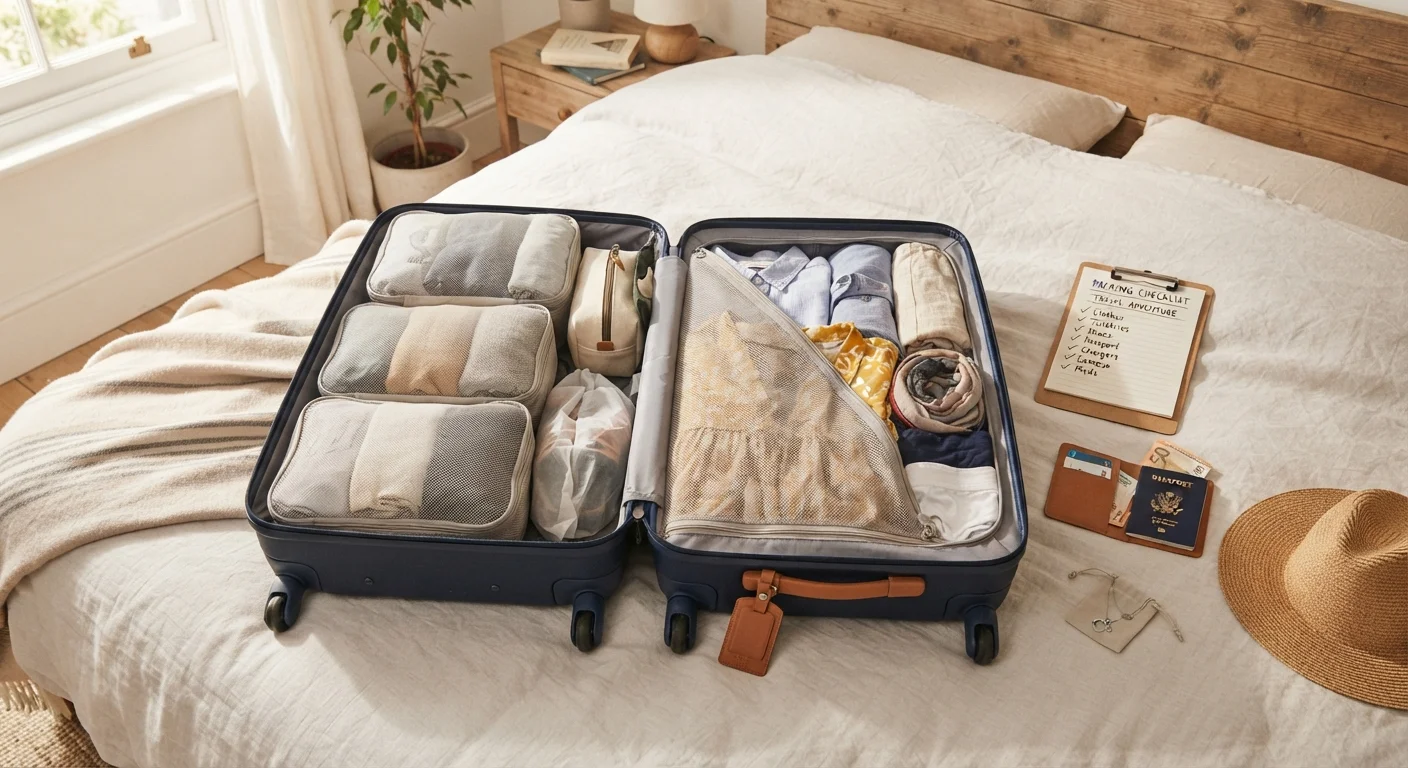
Use a modular packing cube system to keep categories separate and speed up unpacking.
Packing cubes let you locate items without digging through a bag and make repacking mid-trip far faster. They also compress clothing enough to reveal how much you're really bringing.
Build a reusable master checklist for each trip category you commonly take.
Decision fatigue before a trip is real, and starting from scratch every time invites forgetting essentials. A saved, trip-type-specific checklist becomes more refined each time you use it.
Pack for your actual itinerary, not your worst-case scenario wardrobe.
Overpacking almost always comes from planning for hypothetical occasions rather than confirmed activities. If a formal dinner isn't on the schedule, the dress shoes don't make the cut. Our guide on things travelers consistently overpack breaks this down further.
Apply a layering system for trips spanning multiple climates or long durations.
A base layer, mid layer, and outer shell can cover an enormous temperature range without tripling your bag weight. This is especially important for multi-week trips or destinations with significant day-to-night temperature swings.
Airline and Luggage Rules Change
Carry-on size limits, checked baggage fees, and restricted items can vary by airline and route. Always verify current rules directly with your carrier before you pack. For a deeper look at weighing your luggage options, see our carry-on vs. checked bag guide.
Quick Wins to Try Before Your Next Trip
You don't need to overhaul your entire packing process to see results. A few targeted adjustments before departure can meaningfully change how your trip starts — and how smoothly it runs from there.
Traveling with children adds another layer to these decisions entirely. Check out our family trip planning guide for packing considerations specific to trips with kids.
Making It a Habit, Not a Chore
The travelers who pack well consistently aren't naturally more organized — they've simply built systems that remove guesswork. A saved checklist, a set of dedicated packing cubes, and a habit of reviewing the actual itinerary rather than imagining worst-case scenarios make the difference between a stressful pre-trip scramble and a calm, confident departure.
“The best trips aren't the ones where you brought everything — they're the ones where you brought the right things.”
— Travel Editorial Team, Nexus Travel Editors
Once you're packed and ready, the next challenge is making the most of the destination itself without over-scheduling your days. Our US destination pacing guide is worth a read before you go. And if you're coordinating bags and logistics for a group, organizing a group trip has practical frameworks to keep things manageable.
For more smart travel tips across every kind of trip, we've got you covered.
The content on this site is for informational purposes only and is not a substitute for professional advice. Always consult a qualified professional for guidance specific to your situation.