

Why the American South Is a Road Tripper's Dream
Few regions in the United States pack as much geographic, cultural, and culinary variety into a drivable area as the American South. Within a single two-week trip, you can move from the electric nightlife of New Orleans to the solemn beauty of civil rights landmarks in Birmingham, wind through misty Smoky Mountain foothills in Tennessee, and arrive at the Spanish moss-draped squares of Savannah — all without boarding a single plane.
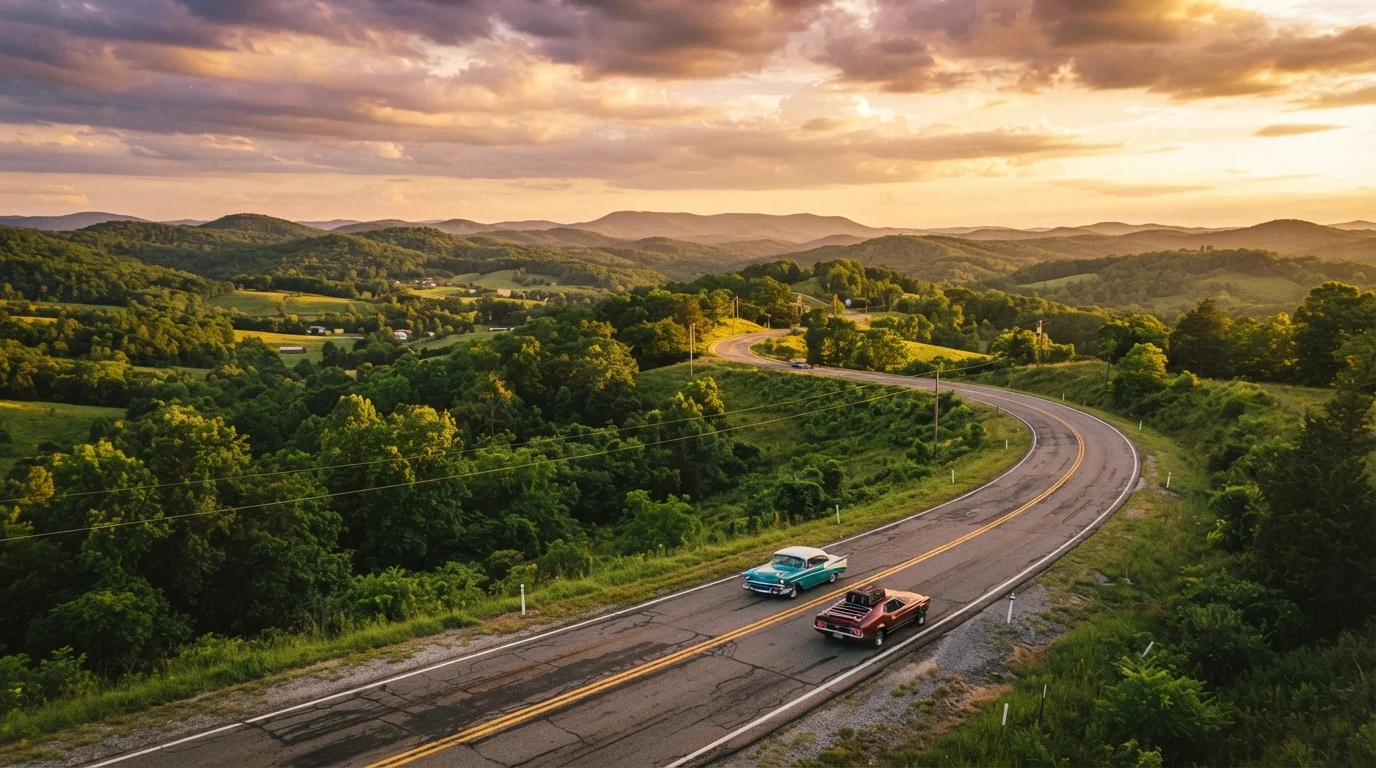
What makes Southern road trips uniquely satisfying is that the driving itself is part of the experience. Routes like the Natchez Trace Parkway and the Blue Ridge Parkway are federally protected scenic corridors that feel nothing like ordinary highways. Even workaday US routes through Mississippi and Alabama reveal roadside barbecue pits, general stores, and small-town courthouses that tell the story of a deeply layered region.
The South also tends to be more accessible for budget-conscious travelers compared to coastal regions in the Northeast or West. State park fees are modest, regional food is hearty and often inexpensive, and lodging outside major festival periods can be quite reasonable. That said, smart planning still makes an enormous difference — especially around weather, routing, and pacing.
What you will need
Step-by-Step: Planning Your Southern Route
Offline GPS or mapping app
Navigate rural stretches where cell coverage is unreliable, particularly in Mississippi Delta and Appalachian areas.
Printed state road atlas
Backup navigation and a useful planning tool for identifying scenic byways not always highlighted by apps.
Roadside emergency kit
Handles common breakdowns — flat tires, dead batteries, minor leaks — on stretches far from service stations.
Portable cooler
Keep drinks and snacks cold during long drives through regions where stops can be sparse in summer heat.
Travel notebook or itinerary app
Track reservations, notes on local finds, and mileage across multiple states and overnight stops.
Choose your route anchor cities
The South is vast, so the smartest starting move is picking two or three hub cities that genuinely excite you and letting your route grow outward from there. Popular anchors include New Orleans, Nashville, Atlanta, Memphis, Charleston, and Savannah — each offering a distinct personality worth spending at least two full days in. Once you have your anchors, identify the natural corridor connecting them and flag smaller towns along the way worth a lunch stop or overnight.
For a classic loop, consider New Orleans → Memphis → Nashville → Atlanta → Savannah, returning via the Georgia and Florida panhandle coast. This covers roughly 1,500–1,800 miles depending on detours — achievable in 10–14 days without feeling rushed. Comparing New Orleans and Nashville can help you decide how many nights each city deserves.
Map daily driving distances realistically
A common mistake is treating Southern highways like interstates built for pure speed. While I-10, I-20, and I-65 move quickly, the most rewarding driving — US-61 through the Mississippi Delta, the Natchez Trace Parkway, US-17 along the South Carolina coast — is scenic and deliberately slow. Plan no more than 250–300 miles of driving on any given day, and fewer if you're routing through urban traffic corridors like Atlanta or Nashville at peak hours.
For a deeper look at vehicle prep, overnight stop strategy, and contingency planning, our long-distance road trip resource is a thorough end-to-end companion.
Account for seasonality and weather
Timing matters enormously in the South. Spring (March–May) and fall (September–October) offer the most comfortable temperatures across most of the region. Summer brings intense heat and humidity — particularly in Louisiana, Mississippi, and coastal Alabama — along with the Atlantic hurricane season running June through November. If you're traveling July or August, prioritize early morning drives and build midday indoor stops into your plan.
Winter travel in the Deep South is milder than much of the country, but mountain sections of Tennessee, North Carolina, and northern Georgia can experience ice and snow. Always check current road conditions and weather forecasts for each state you're entering, and verify any travel advisories through official state DOT and weather service resources before you go.
Build a cultural and culinary framework
One of the South's greatest gifts to road trippers is its staggering regional food diversity. Barbecue styles shift dramatically from Memphis (dry-rubbed ribs) to the Carolinas (vinegar-based whole-hog) to Texas-influenced spots in Louisiana. Seafood dominates the Gulf Coast. Charleston and Savannah showcase Lowcountry cuisine — shrimp and grits, she-crab soup, hoppin' John. Research the signature dishes of each region you're passing through and ask locals where they actually eat rather than defaulting to tourist-facing spots.
Culturally, the South rewards curiosity. The Mississippi Delta is the birthplace of the blues; Memphis shaped rock and soul; Nashville elevated country music into a global genre. Budget time for live music venues, civil rights history sites, and local art communities. Pacing your time at each destination thoughtfully helps you absorb a place rather than just passing through it.
Lock in overnight accommodations strategically
In hub cities, book lodging well in advance — especially during festival seasons (Mardi Gras in New Orleans, CMA Fest in Nashville, SXSW overflow in adjacent states). For smaller overnight towns, flexible booking options reduce stress if your drive runs long. State parks across the South offer excellent campground options for budget-minded travelers and often sit in genuinely beautiful settings; Georgia, Tennessee, and the Carolinas are particularly well-equipped.
For a fuller picture of how pre-trip planning translates into smoother on-the-road decisions, understanding the anatomy of a well-planned trip is worth reading before you finalize your itinerary.
Prepare your vehicle and emergency plan
Before departure, have your vehicle serviced — check oil, tire pressure and tread, brake pads, belts, and all fluids. Long stretches of rural Southern highway can mean 30 or more miles between gas stations, particularly in the Delta and along coastal bayou routes in Louisiana. Keep your tank above a quarter full as a habit, and carry a basic emergency kit including jumper cables, a reflective triangle, and a small first-aid kit.
Make sure your auto insurance is current and that you understand your roadside assistance coverage. Share your general itinerary with someone back home and check in periodically. A start-to-finish road trip planning guide covers emergency supply lists and vehicle prep in greater detail.
Heat and Humidity Are Serious Factors
Summer temperatures in the Deep South regularly exceed 95°F with high humidity. Heat exhaustion is a real risk for travelers spending time outdoors, particularly in coastal Louisiana, Mississippi, and Alabama. Stay hydrated, schedule outdoor activities for early morning or evening, and never leave children or pets in a parked vehicle — interior temperatures can become dangerous within minutes.
Navigating the South's Sub-Regions
The South isn't one monolithic place — it's a collection of sub-regions with genuinely distinct identities, and recognizing those differences sharpens your itinerary.
- The Gulf Coast (Louisiana, Mississippi, Alabama, Florida Panhandle): Seafood-heavy cuisine, flat coastal drives, bayou country, and some of the country's most storied music history in New Orleans.
- The Mississippi Delta: Arguably the most historically resonant stretch of American highway, US-61 runs through cotton country and the birthplace of the blues. Towns like Clarksdale and Greenwood are small but culturally significant.
- Tennessee and the Upper South: Nashville and Memphis anchor the music story, while the eastern part of the state opens into Appalachian mountain scenery, whitewater rivers, and Great Smoky Mountains National Park — the most visited national park in the US.
- The Carolinas and Georgia Coast: Charleston and Savannah are two of the most walkable, historically rich cities in the country. The Lowcountry food culture alone merits a dedicated stop. Avoiding the trap of over-scheduling is especially useful here — these cities reward lingering.
Let the Food Guide Your Route
Some of the South's most worthwhile detours are driven purely by regional specialties — a smoked brisket joint outside of Jackson, a bowl of gumbo in a Lafayette neighborhood spot, fresh oysters on a shrimp boat dock in the Florida Panhandle. Build a loose food itinerary alongside your driving itinerary and you'll find the two inform each other in surprisingly useful ways.
If this is your first extended road trip and you're traveling solo, solo travel tips for first-timers offers practical safety and logistics guidance tailored to independent travelers.
The content on this site is for informational purposes only and is not a substitute for professional advice. Always consult a qualified professional for guidance specific to your situation.