

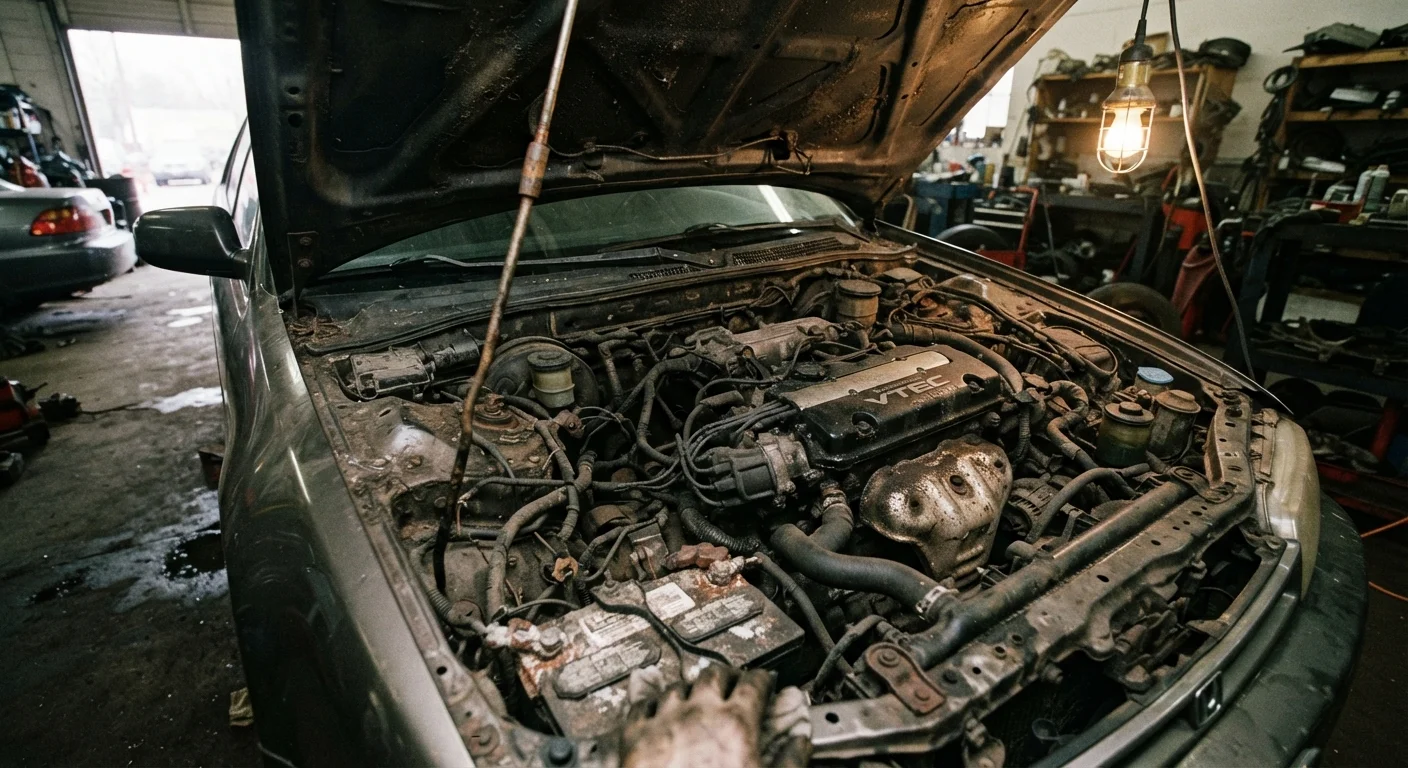
Small Skips, Big Consequences
Most car repairs don't come out of nowhere. They come out of deferred maintenance — small services that got pushed back one too many times until a minor issue became a major failure. The pattern is predictable: skipping an oil change once doesn't destroy an engine, but making a habit of it absolutely can.
The financial math rarely favors delay. A routine oil change might cost $50–$100. A sludged-up engine that starved of clean oil can cost thousands to repair or replace. Understanding why maintenance intervals exist — and what breaks down when you miss them — is the clearest motivation to stay on schedule.
For a broader picture of everything that goes into keeping a vehicle roadworthy, see our comprehensive maintenance overview.
Delaying or skipping oil and filter changes beyond the manufacturer's recommended interval.
Why it happens: Oil changes feel like a hassle and an expense that's easy to push back. Many drivers also assume the old "every 3,000 miles" rule still applies universally, even when their owner's manual specifies 5,000–10,000 miles.
Ignoring a warning light for days or weeks hoping it will clear on its own.
Why it happens: Warning lights are easy to dismiss when the car still seems to drive normally. Drivers often assume a steady (not flashing) light means the issue isn't urgent.
Letting tires go unrotated and unchecked for air pressure until they're visibly worn.
Why it happens: Tire pressure and rotation feel like minor details compared to engine work. Slow leaks and uneven wear happen gradually, so the problem isn't obvious until it's severe.
Never flushing or topping off critical fluids — coolant, brake fluid, transmission fluid, and power steering fluid.
Why it happens: Most drivers check oil but forget that other fluids degrade and get contaminated too. Out of sight, out of mind.
Putting off brake pad replacement after noticing squealing or grinding noises.
Why it happens: Brakes still seem to "work" even when worn, so the repair feels less urgent than it is. Cost concerns also cause people to delay.
How Costs Compound and What to Do Instead
The frustrating reality of deferred maintenance is that each skipped service often makes the next failure more expensive. Worn brake pads destroy rotors. Low coolant leads to overheating, which can warp cylinder heads. Dirty transmission fluid accelerates wear on internal components that cost thousands to rebuild.
Warning Lights Are Not Optional Reading
A check engine or oil pressure light is not a suggestion — it signals that something measurable has already gone wrong. Driving with an active oil pressure warning, even briefly, can seize an engine within minutes. Pull over safely and investigate before continuing to drive.
Staying ahead of these failures doesn't require being a mechanic — it requires a basic routine. Check your owner's manual for your vehicle's specific service schedule, keep a simple log of what's been done, and don't dismiss unfamiliar noises or dashboard lights. Most problems give you early warning signals well before they escalate.
Deferred Maintenance Voids Warranties
Many factory and extended warranties require documented proof that scheduled maintenance was performed on time. Skipping or delaying services — especially oil changes — can give a manufacturer legal grounds to deny a repair claim. Keep receipts and service records even for maintenance you do yourself.
For practical habits that keep a vehicle running reliably year after year, our guide on protecting your car investment over time covers the day-to-day side of ownership. You can also explore the full car maintenance resource hub for topic-specific guidance.
$9,000+
Average engine replacement cost
According to repair industry estimates, a full engine replacement on a typical passenger vehicle commonly runs between $4,000 and $10,000 or more depending on make and model.
35%
Of roadside breakdowns preventable
The American Automobile Association (AAA) has reported that a significant share of roadside emergencies involve issues — dead batteries, flat tires, overheating — that routine maintenance checks could have caught earlier.
The content on this site is for informational purposes only and is not a substitute for professional advice. Always consult a qualified professional for guidance specific to your situation.