

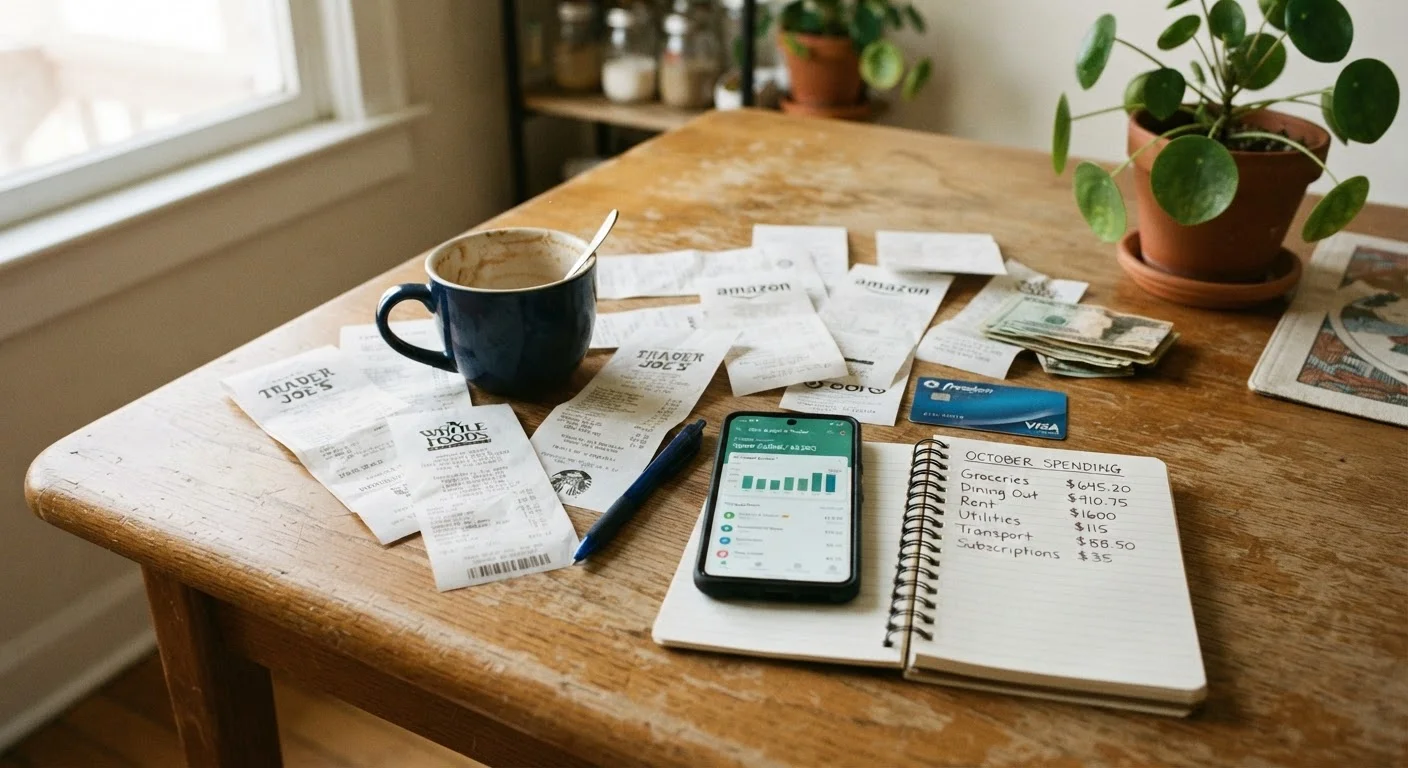
Why Discretionary Spending Derails So Many Budgets
When people sit down to build a budget, they usually account for rent, utilities, car payments, and groceries without much difficulty. What catches them off guard — month after month — is everything else. That "everything else" is discretionary spending, and it's where most household budgets quietly unravel.
The core problem is perception. Ordering takeout twice a week feels modest in the moment. Paying for four streaming services feels like a small convenience. Grabbing a $6 latte each workday feels harmless. But when these habits compound across 30 days, the total can easily exceed what most people spend on groceries. Research from consumer finance surveys consistently finds that Americans underestimate their discretionary spending — often by a wide margin — before they begin tracking it seriously.
Discretionary spending is also psychologically stickier than people realize. Many of these purchases are tied to comfort, reward, or social connection — making them harder to reduce than a fixed bill you can simply cancel. Understanding this dynamic is the first step toward managing it. For a broader look at where your money is going each month, see our full spending category breakdown.
~30%
Recommended share of income for wants
The widely referenced 50/30/20 budgeting framework suggests allocating roughly 30% of after-tax income to discretionary 'wants,' though actual household spending often differs significantly.
$273/mo
Average American subscription spending estimate
Various consumer surveys have estimated that American households spend hundreds of dollars monthly on subscription services, frequently more than they self-report when asked.
1 in 3
Americans who don't track daily spending
Federal Reserve consumer surveys have found that a significant share of U.S. adults do not actively monitor their day-to-day expenditures, leaving discretionary costs unexamined.
What Belongs in the Discretionary Category
Discretionary spending covers any purchase that isn't essential to basic living or a fixed financial obligation. Common examples include:
- Dining out and food delivery — restaurants, coffee shops, meal delivery apps
- Entertainment — streaming platforms, concerts, movies, sporting events
- Clothing and accessories beyond basic replacement needs
- Hobbies and recreation — gym memberships (if rarely used), sports gear, games
- Personal care extras — salon visits, spa services, premium grooming products
- Impulse purchases — anything bought without prior planning
- Subscriptions — apps, magazines, delivery services, software you've forgotten you're paying for
The line between essential and discretionary isn't always crisp. A gym membership could be a genuine health priority for one person and an unused luxury for another. What matters isn't applying a universal rule — it's being honest about what's truly necessary in your specific situation. If you're working with a partner, aligning on these definitions early prevents a lot of friction. Our article on budgeting as a couple offers practical frameworks for navigating those conversations.
How to Track and Control Discretionary Costs
The most effective starting point is a 30-day spending audit. Pull your bank and credit card statements, go line by line, and tag every transaction as essential or discretionary. Most people find this exercise genuinely surprising — and that surprise is the motivator that sticks.
Once you have a real number, you can set an intentional monthly cap. Divide your discretionary budget into subcategories (dining, entertainment, subscriptions, miscellaneous) and assign each a limit that reflects your priorities. One proven method for enforcing those limits is the envelope approach — allocating set amounts per category and stopping when the money is gone. Our guide to envelope budgeting in a digital world explains how to apply this method without carrying cash.
A few practical habits that help:
- Audit subscriptions quarterly. Cancel anything you haven't used in 30 days.
- Add a 24-hour pause before any unplanned purchase over a set threshold (many people use $30–$50).
- Check in weekly, not just monthly. Catching overspending mid-month leaves time to correct it.
- Separate discretionary savings for planned wants — vacations, new electronics — so they don't eat into your monthly budget unexpectedly.
At month's end, review what worked and what didn't. Our monthly budget review checklist walks through exactly what to examine and how to adjust for the following month.
Start With One Month of Real Data
Before setting any discretionary budget limits, spend one full month tracking every purchase without changing your behavior. This gives you an honest baseline rather than an aspirational guess. Most people find the actual number motivating enough to drive real change — no willpower required upfront.
This article is for general informational and educational purposes only and does not constitute personalized financial advice. Consider consulting a qualified financial professional for guidance tailored to your specific situation.
Frequently Asked Questions
Discretionary spending covers non-essential purchases you choose to make: dining out, entertainment, subscriptions, hobbies, travel, and impulse buys. If you could reasonably live without it, it's generally discretionary. Keep in mind the line between 'need' and 'want' can shift depending on your lifestyle and circumstances.
A common guideline is the 50/30/20 rule, which suggests roughly 30% of after-tax income for wants — including discretionary spending. That said, this is a general framework, not a universal rule. Your ideal allocation depends on income, debt obligations, savings goals, and personal priorities.
Discretionary purchases tend to be frequent, small, and emotionally driven — which makes them easy to overlook or rationalize. Tap-to-pay technology and auto-renewing subscriptions make spending even more frictionless, so money leaves your account without much conscious thought.
They overlap but aren't identical. Variable expenses include costs that fluctuate month to month, such as groceries and utility bills, which may be essential. Discretionary spending specifically refers to the non-essential portion of your variable costs — though some people use the terms interchangeably.
Start by auditing your last 30 days of bank and card statements. Categorize each transaction and total the discretionary ones. Seeing the real number is often motivation enough to make changes. Then set a monthly cap per category and check in weekly.
Yes, travel is typically considered discretionary spending since it's non-essential. If you're planning a trip, building it into your budget as its own category is a smart approach. For practical planning guidance, see resources like our <a href="/travel/trip-planning">trip planning hub</a>.
The content on this site is for informational purposes only and is not a substitute for professional advice. Always consult a qualified professional for guidance specific to your situation.