

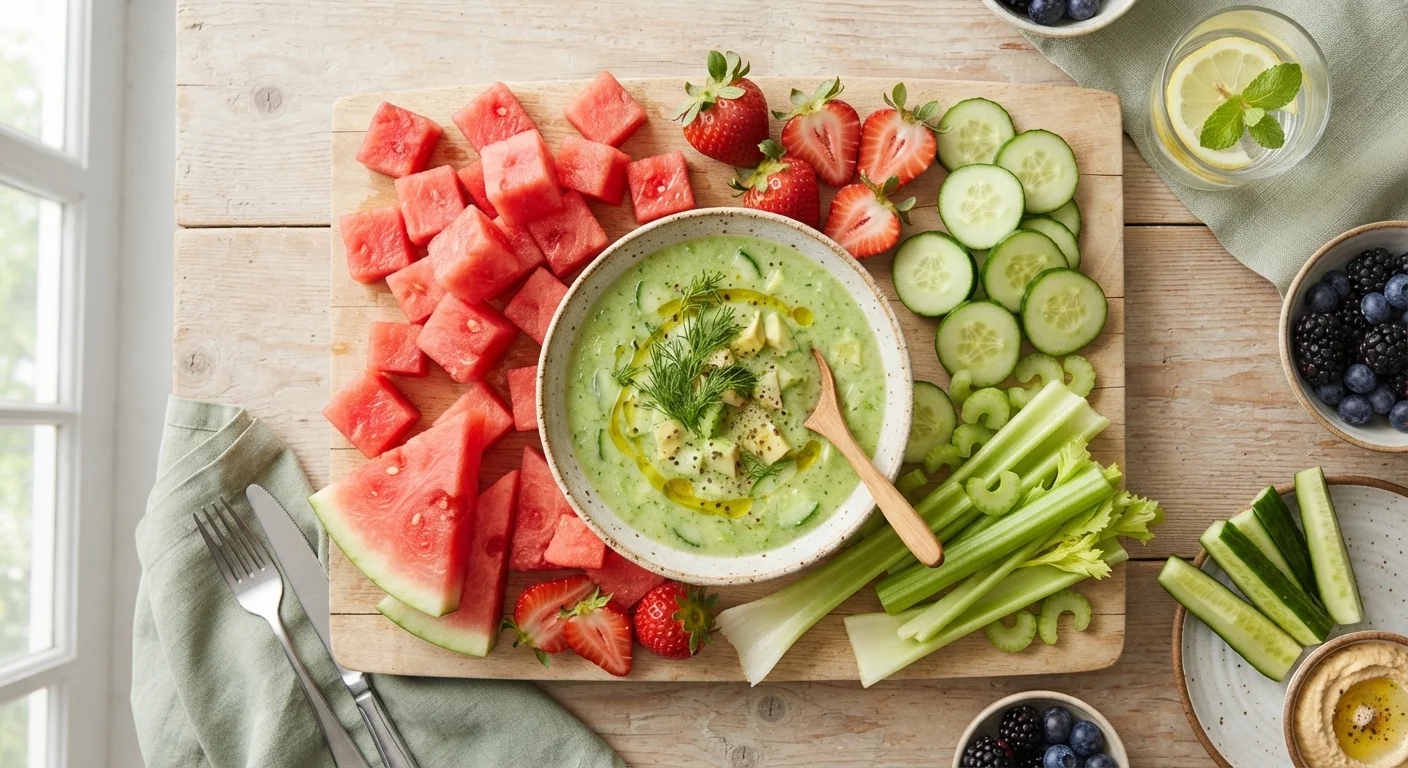
The 20–30% You Might Be Overlooking
Most conversations about hydration focus entirely on how many glasses of water you drink each day — but that framing ignores a meaningful portion of the fluid your body actually receives. According to research published by the European Food Safety Authority and other nutrition bodies, food typically accounts for approximately 20–30% of total daily water intake for most adults.
That percentage can shift significantly based on what you eat. A diet heavy in fresh produce, soups, and dairy will deliver more water than one dominated by breads, crackers, and processed snacks, which are relatively dry by comparison. Understanding where your fluid comes from gives you a more complete picture of your overall hydration — and makes it easier to stay on track without obsessing over every sip.
20–30%
Of daily fluid from food, not drinks
According to estimates from the European Food Safety Authority and similar nutrition research bodies.
95%
Water content of cucumbers by weight
Cucumbers consistently rank among the highest water-content foods available in most American grocery stores.
~3.7L / 2.7L
Recommended total daily water for men / women
The National Academies of Sciences, Engineering, and Medicine set these total adequate intake levels, including water from all food and beverage sources.
Which Foods Are the Biggest Contributors?
Water content in food spans a wide spectrum. At the top end, certain fruits and vegetables are composed of more than 90% water by weight:
- Cucumbers and lettuce — approximately 95–96% water
- Celery and tomatoes — around 94–95% water
- Watermelon and strawberries — roughly 91–92% water
- Cantaloupe and peaches — approximately 89–90% water
Beyond raw produce, several other everyday foods contribute meaningfully to fluid intake. Broth-based soups and stews can be largely water by volume. Plain yogurt typically contains around 85% water. Even cooked oatmeal, which absorbs liquid during preparation, is about 84% water.
Dry foods like crackers, nuts, granola bars, and most baked goods, by contrast, contribute very little — often less than 5% water by weight.
How Food Water Gets Absorbed
The water locked inside plant cells and food matrices is released during chewing and digestion, then absorbed through the intestinal wall the same way water from beverages is absorbed. There is no meaningful functional difference between water from a cucumber slice and water from a glass — your body processes both effectively.
One advantage of food-based water is that it often arrives packaged with other nutrients. Watermelon delivers water alongside lycopene and vitamin C. Yogurt provides water along with protein and calcium. This pairing means water-rich foods frequently offer nutritional benefits that go beyond hydration alone — something worth considering when thinking about overall diet quality. For more on how whole foods contribute to your nutritional picture, see our guide to reading nutrition labels.
Use Urine Color as a Simple Hydration Check
A quick and practical way to gauge hydration is urine color. Pale yellow generally indicates adequate fluid balance, while dark yellow or amber suggests you may need more fluids — from food, beverages, or both. This is a general guideline, not a diagnostic tool; speak with a healthcare provider if you have concerns about hydration or related symptoms.
Practical Ways to Eat Your Way to Better Hydration
Boosting food-based fluid intake doesn't require a dramatic diet overhaul. A few consistent habits can make a noticeable difference:
- Add a raw vegetable or fruit to every meal. Even a small side salad or a handful of berries adds water-rich food to your plate without much effort.
- Choose soups or broth-based dishes as a starter. A cup of vegetable or chicken broth before a meal provides hydration alongside nutrients.
- Swap dry snacks for water-rich alternatives. Reach for cucumber slices, apple wedges, or grapes instead of crackers or pretzels when snacking.
- Include yogurt at breakfast or as a snack. Plain yogurt contributes fluid as well as protein — a useful combination for satiety and hydration.
Higher-fiber foods like fruits and vegetables also support digestive health, which is closely tied to how well your body functions overall. Our article on dietary fiber explains why most Americans fall short and what to do about it.
This article is for general informational and educational purposes only and is not a substitute for professional medical or dietary advice. Individual hydration needs vary. Please consult a qualified healthcare professional for guidance specific to your health situation.
Frequently Asked Questions
Research suggests that roughly 20–30% of total daily fluid intake typically comes from food. The exact amount depends on your diet — people who eat more fruits, vegetables, and soups will get more water from food than those who eat mostly dry, processed foods.
Cucumbers, lettuce, celery, tomatoes, watermelon, strawberries, and cantaloupe all contain more than 90% water by weight. Soups, broths, yogurt, and oatmeal are also high-water options that contribute meaningfully to daily fluid intake.
Yes, caffeinated beverages like coffee and tea contribute to fluid intake. While caffeine has a mild diuretic effect, research indicates that moderate consumption does not cause net dehydration in people who regularly consume caffeine.
For most people, food alone is not sufficient to meet total fluid needs. Beverages remain the primary hydration source. However, a diet rich in water-dense foods meaningfully reduces the amount of additional fluid you need to drink.
Urine color is a practical indicator — pale yellow generally suggests adequate hydration, while dark yellow or amber may signal you need more fluids. Always consult a healthcare professional if you have concerns about your hydration status or health conditions.
The content on this site is for informational purposes only and is not a substitute for professional advice. Always consult a qualified professional for guidance specific to your situation.