

Our Verdict
Plant-based proteins are a nutritionally valuable part of any diet, offering fiber, micronutrients, and protein at a generally low cost. However, they require a bit more planning than animal proteins to ensure adequate amino acid intake and iron absorption. With variety and thoughtful preparation, most people can meet their protein needs through plant sources alone or in combination with animal foods.
Anyone looking to diversify their protein intake, reduce food costs, or eat more whole-food-based meals will benefit from understanding and incorporating plant proteins strategically.
What Counts as a Plant-Based Protein?
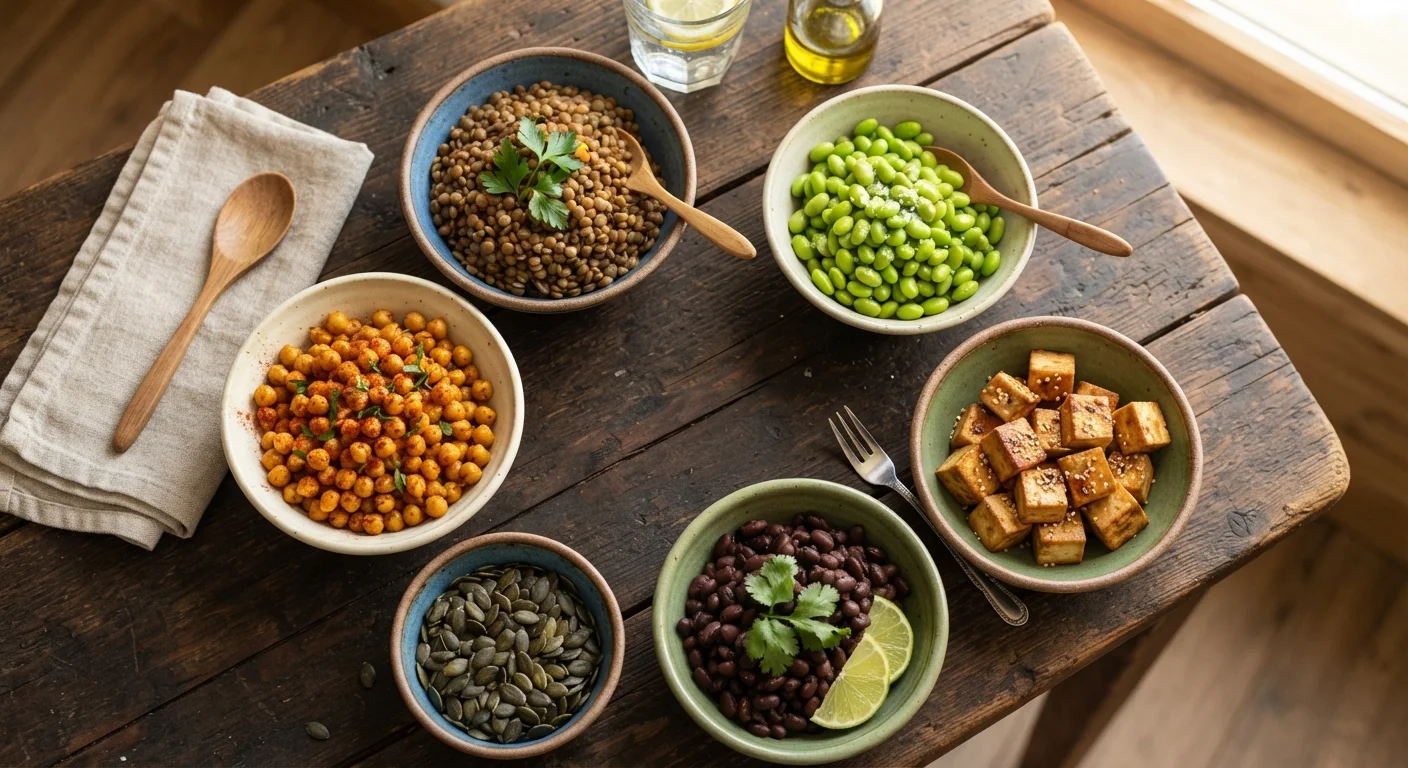
Plant-based proteins come from foods that originate in the plant kingdom and contribute meaningful amounts of protein per serving. The main categories include legumes (beans, lentils, chickpeas, peas), soy foods (tofu, tempeh, edamame), nuts and nut butters, seeds (hemp, pumpkin, sunflower), and certain whole grains such as quinoa and farro.
Unlike animal proteins, most plant sources deliver protein alongside significant amounts of dietary fiber, complex carbohydrates, and a distinct micronutrient profile. This dual nutritional role is central to understanding both their benefits and limitations. See our practical framework for balanced meals for context on how protein fits into the full picture.
The Advantages of Plant-Based Proteins
Plant proteins bring several well-documented benefits that extend beyond the protein content itself.
Deliver fiber alongside protein in one food
Most plant protein sources are also rich in dietary fiber, which supports digestive health, blood sugar regulation, and sustained fullness — benefits animal proteins do not provide.
Generally more affordable than animal proteins
Dried lentils, canned beans, and tofu are consistently among the least expensive protein options available, making them accessible across income levels.
Rich in protective micronutrients and phytochemicals
Legumes and seeds contribute meaningful amounts of potassium, magnesium, folate, and antioxidant compounds that support overall health.
Soy is a nutritionally complete protein
Soy foods — including tofu, tempeh, and edamame — contain all essential amino acids in sufficient amounts, making them functionally comparable to animal protein.
Lower environmental footprint in most cases
Plant protein production generally requires less water and land and generates fewer greenhouse gas emissions than most animal protein production, according to life-cycle analyses.
~18g
Protein per cup of cooked lentils
According to USDA FoodData Central, one cup of cooked lentils also provides approximately 15 grams of dietary fiber.
~1 in 4
Americans eating plant protein daily
National dietary survey data suggests a minority of U.S. adults regularly include legumes as a protein source in their daily diet.
Because many plant protein foods are also high in fiber, they support digestive health and satiety. Lentils, for example, deliver roughly 18 grams of protein and 15 grams of fiber per cooked cup. Read more about why fiber matters in our article on fiber and why most Americans fall short.
Where Plant Proteins Fall Short
Understanding the limitations of plant proteins helps you plan more effectively rather than avoiding them altogether.
Most are incomplete proteins individually
With the exception of soy and a few others, most plant proteins lack adequate levels of one or more essential amino acids, requiring intentional dietary variety to compensate.
Lower protein density per calorie than many animal foods
A cup of cooked lentils provides roughly 18 grams of protein compared to about 26 grams in three ounces of chicken, meaning larger portions may be needed to meet protein targets.
Non-heme iron is less bioavailable
Plant foods contain non-heme iron, which the body absorbs less efficiently than the heme iron in meat. Certain dietary factors further inhibit absorption without intentional pairing strategies.
Antinutrients can reduce mineral absorption
Compounds like phytates and oxalates in legumes, grains, and some vegetables bind to minerals and reduce how much the body can absorb, though preparation methods substantially mitigate this.
Digestive discomfort is common for some people
The fermentable fibers (FODMAPs) in beans and lentils can cause gas and bloating, particularly for those not accustomed to high-fiber diets or those with irritable bowel syndrome.
Protein Quality: What 'Complete' Actually Means
A 'complete' protein contains all nine essential amino acids in amounts the body needs. Animal proteins and soy are naturally complete; most other plant proteins are not. However, 'incomplete' does not mean inadequate — the body does not require a complete protein in every meal or snack. Consuming a variety of plant protein sources throughout the day reliably meets essential amino acid needs for most healthy adults. If you have higher protein demands due to age, pregnancy, or specific health conditions, consulting a registered dietitian is advisable.
Antinutrients are compounds found in many legumes and grains — such as phytates and lectins — that can reduce the absorption of minerals like iron, zinc, and calcium. Soaking, sprouting, and cooking these foods substantially reduces antinutrient levels and improves digestibility.
Practical Tips for Getting the Most from Plant Proteins
A few straightforward strategies make plant proteins work harder for you nutritionally:
- Combine sources strategically. Pairing legumes with grains (think rice and beans, or hummus on whole-wheat pita) provides a full complement of essential amino acids across the meal.
- Vary your choices. Rotating between lentils, tofu, edamame, seeds, and chickpeas ensures you benefit from different micronutrient profiles.
- Pair iron-rich plant foods with vitamin C. Vitamin C significantly enhances non-heme iron absorption. Add bell pepper or citrus to lentil dishes for a practical boost.
- Consider preparation methods. Soaking dried beans overnight, rinsing canned legumes, and fermenting soy (as in tempeh) all improve digestibility and nutrient availability.
Plant proteins tend to be among the most affordable protein sources available, making them a practical cornerstone for budget-conscious eating. Our guide to eating well on a tight budget explores this further. When assessing whether your weekly groceries cover your nutritional bases, the weekly grocery nutrition audit can be a helpful tool.
This article is for general informational and educational purposes only and does not constitute medical or dietary advice. Consult a registered dietitian or qualified healthcare professional for guidance tailored to your individual health needs.
The content on this site is for informational purposes only and is not a substitute for professional advice. Always consult a qualified professional for guidance specific to your situation.