

The Myth That Healthy Eating Is Expensive
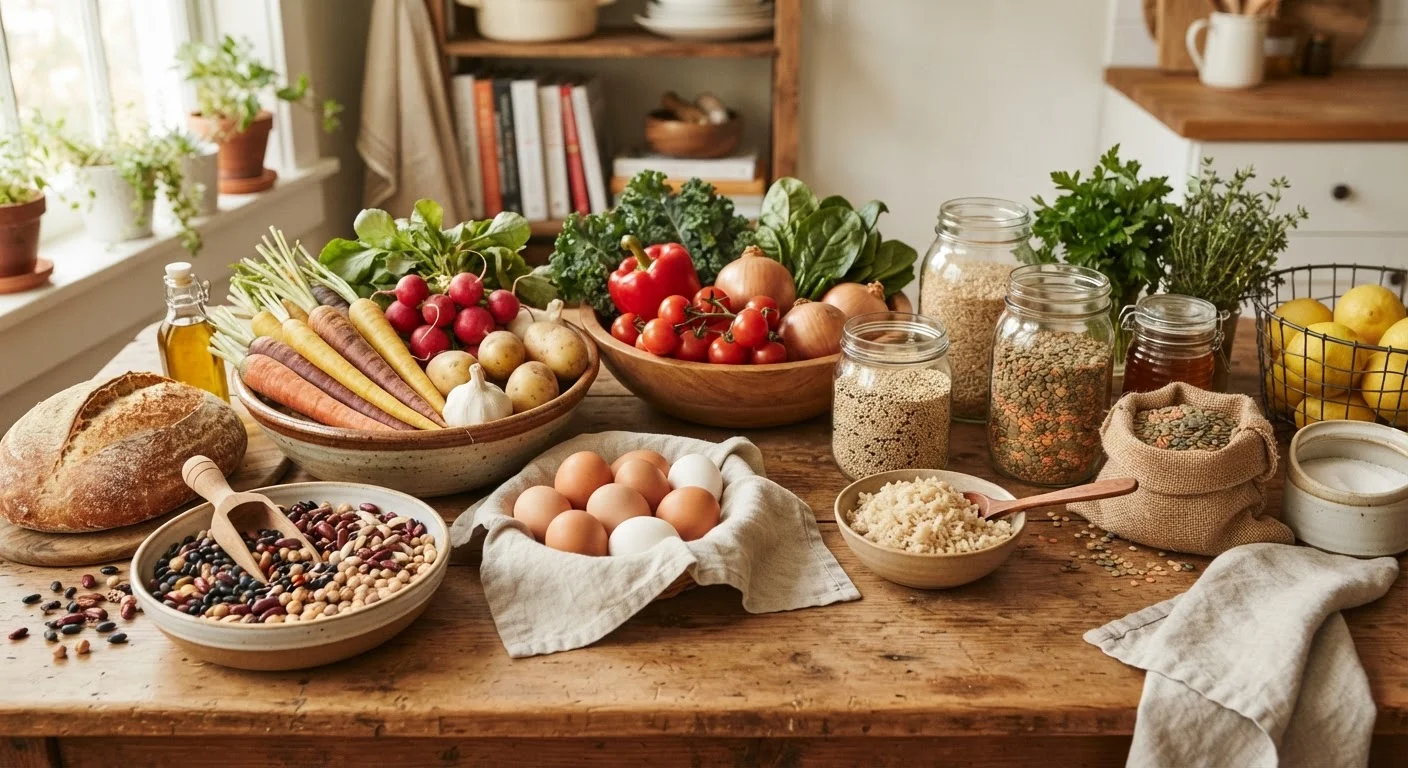
One of the most persistent nutrition myths is that eating well requires a generous food budget. In reality, many of the most nutrient-dense foods available — dried beans, lentils, oats, eggs, canned fish, and frozen vegetables — are also among the most affordable items in any grocery store. The challenge isn't access to cheap nutritious food; it's knowing where to look and how to plan.
If you're new to thinking strategically about your diet, our beginner's guide to eating intentionally covers the nutritional fundamentals that make budget decisions easier. Understanding what your body needs is the first step to spending wisely on food.
Superfoods Aren't Required
Marketing often elevates expensive ingredients — certain berries, seeds, or powders — as nutritional essentials. The evidence base for most of these claims is limited. Everyday foods like eggs, oats, canned sardines, and frozen broccoli deliver comparable or superior nutrition at a fraction of the cost. For a deeper look at which nutrition claims hold up to scrutiny, see our guide on common nutrition myths.
Practical Strategies That Make a Measurable Difference
The following evidence-informed practices can help most households eat more nutritiously without increasing their grocery spend — and in many cases, while reducing it.
Build meals around legumes as your primary protein source several times per week.
Dried or canned beans and lentils are among the most cost-effective sources of protein, fiber, and key micronutrients like iron and folate. They are shelf-stable, versatile, and require minimal preparation. Replacing even two or three meat-based meals per week with legume-based ones can meaningfully reduce food costs.
Choose frozen vegetables over fresh when fresh is out of season or out of budget.
Frozen vegetables are harvested at peak ripeness and flash-frozen, which preserves most of their nutrients. Research published in food science literature has found that frozen produce is often nutritionally comparable to fresh. Frozen vegetables also reduce waste because they're used only as needed.
Plan your meals for the week before you shop, then write a specific list and stick to it.
Meal planning reduces unplanned purchases, lowers food waste, and ensures you buy ingredients that actually get used. The USDA estimates that American households waste a significant portion of the food they purchase — planning is one of the most reliable ways to shrink that figure and its cost.
Buy staples in bulk when storage allows and the per-unit price is lower.
Oats, rice, dried beans, pasta, and canned goods are safe to store for extended periods and are almost always cheaper per serving when purchased in larger quantities. This strategy requires upfront cost but reduces per-meal expenses over time.
Choose store-brand or generic products over name brands for pantry staples.
Store-brand canned beans, tomatoes, tuna, and frozen vegetables are subject to the same food safety standards as branded equivalents and are nutritionally identical in most cases. The price difference can be substantial across a full cart.
Quick Wins You Can Apply This Week
You don't have to overhaul your entire grocery routine overnight. Starting with one or two changes creates momentum without feeling overwhelming. Here are the highest-impact actions you can take immediately.
For a structured way to evaluate whether your weekly haul actually covers your nutritional bases, the weekly grocery nutrition audit offers a practical checklist worth bookmarking.
Where Nutrition Science Supports the Budget Approach
Dietary research consistently finds that diets built around legumes, whole grains, vegetables, and minimally processed proteins are associated with positive health outcomes — and these happen to be some of the most affordable food categories available. The difference between whole and processed foods is worth understanding, because not all processing is harmful, and this distinction can help you make smarter trade-offs at the store.
~30–40%
Food wasted by U.S. households annually
According to USDA estimates, American families discard roughly 30–40% of the food supply — meal planning is one of the most effective interventions.
~$1.50
Estimated cost per serving of cooked dried lentils
Dried lentils routinely provide one of the lowest cost-per-gram-of-protein ratios among common grocery store foods, including both plant and animal sources.
Fiber is one nutrient most Americans fall short on, and it's abundant in low-cost foods like lentils, oats, and frozen peas. Our guide on dietary fiber and how to eat more of it explains why it matters and how easy it is to increase intake affordably. Similarly, if you're relying more on plant proteins to keep costs down, plant-based protein sources offers a balanced look at how they compare nutritionally.
This article is for general informational purposes only and does not constitute medical or nutritional advice. Consult a registered dietitian or qualified healthcare professional for guidance specific to your health needs.
The content on this site is for informational purposes only and is not a substitute for professional advice. Always consult a qualified professional for guidance specific to your situation.