

Why Routine Garage Door Maintenance Matters
Your garage door is likely the largest moving part of your home — and one of the most frequently used. The average household opens and closes their garage door multiple times a day, adding up to thousands of cycles each year. Without periodic upkeep, the hardware wears down quietly until something fails, often at the worst possible moment.
The good news is that a basic maintenance routine takes less than an hour and requires only a few simple tools. Knowing which tasks fall within a homeowner's skill set — and which carry genuine safety hazards — is the key to keeping that door running smoothly without putting yourself at risk. For a broader look at staying on top of all your home's systems, the annual property ownership audit is a helpful companion resource.
Safe DIY Tasks: Inspect, Test, and Lubricate
There are three categories of maintenance work that most homeowners can perform confidently without specialized training.
Perform a monthly visual inspection of all visible hardware.
Bolts, brackets, rollers, and hinges loosen over time from the vibration of repeated operation. Catching a loose bolt before it falls out prevents track misalignment or a door that jams mid-cycle.
Test door balance twice a year using the manual release.
An unbalanced door puts uneven strain on the opener motor, shortening its lifespan. Detecting imbalance early tells you whether the spring tension needs professional adjustment before the opener burns out.
Lubricate rollers, hinges, and the opener's drive chain or screw every six months.
Metal-on-metal friction wears down components and creates the grinding or squealing sounds many homeowners notice. Proper lubrication extends the life of rollers and hinges significantly.
Test the auto-reverse safety feature monthly.
Federal safety standards have required auto-reverse on garage door openers sold since 1993. If this feature fails, the door can close on a person, pet, or vehicle without stopping.
Check and clean the photo-eye sensors every few months.
Dirty or misaligned photo-eye sensors prevent the door from closing properly, which many homeowners misidentify as an opener problem. Keeping them clean and aligned ensures reliable safety function.
Beyond these practices, listen carefully each time the door operates. Grinding, squeaking, or rattling sounds almost always point to a specific component that needs attention — catching them early keeps minor issues from escalating.
Choosing the Right Lubricant Matters
Reach for a lithium-based or silicone-based lubricant formulated for garage doors rather than a general-purpose spray. General-purpose penetrating sprays can attract dust and debris, which accelerates wear on rollers and hinges over time. Your local hardware store will typically carry garage-door-specific products in the door hardware aisle.
Quick Wins You Can Do This Weekend
If you're not sure where to start, these actions have the highest impact for the least amount of effort. Pick one or two and build from there.
What to Leave to a Licensed Professional
Not all garage door work is safe for DIY — and the consequences of getting it wrong can be severe.
Torsion Spring Warning: High Injury Risk
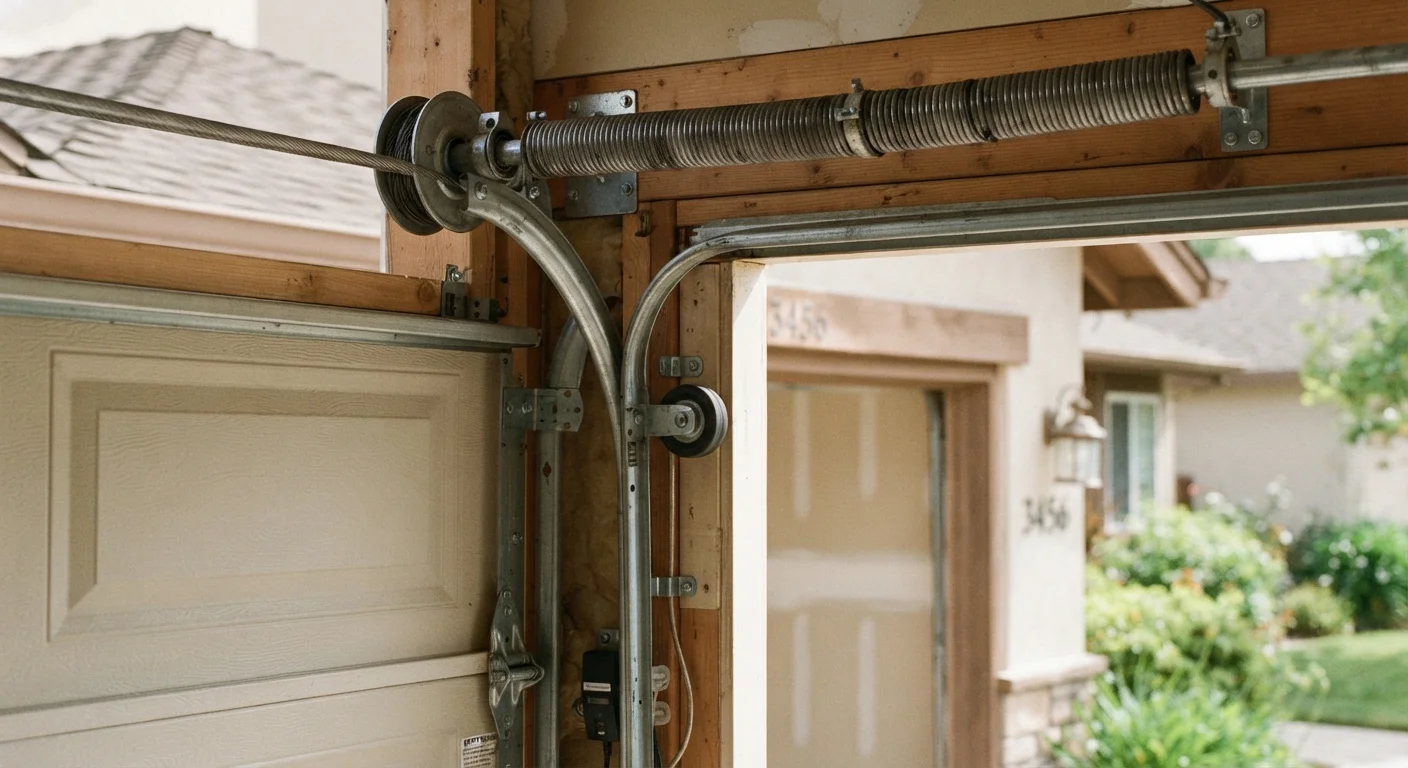
Torsion springs and lift cables are under extreme mechanical tension and are responsible for a disproportionate share of serious garage door injuries. Do not attempt to adjust, repair, or replace these components yourself. If you notice a broken spring (often visible as a gap in the coil) or a fraying cable, stop using the door manually and call a licensed garage door technician. Operating the door when these components are compromised can cause sudden, uncontrolled movement.
Torsion springs are the coiled metal springs mounted horizontally above the door. They store an enormous amount of mechanical energy to counterbalance the door's weight. When a torsion spring fails or is incorrectly adjusted, it can snap with enough force to cause serious injury. This is work for a trained technician with the proper tools — not a weekend project.
Cable replacement falls into the same category. The lift cables run alongside the door and are also under high tension when the door is closed. Fraying or broken cables should be reported to a professional immediately rather than inspected hands-on.
Track realignment is another task that may look simple but can cause the door to bind, fall, or damage the opener if done incorrectly. If a track appears bent or significantly out of plumb, schedule a service call.
The same logic that applies to knowing when to call a mechanic for your car applies here — some jobs require specialized knowledge and equipment. The DIY vs. shop guide captures this thinking well across different maintenance contexts.
~20,000
Garage door-related injuries treated annually in U.S. ERs
According to U.S. Consumer Product Safety Commission data, garage doors and openers account for an estimated 20,000 emergency room visits per year, with spring and pinch-point injuries among the leading causes.
10–15 years
Typical lifespan of quality garage door hardware
Industry guidance from garage door trade associations generally estimates that well-maintained rollers, hinges, and springs can last 10 to 15 years under average residential use before needing replacement.
Building a Simple Maintenance Schedule
Consistency is more valuable than perfection. A twice-yearly inspection — once in spring, once in fall — gives you enough touchpoints to catch developing problems before winter weather or heavy summer use stresses the system further.
Keep a brief log each time you inspect the door: the date, what you lubricated, anything that looked worn, and whether you called a technician. This record is useful if you ever sell your home or need to describe symptoms to a repair company.
“The garage door is often the most neglected mechanical system in a home, yet it operates daily under significant mechanical stress. A simple twice-yearly maintenance routine — combined with knowing when to call a professional — can double or triple the life of the system.”
— International Door Association, North American trade association representing garage door professionals and manufacturers
If you're already in the habit of reviewing your home's systems on a schedule, a garage door check fits naturally into that routine — much the way property ownership audits encourage homeowners to take stock of what they own and maintain.
The content on this site is for informational purposes only and is not a substitute for professional advice. Always consult a qualified professional for guidance specific to your situation.