

Our Verdict
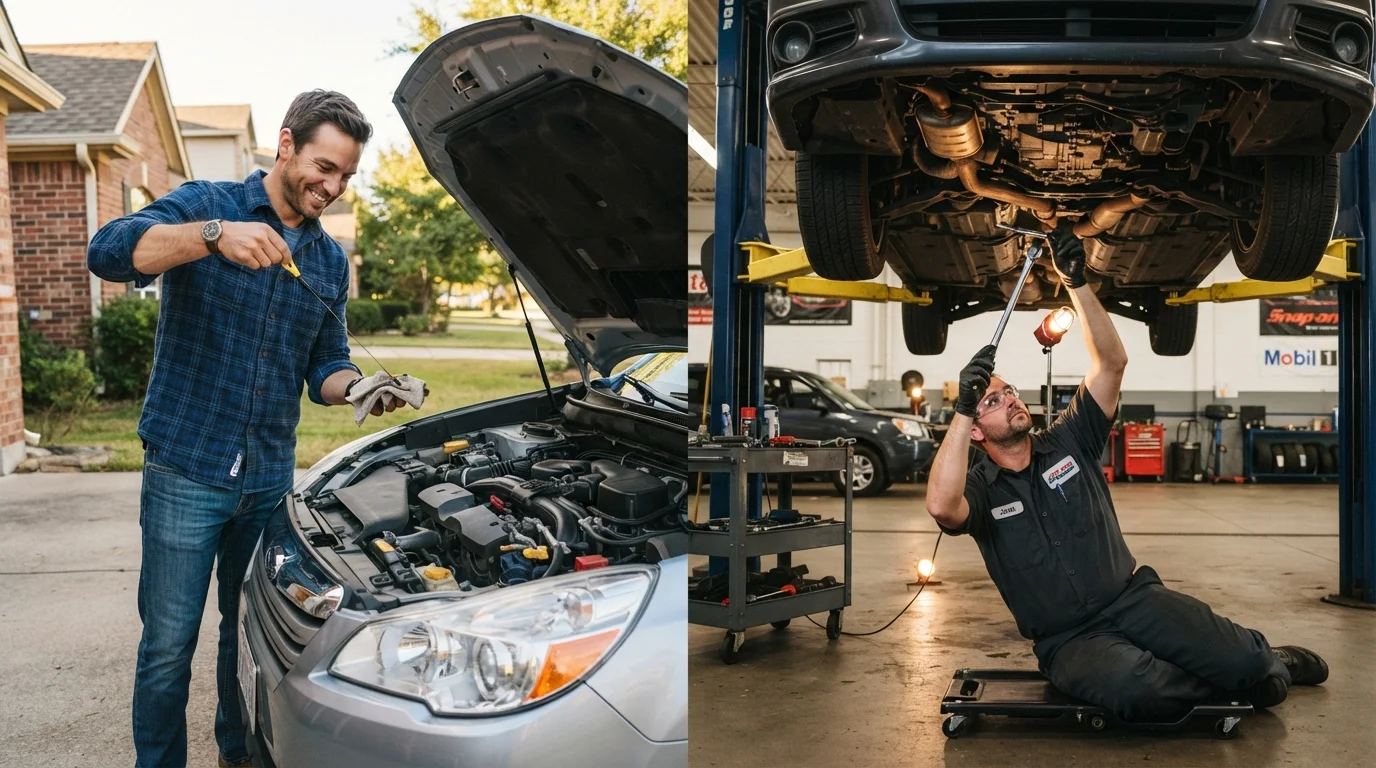
DIY maintenance makes good sense for simple, low-risk tasks that don't require specialized equipment or put safety systems at risk. For anything involving brakes, steering, structural components, or advanced diagnostics, a qualified mechanic is the right call. The smartest approach is knowing your limits before you start - not after.
| Best for | Recommended |
|---|---|
| Drivers comfortable with basic tools and routine upkeep | DIY Maintenance |
| Safety-critical repairs and complex diagnostics | Professional Shop |
| Drivers without specialized tools or garage space | Professional Shop |
| Those wanting to save money on predictable, low-risk tasks | DIY Maintenance |
Why the DIY vs. Shop Question Actually Matters
Most drivers fall somewhere between two extremes - the person who never opens the hood and the one who rebuilds engines on weekends. The vast majority of us are somewhere in the middle, capable of handling some things ourselves but not others. Getting this distinction right isn't just about saving money. It's about not accidentally creating a safety problem while trying to avoid a repair bill.
For a broader look at what your car needs over its lifetime, see our practical owner's maintenance overview. This article focuses specifically on where the DIY/shop line sits - and why.
Your Owner's Manual Is Underrated
Before deciding whether a job is DIY-friendly, check your owner's manual. It lists manufacturer-specified intervals, fluid types, and torque values - details that matter more than most general guides. Many manuals also flag which procedures require dealer or specialist tools, which is a useful signal to take the job to a shop.
Tasks That Belong in Your Driveway
A solid category of maintenance jobs is genuinely accessible to anyone willing to follow instructions carefully and work methodically. These tasks typically involve no risk to safety systems, require inexpensive tools, and have clearly visible results you can verify.
- Engine air filter replacement: Usually a matter of unclipping a housing, swapping the filter, and snapping it back. Takes minutes.
- Wiper blade replacement: Manufacturers design these to be swapped without tools. Your car's manual tells you the right size.
- Fluid top-offs: Checking and topping off washer fluid, coolant (when the engine is cold), and power steering fluid are low-risk tasks. Our guide to checking your car's fluid levels walks through each one.
- Battery terminal cleaning: Corroded terminals are common and cleaning them with a wire brush and baking soda solution is straightforward - just disconnect the negative cable first.
- Cabin air filter swap: Often located behind the glove box. Check your owner's manual; most take under ten minutes.
The common thread: these jobs are reversible, low-stakes, and use parts that are easy to inspect before and after.
Tasks That Belong in a Shop
Other jobs look deceptively simple but carry real consequences if done incorrectly. The deciding factors are usually: Does this touch a safety system? Does it require specialized tools most people don't own? Could a mistake make the vehicle unsafe to drive?
Don't Let YouTube Confidence Become Overconfidence
Video tutorials are genuinely useful for understanding what a job involves - but watching a brake job once doesn't substitute for hands-on experience with the specific tools and conditions your car presents. A repair done incorrectly on a safety system can create a hazard that isn't immediately obvious. If a job gives you pause, trust that instinct.
- Brake system work: Replacing brake pads sounds approachable, but incorrect installation - wrong torque specs, contaminated rotors, improperly seated calipers - can cause brake failure. This is not a category for learning on the fly.
- Suspension and steering components: Ball joints, tie rod ends, and wheel bearings affect how your car handles and stops. Improper installation can cause loss of control.
- Airbag system repairs: Any work near airbag components requires specific tools and knowledge to avoid accidental deployment, which can cause serious injury.
- Transmission work: Internal transmission repairs involve precision tolerances and specialized equipment that most home shops simply don't have.
- Advanced diagnostics: A check engine light can mean dozens of things. A shop's diagnostic scan tools read data that basic consumer code readers often miss.
If you do end up in a shop and feel uncertain about what you're being told, our article on talking to a mechanic without getting lost in the jargon can help you ask the right questions.
How to Make the Call: A Practical Framework
Before starting any job, run through these four questions:
- Does this affect a safety-critical system? Brakes, steering, tires, suspension, and restraint systems (airbags, seatbelts) all qualify. When in doubt, default to a professional.
- Do I have the right tools? Improvising with the wrong socket size or skipping a torque wrench on critical fasteners creates new problems.
- Can I verify the result? If you can't confirm the job was done correctly - either visually or through testing - you're flying blind.
- What's the worst-case scenario? A poorly installed wiper blade means a streaky windshield. A poorly installed wheel bearing can mean a wheel separating at highway speed. Weight consequences accordingly.
| DIY Maintenance | Professional Shop | |
|---|---|---|
| Typical cost | Parts only; labor is free | Parts plus labor charges |
| Safety risk | Low for routine tasks | Managed by trained technicians |
| Tools required | Basic hand tools usually sufficient | Specialized equipment available |
| Best task types | Filters, fluids, wipers, batteries | Brakes, suspension, diagnostics, transmission |
| Skill requirement | Beginner to intermediate | Professional certification |
| Error consequences | Usually low and fixable | Caught before leaving the shop |
The honest answer is that DIY maintenance saves money and builds useful knowledge - within its appropriate scope. Overreaching costs more to fix than simply going to a shop in the first place.
The content on this site is for informational purposes only and is not a substitute for professional advice. Always consult a qualified professional for guidance specific to your situation.