

What Hardiness Zones Actually Measure
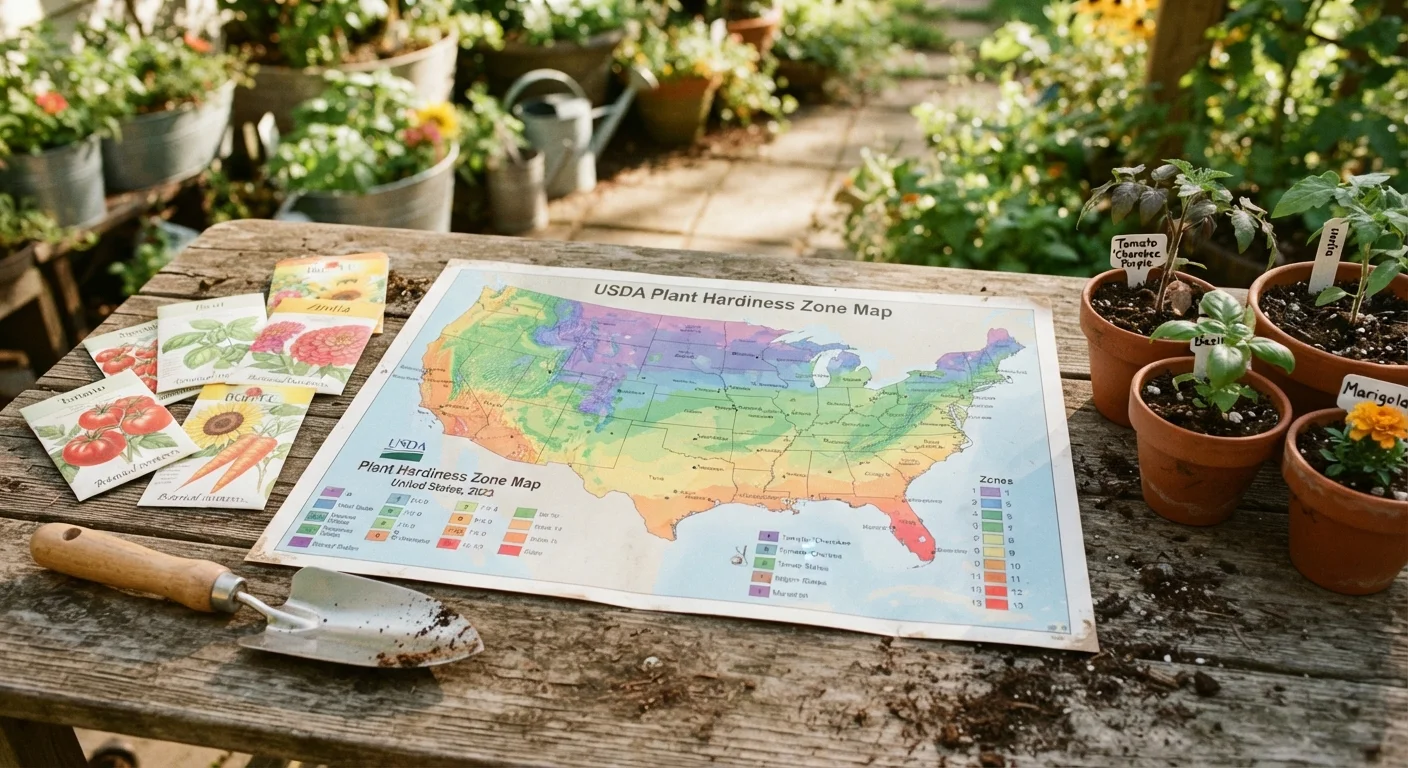
When you pick up a perennial at the garden center and the tag reads "Zones 4–8," that number has a precise meaning. USDA hardiness zones reflect the average annual extreme minimum temperature a given area experiences — in other words, how cold it typically gets on the coldest night of the year. Zone 1, found in interior Alaska, dips below -60°F. Zone 13, covering parts of Hawaii and Southern California, rarely falls below 60°F.
What hardiness zones do not measure is equally important to understand. They say nothing about summer heat, humidity, rainfall, soil type, or the length of the growing season. A plant listed as "hardy to Zone 7" will survive a Zone 7 winter, but that doesn't mean it will necessarily thrive if your summers are unusually wet or your soil is heavy clay.
Hardiness Zones vs. Growing Zones
You may hear the terms "hardiness zone" and "growing zone" used interchangeably, but they aren't exactly the same. "Hardiness zone" specifically refers to the USDA's cold-minimum system. "Growing zone" is an informal term that sometimes incorporates heat, rainfall, and season length. When reading plant labels, assume the zone number refers to the USDA Hardiness Zone system unless otherwise noted.
How to Find and Use Your Zone
Finding your zone takes about 30 seconds. The USDA's official Plant Hardiness Zone Map (planthardiness.ars.usda.gov) lets you enter any U.S. ZIP code to get your zone and subzone. Gardeners in transitional climates — such as the mid-Atlantic or the Pacific Northwest foothills — are often surprised to find their subzone differs from a neighbor's just a mile away.
Once you know your zone, use it as the first filter when selecting plants. Look for the zone range on nursery tags, seed packets, or catalog listings. Choose plants whose rated range includes your zone. A plant rated for Zones 5–9 is a safe match if you live in Zone 6; a plant rated for Zones 8–11 will likely die in your first hard frost if you're in Zone 6.
See our season-by-season gardening calendar for guidance on timing your planting once you know your zone.
Push Your Zone With Mulch
If a plant is rated one zone warmer than yours, heavy mulching in late fall can often bridge the gap. Apply 3–4 inches of shredded bark or straw around the root zone after the ground begins to cool. This insulates roots against hard freezes and gives marginally hardy perennials a fighting chance through winter.
Microclimates: When Your Yard Breaks the Rules
Your official zone is an average — your yard may have pockets that behave differently. These are called microclimates, and they can shift conditions by a full zone in either direction. Common examples include:
- South-facing walls that absorb and radiate heat, creating a warmer microclimate ideal for marginally hardy plants.
- Low-lying areas where cold air pools on still, clear nights, making them colder than surrounding ground.
- Urban heat islands that keep city gardens warmer than suburban or rural areas in the same ZIP code.
Experienced gardeners learn to exploit these microclimates deliberately — tucking a borderline-hardy fig against a brick wall, or avoiding frost-sensitive plants in a low spot near the lawn.
13
USDA hardiness zones covering the U.S.
The USDA Plant Hardiness Zone Map divides the country into 13 primary zones, each split into 'a' and 'b' subzones.
10°F
Temperature difference between each zone
Each numbered zone represents a 10°F range in average annual extreme minimum temperature, with subzones spanning 5°F each.
2023
Year of the most recent USDA zone map update
The 2023 revision shifted roughly half of U.S. locations to a warmer half-zone compared to the previous 2012 map, reflecting updated 30-year climate data.
Zones as a Starting Point, Not the Final Word
Hardiness zones are an essential tool, but they're one piece of a larger puzzle. Two gardens in the same zone can perform very differently depending on soil drainage, wind exposure, and local rainfall patterns. A Zone 7 gardener in dry Arizona faces completely different challenges than a Zone 7 gardener in humid Virginia.
For a more complete picture, some gardeners cross-reference the USDA Hardiness Zone with the American Horticultural Society's Heat Zone Map to understand both cold tolerance and heat stress. Additionally, native plant resources organized by ecoregion — rather than just temperature — can help you select plants genuinely adapted to your local conditions.
Think of your hardiness zone as the minimum qualification a plant must meet to survive your winters. Everything beyond that — how well it grows, blooms, and produces — depends on the full set of conditions you provide.
Frequently Asked Questions
Visit the USDA Plant Hardiness Zone Map website at planthardiness.ars.usda.gov and enter your ZIP code. The map will display your exact zone and subzone instantly. Most nursery tags and seed packets also list the zones a plant is rated for.
Both fall within Zone 6, but Zone 6a has minimum temperatures between -10°F and -5°F, while Zone 6b ranges from -5°F to 0°F. These subzones help gardeners make finer-grained decisions, especially for marginally hardy perennials and shrubs.
Yes, but with added effort. You can grow plants rated one zone warmer by using frost cloth, mulching heavily, or growing them in containers you bring indoors. Growing plants rated colder than your zone is also possible — they simply may not go dormant properly in mild winters.
No. USDA hardiness zones only reflect minimum winter cold. The American Horticultural Society publishes a separate Plant Heat Zone Map that tracks the number of days per year above 86°F, which is useful for selecting plants that tolerate heat as well as cold.
The USDA updates the map periodically as climate data accumulates. The most recent major revision was released in 2023 and reflected about a half-zone warming shift in many parts of the country compared to the previous 2012 edition.
The content on this site is for informational purposes only and is not a substitute for professional advice. Always consult a qualified professional for guidance specific to your situation.