

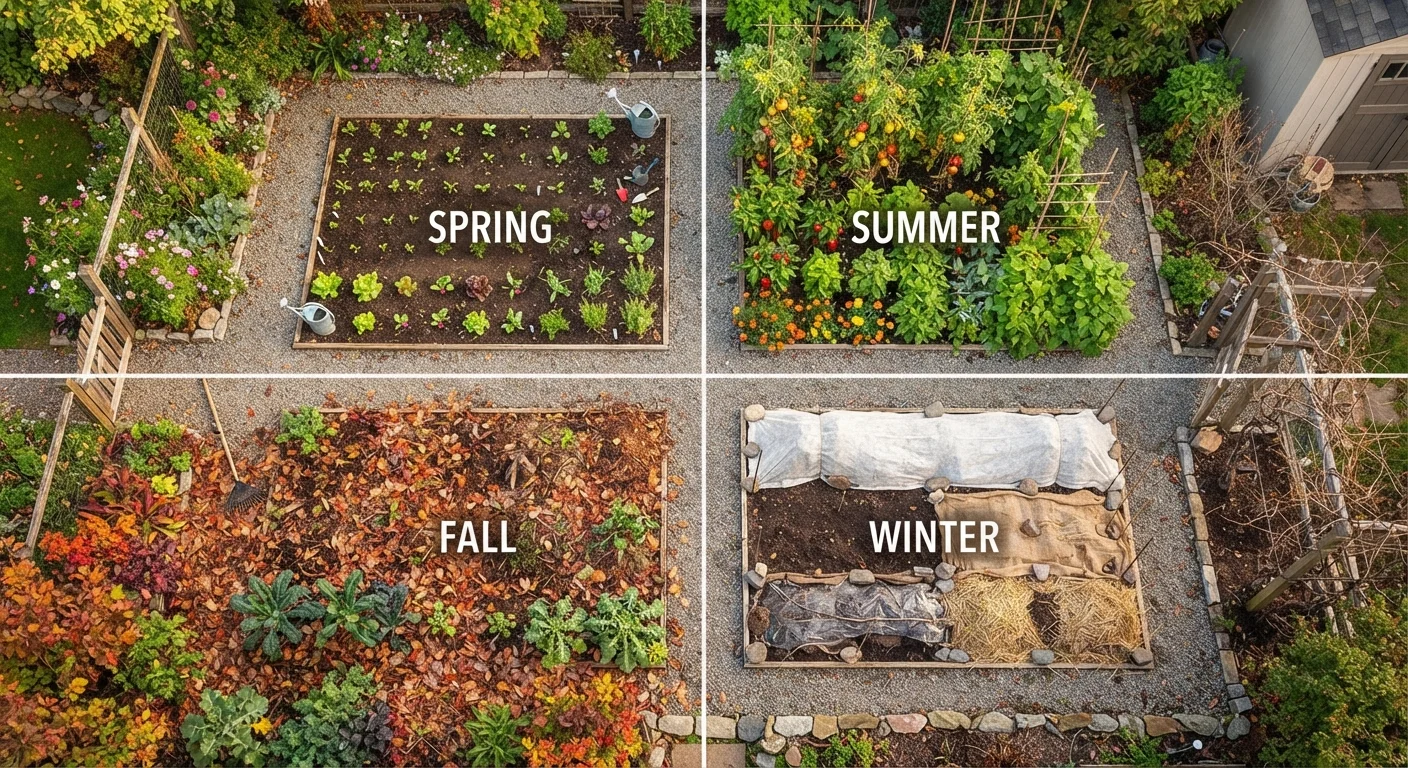
How to Use This Gardening Calendar
Gardening success is largely a matter of timing. Plants need to go in the ground when soil temperature, sunlight hours, and frost risk align — and the same is true for pruning, amending, and putting beds to rest. This calendar gives you a season-by-season framework of the most important tasks, organized so you always know what's coming next.
Keep in mind that specific timing depends on where you live. The tasks below assume a temperate U.S. climate with four distinct seasons. Gardeners in warmer zones may start earlier in spring and plant again in fall; those in colder zones may have shorter windows. Before digging in, it helps to know your USDA hardiness zone — it's the single most useful piece of location data a gardener can have.
| Cool-season planting window | 2–4 weeks before last spring frost |
| Warm-season soil temp minimum | 60°F at root zone |
| Recommended mulch depth | 2–3 inches for moisture retention |
| Indoor seed start lead time | 6–10 weeks before transplant date |
| Fall planting cutoff | 6–8 weeks before first expected frost |
| Winter mulch depth for perennials | 3–4 inches over root zone |
Winter and Early Spring: Plan, Start Seeds, and Prepare
The gardening year begins long before the last frost. In late winter (roughly January–February in most zones), use downtime to review last season's notes, order seeds, and sketch out your beds. Rotate crops on paper before you rotate them in the ground.
Start seeds indoors. Most warm-season crops — tomatoes, peppers, eggplant — need 6–10 weeks of indoor growing before they can be transplanted. Count back from your average last frost date to find your start window. Seed packet labels list days to maturity and indoor start timing, making them your best planning reference.
Prep beds early. As soon as soil is workable (it shouldn't be frozen or muddy enough to compact), clear dead plant matter, top-dress with compost, and loosen compacted areas. See our garden bed prep checklist for a step-by-step approach. Prune dormant fruit trees and shrubs before buds swell — this is the window when cuts heal cleanly and disease pressure is lowest.
Last frost date
The average date after which freezing temperatures are unlikely in your area. It marks the safe window to transplant frost-sensitive plants outdoors. Your local cooperative extension office can provide this date for your county.
Hardiness zone
A USDA-defined geographic rating based on average annual minimum winter temperatures. It helps gardeners determine which plants can survive winters in their area.
Cover crop
A plant grown primarily to protect and enrich bare soil rather than for harvest. Common examples include winter rye, clover, and buckwheat. They suppress weeds and add organic matter when tilled under.
Deadheading
The practice of removing spent or faded flowers from a plant. It encourages continued blooming by preventing the plant from directing energy into seed production.
Direct sow
Planting seeds directly into outdoor garden soil rather than starting them indoors in containers first. Many root vegetables and quick-maturing crops perform best when direct-sown.
Spring: Plant Cool-Season Crops and Divide Perennials
Once nighttime temperatures stay consistently above freezing, cool-season crops can go directly into the ground. Lettuce, spinach, peas, radishes, and brassicas (broccoli, cabbage, kale) thrive in the 45–65°F range and can tolerate a light frost. Direct sow or transplant these 2–4 weeks before your last frost date.
Don't rush warm-season crops. Tomatoes, squash, cucumbers, and beans need consistently warm soil — at least 60°F at the root zone. Planting too early stunts growth and can set transplants back by weeks. Patience here pays off more than eagerness.
Spring is also the time to divide overcrowded perennial clumps, encouraging vigorous new growth. Understanding the difference between annuals and perennials helps you plan which plants return on their own and which need to be replanted each year. If you're establishing a new garden from scratch, our beginner's garden guide walks through soil, sunlight, and layout before your first shovel goes in.
6–10 weeks
Indoor seed start lead time before transplant
Most warm-season crops like tomatoes and peppers require this head start to be ready for outdoor planting after the last frost.
2–3 inches
Mulch depth to retain soil moisture
A consistent layer of organic mulch around plants can meaningfully reduce watering frequency during hot summer months.
60°F
Minimum soil temperature for warm-season crops
Planting tomatoes, squash, or peppers before soil reaches this threshold typically results in stunted growth or transplant shock.
Summer: Maintain, Harvest, and Watch for Problems
Summer gardening shifts from planting to maintaining. Water deeply and less frequently rather than shallowly every day — deep watering encourages roots to follow moisture downward, building drought resilience. Mulch around plants to retain moisture and suppress weeds; 2–3 inches of organic mulch can significantly reduce how often you need to water.
Harvest vegetables consistently. Leaving ripe produce on the vine signals the plant to stop producing; regular picking extends the harvest window. Deadhead annual flowers for the same reason — removing spent blooms redirects energy into new flower production.
Watch for pests and disease pressure, which peaks in heat and humidity. Practice companion planting strategies to naturally deter common insects. Also consider whether your layout — raised beds or in-ground rows — is working for you. Raised beds and in-ground plots each have drainage and pest-management trade-offs worth evaluating mid-season.
Check Local Frost Date Resources
Frost dates vary significantly even within the same state. Your county's cooperative extension service — often connected to a land-grant university — publishes locally verified last and first frost dates along with region-specific planting calendars. These are free, reliable, and far more accurate than national averages.
Fall: Plant for Spring, Feed the Soil, and Put Beds to Rest
Fall is arguably the most productive season for a gardener who plans ahead. Cool-season crops can go back in the ground 6–8 weeks before your first expected frost — giving you a second harvest of lettuce, kale, spinach, and root vegetables before winter sets in.
Feed your soil now. Incorporate finished compost into beds after the season's last harvest. If you're not already composting kitchen and garden scraps, fall is a great time to start — turn to our guide on composting at home to get a pile going that will be ready by spring. You can also plant a cover crop (like winter rye or clover) to protect bare soil, suppress weeds, and add organic matter when tilled under in spring.
Winterize your beds. After the first hard frost, cut back dead annuals and spent vegetable plants. Leave ornamental grasses and seed heads of perennials standing through winter — they provide habitat for beneficial insects and visual interest. Apply a 3–4 inch layer of mulch over perennial beds to insulate roots. Store tender bulbs (dahlias, cannas) indoors in a cool, dry location. A little fall effort dramatically reduces spring workload.
The content on this site is for informational purposes only and is not a substitute for professional advice. Always consult a qualified professional for guidance specific to your situation.