

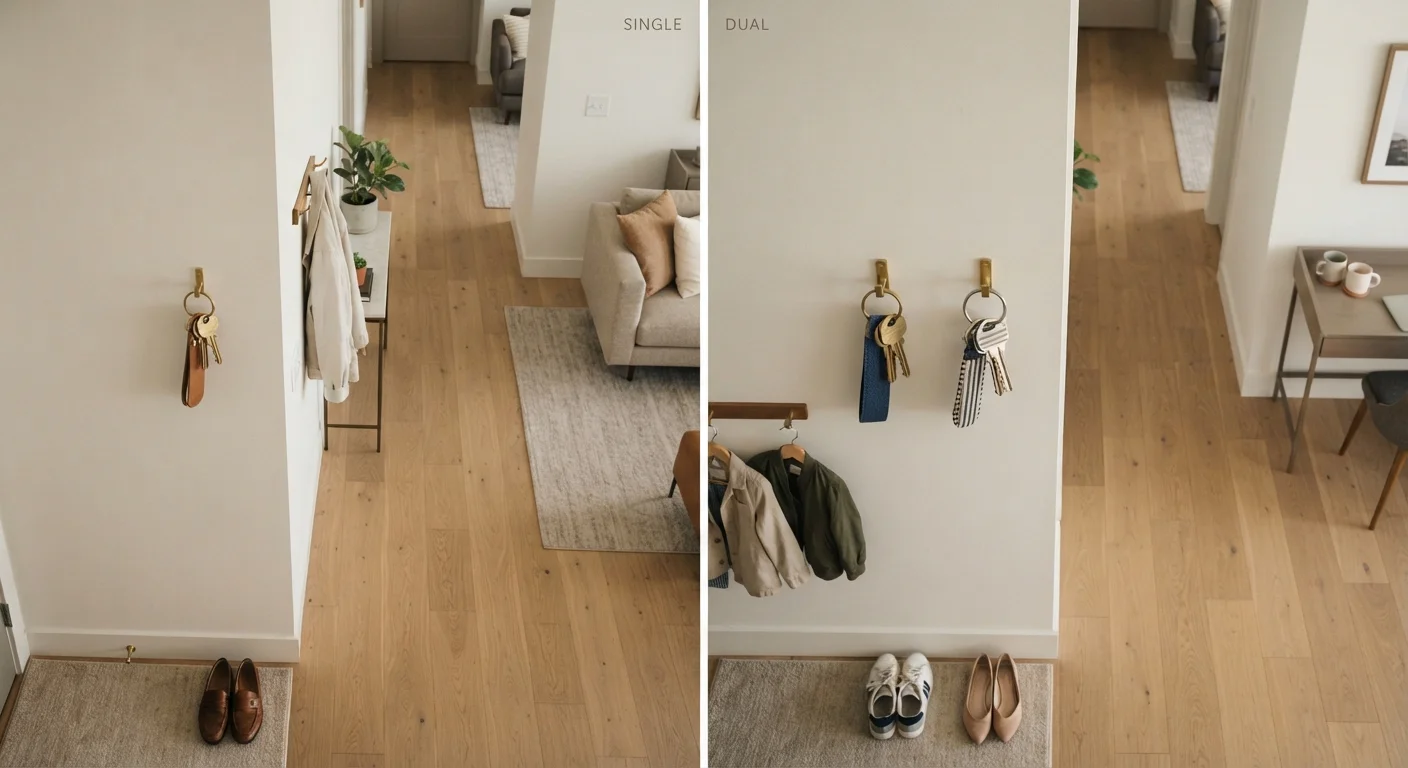
Option A
Sole Ownership
Complete control — and complete responsibility — in one person's hands.
Best for: Individual buyers who want uncomplicated title, full decision-making authority, and no shared liability.
Option B
Co-Ownership (Joint Vesting)
Shared rights and shared stakes, with rules that vary by structure.
Best for: Married couples, domestic partners, or co-buyers who want to hold property together and plan for inheritance.
What Vesting Actually Means
Vesting refers to how legal ownership of a property is held and recorded on the deed. It is not a minor technicality — it determines who can sell or refinance the home, how the property is treated if an owner dies, and what happens in the event of a creditor claim or legal dispute. Before you sign closing documents, understanding your vesting options is one of the most consequential decisions you will make.
For a broader look at the documents involved in establishing ownership, see how deeds and titles work. Vesting is the specific question of who is named on that deed and under what legal arrangement.
| Criterion | Sole Ownership | Co-Ownership (Joint Vesting) |
|---|---|---|
| Number of owners | One individual | Two or more people |
| Decision-making authority | Sole owner decides alone | All owners typically must agree |
| Liability exposure | Owner bears all liability | Shared, but varies by structure |
| Probate at death | Usually required unless trust exists | Avoided with joint tenancy survivorship |
| Transfer of interest | Owner may transfer freely | Depends on structure and state law |
| Unequal ownership shares | Not applicable | Allowed under tenancy in common |
| Estate planning flexibility | Requires will or trust to direct transfer | Survivorship may limit what heirs receive |
Sole Ownership: Full Control, Full Exposure
When a single individual holds title alone, the ownership structure is straightforward. That person has the exclusive right to sell, refinance, lease, or transfer the property without anyone else's consent. There are no co-owner agreements to negotiate and no shared decision-making to manage.
However, sole ownership also means sole liability. Creditors can pursue the property for the owner's debts, and at the owner's death, the property must pass through the owner's estate — typically via probate — unless a trust or beneficiary deed is in place. For anyone purchasing without a partner, understanding what happens to a home when the owner dies is essential forward planning.
~70%
Married couples who hold title jointly
According to the American Bar Association, the majority of married homeowner couples hold property in some form of joint ownership, though practices vary widely by state.
9 states
U.S. community property jurisdictions
Arizona, California, Idaho, Louisiana, Nevada, New Mexico, Texas, Washington, and Wisconsin follow community property rules that affect default spousal ownership.
Co-Ownership Structures: Rights Depend on the Arrangement
When two or more people hold title together, the specific form of co-ownership governs almost everything. The two most common forms in the U.S. are joint tenancy and tenancy in common.
Joint tenancy requires that all owners hold equal shares and acquire title at the same time. Its defining feature is the right of survivorship: if one owner dies, their share passes automatically to the surviving owner(s) without going through probate. This is often the preferred structure for married couples.
Tenancy in common is more flexible. Owners can hold unequal shares, and each can independently sell, transfer, or will their individual interest. There is no automatic survivorship — a deceased owner's share goes to their estate or named heirs. This structure is common among unmarried co-buyers or family members with differing financial contributions.
A detailed side-by-side breakdown is available in our guide to joint tenancy versus tenancy in common.
Vesting Can Be Changed After Closing
If you already own a property and want to change how title is held — for example, adding a spouse or restructuring co-ownership — it is legally possible through a new deed. However, the process varies by state, may trigger recording fees, and in some cases could affect your mortgage terms or property tax status. Always work with a licensed real estate attorney before making changes to an existing deed.
Community Property: A State-Level Factor for Married Couples
Nine U.S. states — including California, Texas, and Arizona — follow community property laws, which create a default presumption that property acquired during marriage is owned equally by both spouses, regardless of whose name appears on the deed. Some of these states also recognize community property with right of survivorship, combining the equal-ownership presumption with a probate-bypass feature.
If you are married and buying in a community property state, the vesting decision becomes more nuanced. Married buyers should consult a real estate attorney familiar with their state's laws before choosing how to hold title. Separately, title insurance can provide a layer of protection against claims on your ownership that predate your purchase, regardless of how you vest.
This article provides general educational information about property vesting and is not legal advice. Real estate and estate planning laws vary significantly by state. Consult a licensed real estate attorney or estate planning professional for guidance specific to your situation.
The content on this site is for informational purposes only and is not a substitute for professional advice. Always consult a qualified professional for guidance specific to your situation.