

Our Verdict
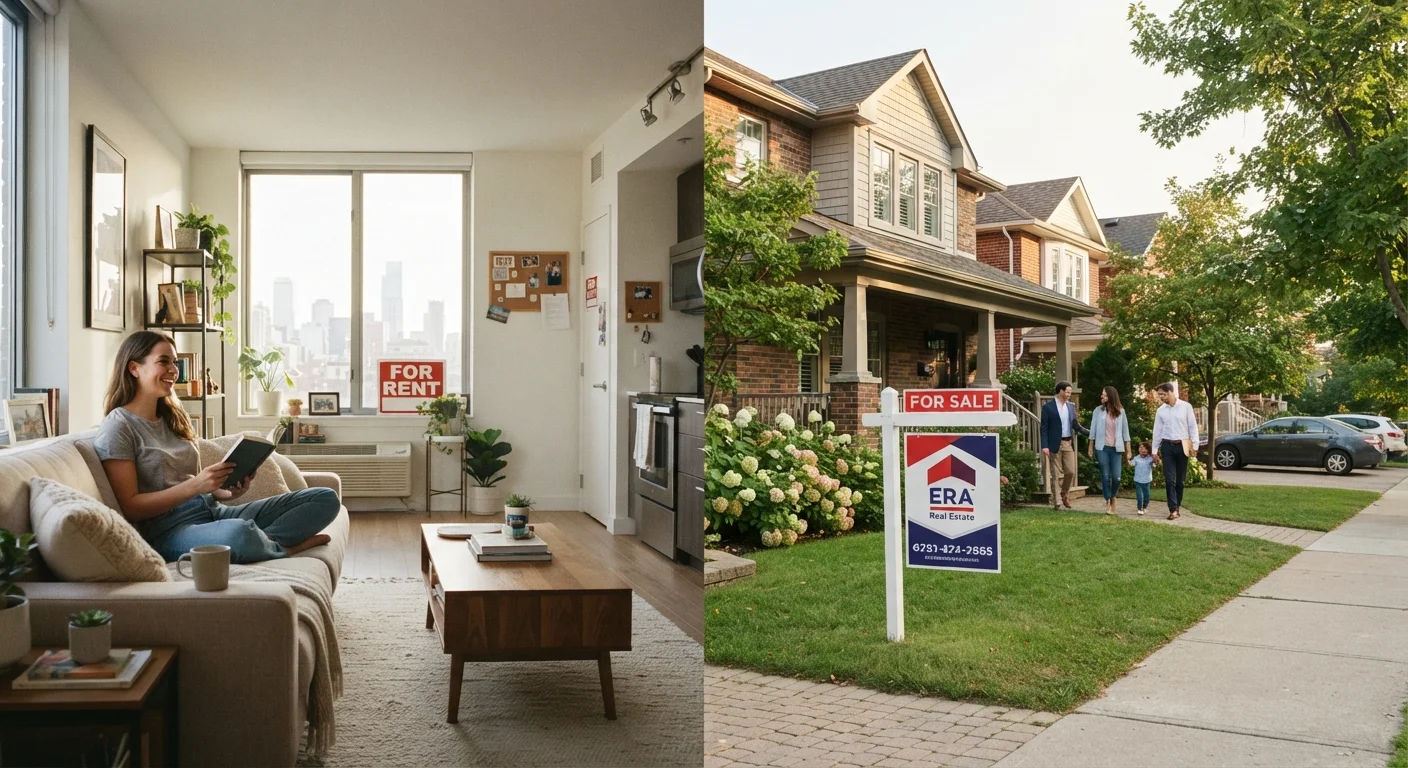
Renting and buying each serve different financial and lifestyle needs, and neither is a universally superior choice. The strongest predictor of whether buying makes financial sense is how long you plan to stay — generally five or more years. For those with stable income, a solid down payment, and long-term roots, ownership can build meaningful wealth. For those early in their careers, navigating transitions, or living in high-cost markets, renting is often the smarter, more flexible path.
| Best for | Recommended |
|---|---|
| Early-career renters or frequent movers | Renting |
| Families with stable income planning to stay 5+ years | Buying |
| Those in high-cost markets with limited savings | Renting |
| Those seeking long-term wealth building and housing stability | Buying |
Why This Decision Isn't One-Size-Fits-All
The rent-vs-buy debate is one of the most loaded conversations in personal finance — and one of the most frequently oversimplified. Owning a home is often described as the cornerstone of financial stability, while renting gets dismissed as "throwing money away." Neither framing is accurate.
The truth is that both options carry real costs, real benefits, and real risks. What makes the decision genuinely complex is that the right answer changes depending on your life stage, local housing market, financial health, and personal priorities. The financial comparison involves far more than monthly payments — it includes opportunity costs, tax implications, transaction costs, and your timeline.
Rather than declaring a winner, this guide walks through how the calculus actually shifts across different life stages so you can apply it honestly to your own situation.
Renting vs. Buying: A Side-by-Side Look
Before diving into life stages, it helps to understand the structural trade-offs between the two options.
| Renting | Buying | |
|---|---|---|
| Upfront costs | Security deposit, first/last month | Down payment, closing costs (2–5%) |
| Monthly cost predictability | Subject to rent increases at renewal | Fixed-rate mortgage stays constant |
| Flexibility to relocate | High — typically 30–60 days notice | Low — selling takes months and costs money |
| Maintenance responsibility | Landlord handles most repairs | Owner bears full cost and burden |
| Equity and wealth building | None — payments don't build ownership | Builds equity; may appreciate over time |
| Tax considerations | No property tax or mortgage interest deduction | Potential deductions; subject to tax law |
| Ideal time horizon | Short- to medium-term stays | Generally 5+ years to offset transaction costs |
One figure that often gets overlooked: the break-even point — the number of years it takes for buying to become cheaper than renting in the same market, after accounting for transaction costs, maintenance, and equity gains. In many U.S. metros, that threshold sits between five and seven years. Staying for less typically favors renting on a pure cost basis.
For a deeper look at how mortgage structure affects long-term ownership costs, see how fixed and adjustable-rate mortgages compare.
In Your 20s: Flexibility Often Outweighs Equity
Early adulthood is typically marked by career transitions, geographic mobility, and financial building blocks that aren't yet in place — a full emergency fund, a stable income trajectory, or a clear sense of where you want to live long-term.
For most people in this stage, renting makes practical sense. It preserves liquidity, keeps options open, and avoids the transaction costs of buying and selling quickly. Closing costs alone — typically 2–5% of the purchase price — can wipe out early equity gains if you move within a few years.
Build Your Financial Foundation First
Before buying, aim to have a stable emergency fund covering three to six months of expenses — separate from your down payment savings. Stretching financially to buy without a cushion leaves you vulnerable to unexpected costs like repairs or job loss. A healthy financial base makes homeownership far more sustainable and less stressful.
That said, buying young isn't categorically wrong. If you're in a stable market, have a solid down payment (ideally 20% to avoid private mortgage insurance), and plan to stay put, early ownership can compound meaningfully over time. The key question isn't your age — it's your timeline and financial foundation. If you're just starting out as a renter, this practical introduction to renting your first apartment covers what to expect from applications, costs, and landlords.
In Your 30s and 40s: Stability Shifts the Equation
For many households, the 30s and 40s represent a convergence of factors that favor ownership: career stability, growing families that benefit from school-district consistency, and more accumulated savings for a down payment.
Buying in this stage — especially in a market you intend to stay in — can function as both housing security and a long-term wealth-building tool. Mortgage payments build equity over time, and if the property appreciates, owners share in that gain. Renters, by contrast, are exposed to rent increases and have no claim to property value growth.
Don't Confuse Approval with Affordability
Mortgage lenders approve you based on what you can technically repay — not what's comfortable for your lifestyle. Being approved for a large loan doesn't mean you should borrow the full amount. Leave room in your budget for maintenance (commonly estimated at 1–2% of home value annually), insurance, property taxes, and unexpected repairs.
Still, buying in your 30s or 40s doesn't guarantee financial success. Overstretching on a purchase — buying at the top of your approval limit rather than your comfort zone — is a common and costly mistake. It's also worth consulting a licensed financial adviser about how homeownership fits into your broader financial picture, including retirement savings and any outstanding debt. See how the emergency fund vs. debt payoff trade-off can intersect with saving for a down payment.
In Your 50s and Beyond: Different Priorities, Different Calculations
Later-stage housing decisions often involve downsizing, relocation, or shifting from equity building to cost minimization. Homeowners who've built substantial equity may choose to sell and rent — freeing up capital, eliminating maintenance burdens, and gaining mobility for retirement.
Conversely, retirees or near-retirees who own their homes outright gain the significant advantage of predictable (non-rising) housing costs, which can be a valuable hedge against inflation on a fixed income.
Renting in this phase isn't a step backward — in high-cost cities or for those seeking lifestyle flexibility, it may be the most financially rational choice. The question is less about which path builds more wealth and more about which delivers the most stability and security for your specific circumstances. If you do decide to purchase at this stage and are considering sharing ownership, understanding joint tenancy vs. tenancy in common is worth the time.
This article is for general informational and educational purposes only and does not constitute financial, legal, or real estate advice. Consult a qualified financial adviser or real estate professional for guidance tailored to your personal situation.
The content on this site is for informational purposes only and is not a substitute for professional advice. Always consult a qualified professional for guidance specific to your situation.