

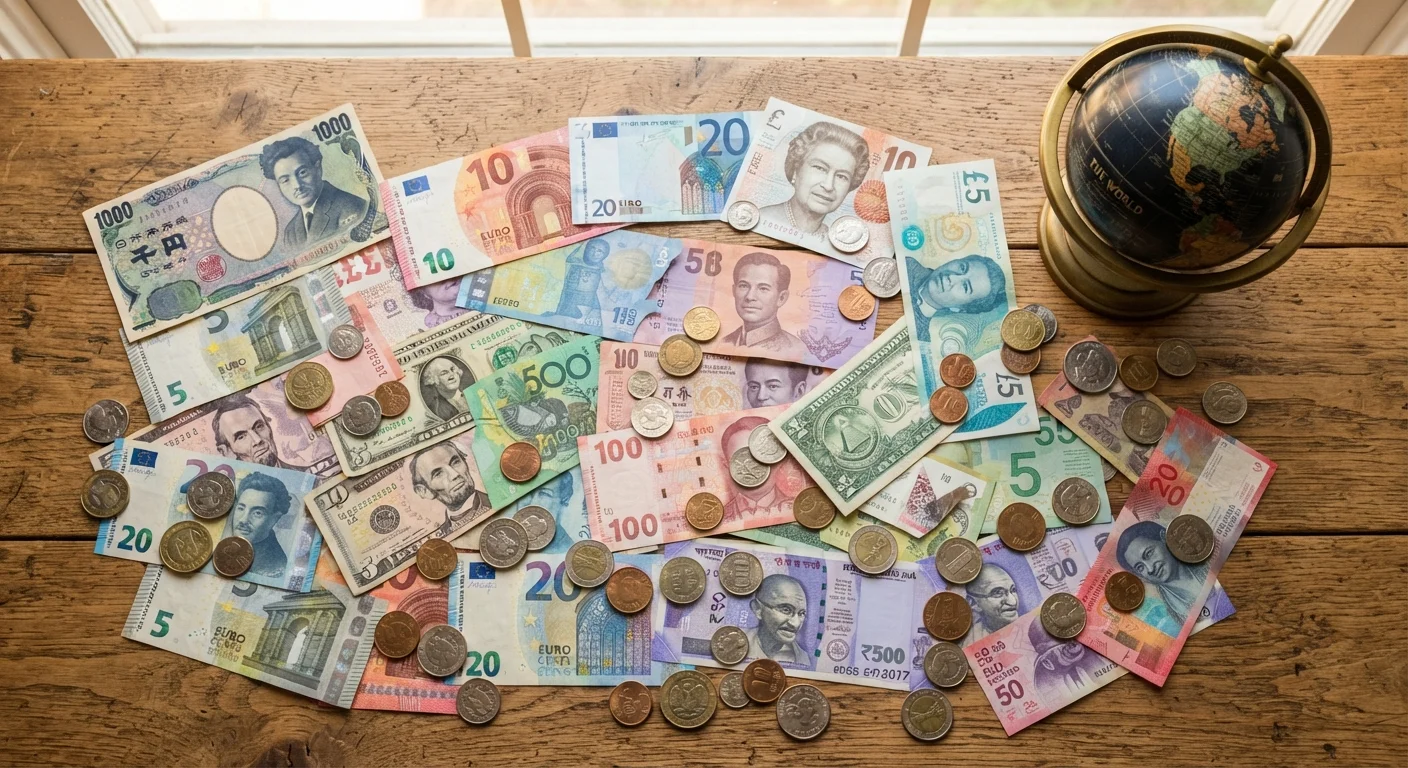
What Actually Happens When You Exchange Currency
Every time you convert dollars into euros, yen, pesos, or any other currency, you're participating in the global foreign exchange market — even if it feels as routine as swiping a card. The exchange rate is the price of one currency in terms of another, and it shifts continuously based on economic conditions, interest rates, and market activity.
The rate you see on financial sites is called the mid-market rate — essentially the midpoint between what buyers and sellers are trading at on the open market. Travelers rarely receive this rate directly. Banks, currency exchange services, and card networks all add a markup — their margin for providing the service. Understanding this gap helps you recognize when you're getting a reasonable deal versus an expensive one.
1–3%
Typical foreign transaction fee per purchase
Most major bank-issued cards charge between 1% and 3% on foreign currency transactions, according to general industry disclosures.
$180B+
Daily US dollar forex trading volume
The Bank for International Settlements reports that the US dollar is involved in the vast majority of global forex transactions, underscoring how actively exchange rates move.
5–15%
Typical airport kiosk markup over mid-market rate
Consumer finance analysts and travel organizations have documented airport currency exchange markups commonly ranging from 5% to over 15% above the mid-market rate.
Where You Exchange Money — and Why It Matters
Not all exchange options are created equal. Here's a quick breakdown of the most common ways travelers access foreign currency:
- Airport kiosks and hotel desks: Convenient, but notorious for the worst rates and highest fees. Use these only for urgent, small amounts.
- Local ATMs at your destination: Often one of the better options. Your bank's network pulls funds at a rate close to the mid-market rate, though your bank may charge an ATM fee and a foreign transaction fee. Check your account terms in advance.
- Your home bank before departure: Rates vary widely by institution. Some larger banks offer competitive rates for account holders ordering foreign currency in advance.
- Credit cards: Many cards process transactions at rates very close to the mid-market rate, making them excellent for purchases where cards are accepted — especially if your card waives foreign transaction fees.
Planning your currency strategy before you depart is a smart part of any trip budget. See our guide to building a realistic travel budget for how to factor in these costs.
Notify Your Bank Before You Travel
Before departing, let your bank and card issuers know your travel dates and destinations. This simple step helps prevent your card from being flagged for fraud when charges appear from abroad. Many banks allow you to set travel notifications through their mobile apps in just a few minutes.
The Dynamic Currency Conversion Trap
One of the most common — and costly — surprises for international travelers is dynamic currency conversion (DCC). This happens when a merchant's payment terminal or an ATM abroad offers to process your transaction in US dollars rather than local currency. It sounds helpful, but the exchange rate applied is set by the merchant's payment processor, not your bank, and it almost always works against you.
The rule of thumb: always choose to pay in the local currency. Selecting local currency lets your own bank or card issuer apply their exchange rate, which is typically more favorable. If a terminal asks "Would you like to pay in USD?" — decline.
Fees to Know Before You Go
Beyond the exchange rate itself, several fees can quietly inflate the true cost of spending money abroad:
- Foreign transaction fees: Added by your card issuer on purchases made in foreign currencies, typically 1–3% per transaction. Many travel cards eliminate this fee — worth confirming before your trip.
- ATM withdrawal fees: Your bank may charge a flat fee per international ATM withdrawal. The ATM's own bank may also add a surcharge. Withdrawing larger amounts less frequently can reduce repeated flat fees.
- Currency exchange commissions: Some exchange services advertise "no fee" but compensate with a wider spread on the rate. Compare the actual rate offered against the mid-market rate rather than focusing solely on advertised fees.
If you're newer to international travel, our first-time international traveler's orientation covers many of the financial and logistical basics you'll want to have sorted before departure.
Currency Regulations Vary by Country
Some countries have restrictions on how much foreign or local currency you can bring in or take out. A few destinations also have official fixed exchange rates or restrictions on where currency can be legally exchanged. Always check current regulations through official government travel advisories and your destination country's customs authority before you travel — rules can change.
Frequently Asked Questions
Exchanging a small amount of cash before departure for immediate needs — like a taxi or meal on arrival — is reasonable. However, large exchanges at US banks or airport kiosks often carry poor rates. Using a local ATM at your destination generally provides more competitive conversion rates.
A foreign transaction fee is a charge your bank or credit card issuer adds when you make a purchase in a foreign currency, typically 1–3% of the transaction amount. Many travel-oriented cards waive this fee entirely, so it's worth checking your card's terms before you depart.
Dynamic currency conversion (DCC) is when a merchant or ATM abroad offers to charge you in US dollars instead of local currency. While it sounds convenient, DCC almost always applies a worse exchange rate than your own bank would use. When given the choice, always pay in local currency.
Airport kiosks are convenient but typically charge the highest fees and worst exchange rates of any option. If you need local cash immediately on arrival, exchange only a small amount at the airport, then seek better rates at a local bank or ATM once you're settled.
Check the mid-market rate on a reliable financial site or currency converter before your trip. This gives you a baseline. Any rate you're offered will likely be somewhat less favorable due to provider markups, but a significant gap suggests unfavorable terms.
A mix of both is generally the most practical approach. Cards provide convenience and often good rates, but some markets, smaller towns, or local vendors operate primarily on cash. Carrying a modest amount of local currency ensures you're never caught without a payment option.
The content on this site is for informational purposes only and is not a substitute for professional advice. Always consult a qualified professional for guidance specific to your situation.