

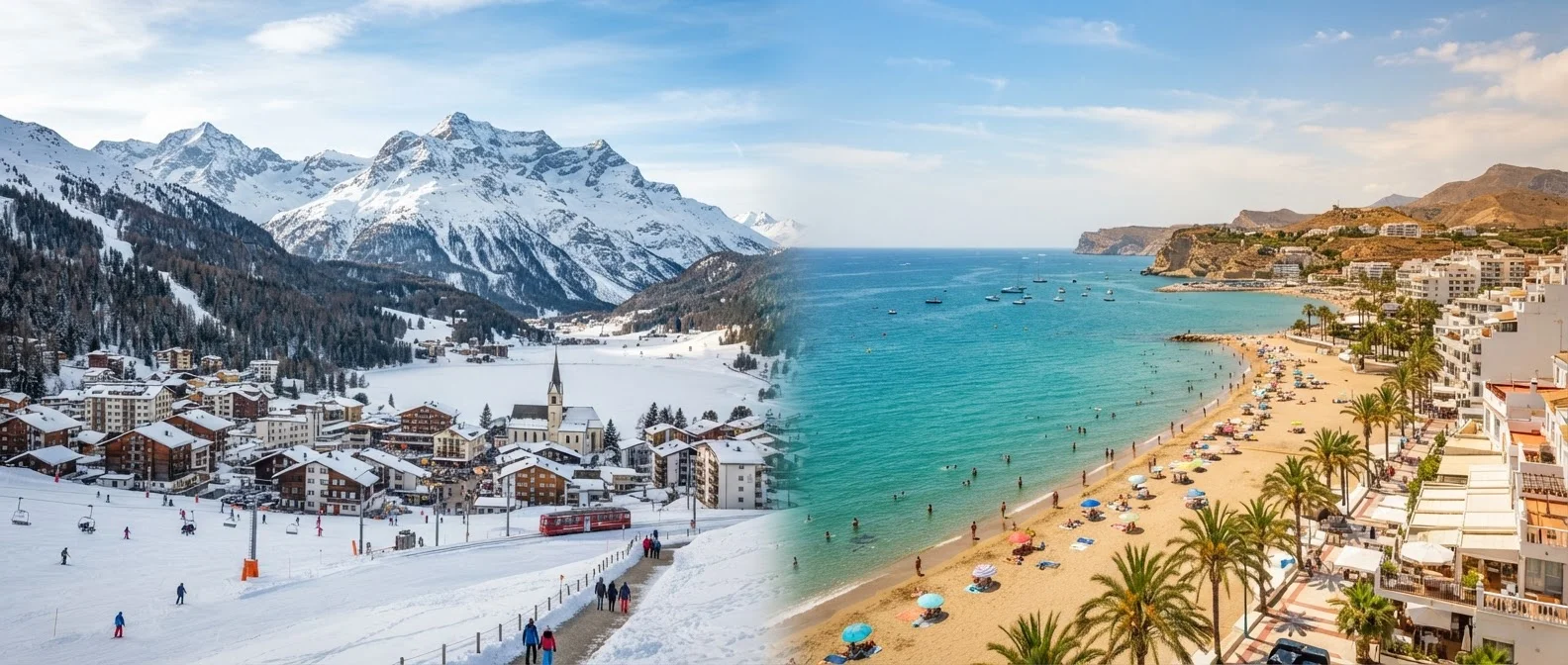
Option A
Mountain Towns
The high-altitude retreat for adventurers and nature seekers.
Best for: Travelers craving fresh air, dramatic scenery, outdoor activities, and a slower, cozy pace away from crowds.
Option B
Coastal Getaways
The sun-and-surf escape for beach lovers and seafood enthusiasts.
Best for: Vacationers who want warm breezes, waterfront dining, sand between their toes, and easy access to water-based recreation.
What Each Destination Type Actually Delivers
Choosing between a mountain town and a coastal getaway isn't just about scenery — it's about matching the environment to the kind of trip you actually want to have. Both settings offer genuinely distinct rhythms, activities, and sensory experiences.
Mountain towns in the US span everything from the art-scene energy of Asheville, North Carolina, to the ski-resort glamour of Park City, Utah, to the laid-back charm of Taos, New Mexico. What they share is a certain intimacy — walkable main streets, local breweries, proximity to trails, and the kind of cool, clear air that makes mornings feel energizing. Summer in the Rockies or the Appalachians can mean highs in the 70s even when the rest of the country is sweltering.
Coastal getaways run the spectrum from the rugged, foggy shores of the Pacific Northwest to the powdery white sands of Gulf Coast Alabama to the historic harbor towns of coastal Maine. The ocean anchors the experience — whether you're surfing, kayaking, fishing, or just watching the tide come in over a cup of coffee. Seafood, waterfront sunsets, and salt air tend to do something wonderful to a person's stress levels.
For a useful lens on how to structure either trip once you've chosen your setting, see our guide to flexible vs. fixed itineraries.
| Criterion | Mountain Towns | Coastal Getaways |
|---|---|---|
| Summer temperatures | Cool to mild (60s–70s°F typical) | Warm to hot (75–95°F typical) |
| Peak season | Winter (ski) or summer (hiking) | Summer (June–August) |
| Primary activities | Hiking, skiing, cycling, wildlife | Swimming, surfing, fishing, kayaking |
| Crowd levels in summer | Moderate (varies by town) | High at popular beaches |
| Altitude considerations | Yes — above 8,000 ft needs adjustment | Not applicable |
| Accessibility by car | Often requires mountain roads | Usually straightforward highway access |
| Off-season value | Strong in spring and fall | Strong in spring and fall |
| Dining & nightlife | Charming local scenes, more limited | Wider variety, especially seafood |
The Practical Side: Logistics, Costs, and Accessibility
Both destination types vary enormously in cost depending on where and when you go, but a few patterns are worth knowing before you book.
Mountain towns that sit near major ski resorts — think Vail, CO or Jackson, WY — carry premium price tags year-round, though shoulder seasons (May–June and October) can be dramatically more affordable. Smaller, less-famous mountain towns often offer comparable scenery at a fraction of the cost. Traveling in the off-season is especially rewarding in mountain settings, where fall foliage or late spring wildflowers can rival any peak-season draw.
Coastal destinations tend to hit their pricing peak in July and August, particularly along the Atlantic and Gulf coasts. Spring and fall visits to spots like the Outer Banks of North Carolina or the Oregon Coast can feel like a completely different — and far more peaceful — trip.
72%
Americans who prioritize nature in travel
A 2023 MMGY Global Portrait of American Travelers survey found that access to natural scenery is among the top factors American leisure travelers consider when choosing a domestic destination.
40%+
Price premium at peak coastal season
Travel industry data consistently shows that accommodation rates at popular coastal destinations can exceed off-season rates by 40% or more during July and August.
8,000 ft
Altitude threshold for acclimatization
The CDC notes that travelers ascending to elevations above roughly 8,000 feet should allow time to acclimatize and be aware of altitude sickness symptoms before strenuous activity.
Accessibility is another factor. Coastal towns are often reachable by major highways or regional airports with frequent service. Mountain destinations sometimes require longer drives from the nearest hub airport, and high-altitude areas (above 8,000 feet) may present challenges for travelers with certain cardiovascular or respiratory conditions. This isn't a reason to avoid them — just something to factor into your planning honestly.
Getting there is its own decision. Our road trip vs. flying comparison breaks down when driving makes more sense than booking a flight for domestic trips.
Activities, Mood, and What You'll Actually Remember
Ask yourself: do you want your vacation to leave you feeling energized or restored? Both are valid — and both destination types can deliver either, depending on how you approach the trip.
Mountain towns reward active travelers. Trails, mountain biking, white-water rafting, rock climbing, and wildlife spotting are all in natural reach. But they also reward slow travelers — a rocking chair on a porch in the Blue Ridge Mountains, a hot spring soak in Colorado, a farmers market on a crisp Saturday morning. The mountains don't demand that you earn your experience through exertion.
Coastal getaways have a similar duality. Yes, there's surfing, paddleboarding, fishing charters, and cycling along beachfront paths. But there's also the deeply productive act of doing nothing at all beside moving water, which has a way of resetting even the most exhausted visitor.
Don't Overlook Hybrid Destinations
Some American destinations genuinely offer both mountain and coastal experiences within a short drive. Coastal Maine puts you within two hours of serious mountain hiking in Acadia and the White Mountains. Big Sur, California places dramatic cliffs and redwood forests in direct conversation with the Pacific Ocean. If you can't decide, these regions let you do both — just be realistic about how much driving you're willing to build into a single trip.
If you're open to destinations that blur the line between these two archetypes, it's worth exploring what the interior of the country offers as well. Our feature on the Great Lakes region covers dunes, forests, and island communities that scratch both itches simultaneously. And if you want to maximize whatever destination you choose, our guide to experiencing a US destination without over-scheduling offers a smarter approach to pacing your days.
The content on this site is for informational purposes only and is not a substitute for professional advice. Always consult a qualified professional for guidance specific to your situation.