

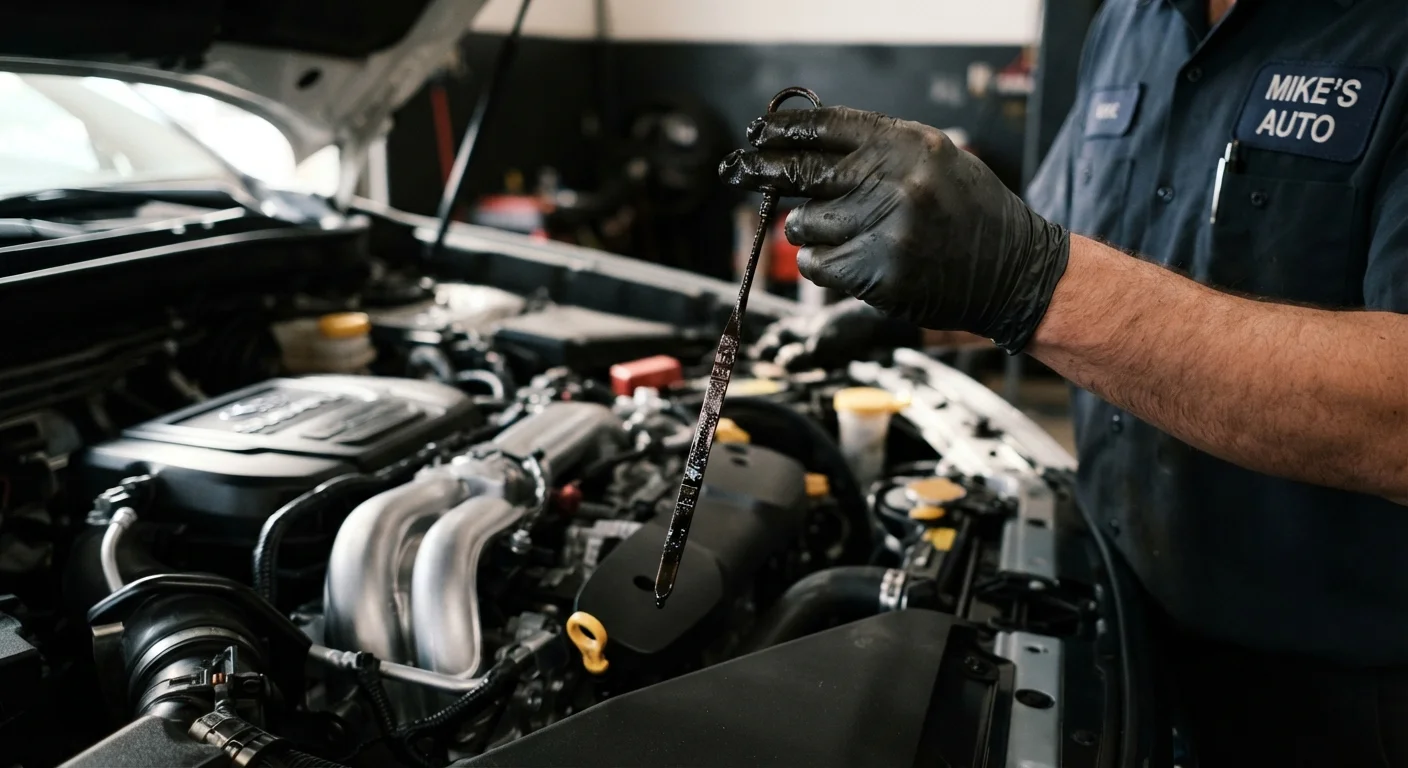
What Oil Actually Does Inside Your Engine
Engine oil has four main jobs: lubricate moving parts, cool components that coolant can't reach, clean away contaminants, and protect metal surfaces from corrosion. Without fresh, functioning oil, your engine is essentially metal grinding on metal at thousands of revolutions per minute.
Think of oil as the engine's circulatory system. It flows through narrow passages, around pistons, over camshafts, and through bearings - all in fractions of a second. When that oil is fresh, it does all of this efficiently. As it ages, it gradually stops doing any of it well.
For a broader look at how oil fits into your car's overall upkeep, see the practical owner's maintenance overview - it covers every major system your vehicle depends on.
5,000-10,000 mi
Typical synthetic oil change interval
Most vehicle manufacturers specify full synthetic oil change intervals in this range under normal driving conditions; always verify with your owner's manual.
#1
Leading cause of premature engine failure
Automotive repair professionals and industry sources consistently cite neglected lubrication - including skipped oil changes - as a top contributor to preventable engine failure.
What Degraded Oil Actually Does to Your Engine
As oil ages, it oxidizes and accumulates combustion byproducts, dirt, and metal particles. The result is a fluid that thickens, loses its slippery quality, and carries abrasive debris rather than washing it away. Here's what that sets in motion:
- Increased friction and heat: Metal components that normally glide past each other now scrape. This generates excess heat, which accelerates wear on pistons, bearings, and camshaft lobes.
- Sludge formation: Old, oxidized oil mixed with combustion residue can congeal into a thick black sludge. This sludge clogs oil passages, starving parts of lubrication entirely.
- Accelerated wear: Fine metal particles from worn surfaces stay suspended in degraded oil, acting like sandpaper circulating through your engine.
- Oil pressure drops: Clogged passages reduce oil pressure, which can trigger warning lights - or in severe cases, cause engine components to seize.
None of this happens instantly. It builds over miles and time, which is exactly what makes it easy to ignore until repairs become unavoidable.
Check Your Owner's Manual First
The oil change interval printed in your owner's manual is the most reliable guide for your specific vehicle. It accounts for your engine design, recommended oil type, and typical operating conditions. Generic advice - like changing oil every 3,000 miles - may be too frequent for modern engines using synthetic oil, or not frequent enough if you tow or drive in extreme conditions.
One Skipped Change vs. a Pattern of Neglect
Here's the honest answer most drivers want: missing a single oil change by a modest amount - especially in a newer vehicle using synthetic oil - is unlikely to cause serious harm. The oil is degraded, not gone, and engines are built with some tolerance for real-world imperfection.
What changes the outcome dramatically is repetition. Drivers who skip changes routinely, or who go tens of thousands of miles between services, are the ones facing sludge buildup, seized components, and engines that need replacement rather than maintenance. The damage isn't linear - it compounds.
It's also worth noting that not all driving is equal. Short trips, stop-and-go city driving, towing, and extreme temperatures all degrade oil faster than highway cruising. Your owner's manual will often list a "severe duty" interval that's shorter than the standard recommendation - and many American driving patterns qualify as severe.
Some common beliefs about oil change frequency don't hold up well under scrutiny. The car maintenance myths that keep costing drivers money covers why the old every-3,000-miles rule is often unnecessary for modern vehicles.
When to Worry - and What to Do
If you've missed a change and aren't sure how far over you are, the practical move is simple: get it done now. For most drivers in most situations, catching a lapse early and returning to a regular schedule is all it takes to avoid lasting consequences.
Signs that old or degraded oil may already be causing problems include:
- Dark, gritty oil on the dipstick (black and grainy rather than amber and smooth)
- A burning oil smell from the engine bay
- Louder-than-usual engine noise, especially a ticking or knocking sound at startup
- An illuminated oil pressure warning or oil life indicator
If you notice knocking or significant oil pressure drops, have a qualified mechanic inspect the engine before driving further. Continuing to drive with low oil pressure can turn a repair into a replacement.
For more on what deferred maintenance typically costs - and how quickly problems escalate - the guide to skipping regular maintenance breaks down the real-world consequences across multiple vehicle systems.
“Engine oil is the single most important fluid in your vehicle. The cost of an oil change is trivial compared to the cost of an engine. What's expensive is letting people find that out the hard way.”
— A veteran automotive technician with over 25 years of engine repair experience, ASE-Certified Master Technician
Frequently Asked Questions
One missed oil change is unlikely to cause immediate engine failure, especially if you're not too far past your interval. The oil will be dirtier and slightly less effective, but catching up promptly limits the damage. Make it a pattern, and the risks grow significantly.
It depends on your vehicle, oil type, and how you drive. Conventional oil typically needs changing every 3,000-5,000 miles; full synthetic can often go 7,500-10,000 miles or more. Always check your owner's manual rather than relying on a general rule.
Yes, potentially. Most manufacturer warranties require documented proof of regular maintenance. If an engine problem arises and you can't show you kept up with oil changes, the automaker may deny a warranty claim.
Engine sludge appears as a thick, tar-like black deposit inside your engine. You might notice it on the oil cap, dipstick, or visible engine surfaces. A mechanic can confirm its presence during an inspection.
Going modestly over - say 500 to 1,000 miles - in an otherwise healthy vehicle with quality oil is not ideal but rarely catastrophic. Get the change done as soon as practical and don't make a habit of it.
Some vehicles have an oil life monitoring system that will trigger a warning light. However, the check engine light isn't specifically an oil degradation alert - relying on dashboard lights alone to manage oil health is risky.
The content on this site is for informational purposes only and is not a substitute for professional advice. Always consult a qualified professional for guidance specific to your situation.