

Option A
Aggressive Driving
The unsafe habit that's still a traffic offense.
Best for: Understanding when frustration behind the wheel crosses into citation-worthy behavior without escalating to criminal conduct.
Option B
Road Rage
The criminal escalation of unchecked anger.
Best for: Recognizing when a driving situation has become a safety and law enforcement emergency requiring an immediate, de-escalating response.
Two Terms, Two Very Different Legal Meanings
Most drivers use "aggressive driving" and "road rage" interchangeably, but traffic authorities — and courts — treat them very differently. The distinction isn't just semantic. It determines whether you're looking at a traffic ticket or a criminal charge.
Aggressive driving refers to a pattern of unsafe traffic behaviors, typically defined by state law as a combination of moving violations that endanger other people or property. Common examples include excessive speeding, running red lights, tailgating, and cutting across lanes without signaling. It's a traffic offense — serious, but handled through citations and fines.
Road rage, by contrast, involves intentional aggressive or violent behavior directed at another driver or pedestrian. Think: deliberately blocking someone, making threatening gestures, getting out of the car to confront another driver, or using the vehicle itself as a weapon. Many states classify road rage incidents as criminal assault or reckless endangerment.
| Criterion | Aggressive Driving | Road Rage |
|---|---|---|
| Legal classification | Traffic violation | Criminal offense (in most states) |
| Driver intent | Reckless, impulsive | Deliberate, targeted |
| Common behaviors | Speeding, tailgating, unsafe lane changes | Threatening gestures, blocking, assault |
| Typical consequence | Citation, fines, points on license | Arrest, criminal charges |
| Primary trigger | Stress, impatience, running late | Perceived personal affront, retaliation |
| Recommended response | Space, slower pace, awareness | Disengage, drive to safety, call 911 |
The clearest dividing line is intent. Aggressive driving is reckless — the driver is prioritizing speed or convenience over safety. Road rage is targeted — the driver is trying to intimidate, threaten, or harm a specific person.
Where Aggression Starts — and Why It Escalates
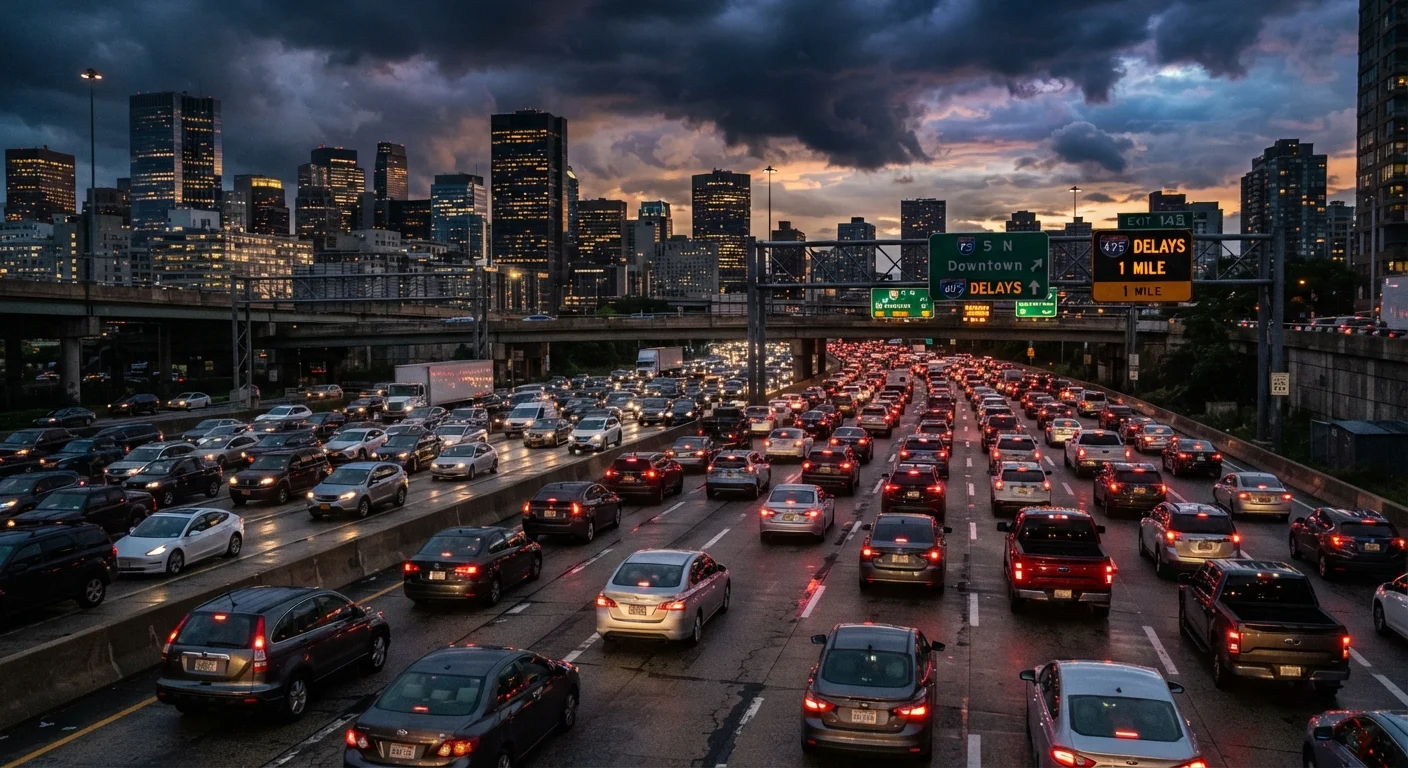
Aggressive driving often starts with stress. Running late, construction delays, and heavy traffic are common triggers. The behaviors that follow — tailgating, rapid lane changes, honking excessively — are frequently impulsive rather than calculated. That's also why they're so dangerous: tailgating, for example, dramatically reduces your reaction time and is a leading cause of rear-end collisions.
80%
Drivers who report aggressive driving
According to AAA Foundation for Traffic Safety research, roughly 80% of U.S. drivers expressed significant anger, aggression, or road rage at least once in the prior year.
Half
Drivers who respond to aggression with aggression
AAA research found approximately half of drivers who were on the receiving end of aggressive behavior admitted to retaliating — the primary pathway to road rage escalation.
Road rage typically begins as aggressive driving that gets a reaction. One driver cuts off another; the second driver responds with a horn blast or a rude gesture; the first driver escalates. Each retaliation raises the stakes. What started as a careless merge can become a confrontation that ends in property damage or injury.
Recognizing your own warning signs — white-knuckle grip, racing heart, the urge to "teach someone a lesson" — is the first and most effective check. Pulling back, slowing down, and creating space between yourself and another vehicle breaks the feedback loop before it spirals. This is the core logic behind defensive driving, which is about anticipating conflict, not just following the rules.
How to Respond When You're on the Receiving End
If another driver is behaving aggressively toward you, the instinct to respond in kind is understandable — but almost always makes things worse. Here's what authorities and safety experts generally recommend:
- Don't make eye contact. It can be read as a challenge.
- Don't gesture or honk back. Retaliation is the primary escalation trigger.
- Create distance. Change lanes, slow down, take an exit — whatever creates a buffer between you and the other vehicle.
- Drive to a public place if someone is following you. Do not go home.
- Call 911 if you feel you or others are in immediate danger. Note the license plate if you can do so safely.
It's also worth noting that fatigue and distraction can make drivers more reactive — you may snap at minor provocations when you're exhausted in ways you normally wouldn't. Understanding your own state behind the wheel matters. See how fatigue and distraction affect judgment and reaction time in ways that mirror impairment.
State Laws Vary Significantly
Not every state has a statute that uses the term "aggressive driving" — definitions and thresholds differ. Some states define it as committing two or more specific moving violations simultaneously; others set their own criteria. If you've been cited or involved in an incident, checking your state's specific statutes (or consulting an attorney) gives you the clearest picture of what you're facing legally.
The safest mindset on any road: the other driver's behavior is not a personal attack, even when it feels like one. Treating every incident as one to disengage from — not win — keeps you and others safer.
The content on this site is for informational purposes only and is not a substitute for professional advice. Always consult a qualified professional for guidance specific to your situation.