

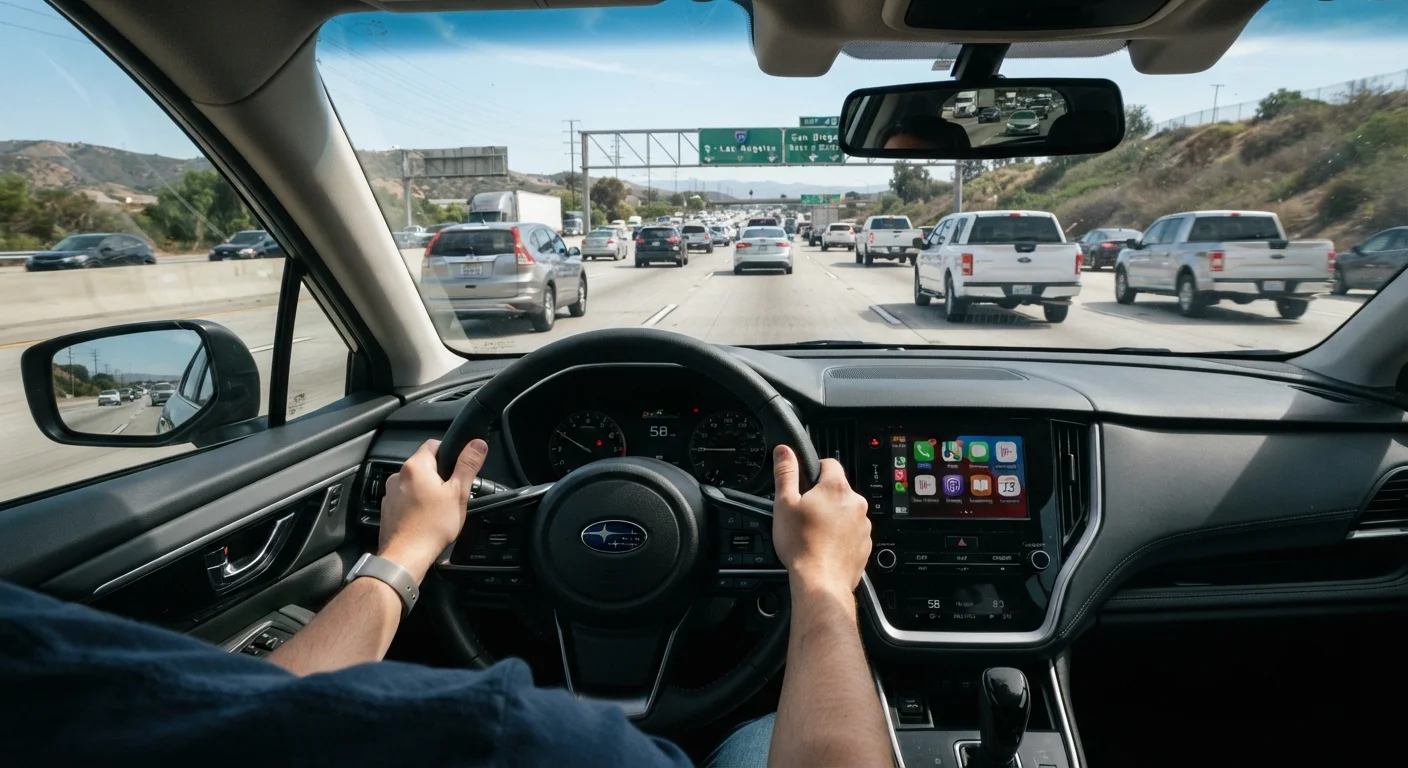
The Difference Between Legal and Safe
Most drivers think of safety in terms of rule-following: stay in your lane, stop at red lights, don't exceed the posted speed limit. Those rules matter. But they describe the floor of acceptable behavior — not the ceiling.
Traffic laws are written to create order and assign responsibility after a crash. They tell you what you must do. Defensive driving tells you what a skilled driver chooses to do in order to avoid the crash in the first place.
Consider this: a driver can be completely within the law — traveling the speed limit with a valid license — and still be dangerously inattentive. They might be staring at the bumper two car lengths ahead instead of scanning a quarter mile down the road. They might be unaware that the truck in their blind spot is drifting. Being legal and being safe are related, but they are not the same thing.
“The goal of defensive driving is not just to obey the law, but to give yourself time and space to respond to what other drivers do — before it becomes a crisis.”
— National Safety Council, U.S. nonprofit organization focused on eliminating preventable deaths
What Defensive Driving Actually Looks Like
Defensive driving is built on a few core principles that experienced drivers apply without much conscious thought — but that every driver can practice intentionally.
- Look far ahead. Skilled drivers scan 10–15 seconds ahead of their vehicle, not just at the car directly in front of them. This gives more time to react when brake lights suddenly appear or a car weaves unexpectedly.
- Maintain a space cushion. Keeping adequate distance on all sides of your vehicle gives you room to maneuver. Following too closely is one of the leading causes of rear-end collisions — a risk that a safe following distance directly reduces.
- Expect the unexpected. A defensive driver assumes that any driver nearby might make a mistake — run a stop sign, brake suddenly, change lanes without signaling. That assumption keeps you from being caught off guard.
- Control what you can control. You cannot control other drivers. You can control your speed, following distance, lane position, and attention level.
Practice the Three-Second Rule Daily
Pick a fixed point on the road — a sign or overpass — and count the seconds between when the car ahead passes it and when you do. If you reach three seconds, your following distance is adequate for normal conditions. In rain, fog, or heavy traffic, add more. This one habit addresses one of the most common mistakes everyday drivers make.
These habits become especially important in higher-stress environments. Work zones are a clear example — reduced lane widths, unpredictable worker movement, and distracted drivers compound quickly when no one is applying defensive principles.
Attention Is the Foundation
Every defensive driving skill depends on one thing: paying attention. You cannot anticipate a hazard you never noticed. This is why distraction and fatigue are so corrosive to driving safety — they do not just slow your reaction time, they narrow what you perceive in the first place.
Driver fatigue and distraction produce similar results: reduced awareness, slower responses, and poorer judgment — but they have different causes and different solutions. A defensive driver monitors their own state as much as they monitor the road.
94%
Of serious crashes tied to driver behavior
According to the National Highway Traffic Safety Administration, roughly 94% of serious crashes involve driver error as a contributing factor — underscoring why habits matter more than luck.
3 sec
Minimum recommended following distance
Traffic safety organizations generally recommend maintaining at least a three-second gap behind the vehicle ahead under normal conditions, with more space in bad weather or at higher speeds.
Low-light conditions raise the stakes further. The same defensive habits that serve you in daytime traffic become even more important after dark, when visibility shrinks and hazard recognition is delayed. Night driving rewards the same proactive awareness that defines defensive driving at any hour.
Defensive Driving vs. Aggressive Driving
It helps to understand defensive driving in contrast to its opposite. Aggressive driving — speeding, weaving through traffic, following closely, ignoring signals — is characterized by treating the road as a competition. The aggressive driver reacts to frustration by escalating.
The defensive driver does the opposite. When cut off, a defensive driver creates more space rather than less. When traffic slows unexpectedly, they were already watching far enough ahead to anticipate it.
Defensive Driving Courses Vary by State
Each state sets its own standards for what qualifies as an approved defensive driving course, and eligibility for insurance discounts or point reductions depends on both your state's rules and your insurer's policies. Check with your state DMV and your insurance provider before enrolling to confirm what benefits apply to your situation.
Neither approach is about personality type. Defensive driving is a learned set of skills — available to anyone willing to practice them deliberately. Many states offer formal courses through driver education programs, and some insurers recognize completion of an approved course when reviewing premiums. The educational benefit is the more durable one: the habits you build outlast any discount.
Frequently Asked Questions
No. Traffic laws set the minimum legal standard for how you must drive. Defensive driving is a proactive mindset that goes further — scanning for hazards, anticipating what other drivers might do, and adjusting your driving before a problem develops. You can follow every rule and still be an inattentive driver.
Key habits include maintaining a safe following distance (the three-second rule is a common baseline), scanning well ahead of your vehicle, checking mirrors regularly, minimizing distractions, and adjusting speed for road and weather conditions. Staying predictable — signaling, avoiding sudden moves — also helps other drivers around you.
Many insurers offer a discount for completing an approved defensive driving course, and some states allow course completion to remove points from a driving record. The specific benefit varies by state and insurer, so check with your provider before enrolling.
Defensive driving is calm, deliberate, and focused on reducing risk. Aggressive driving — speeding, tailgating, cutting off other vehicles — increases risk for everyone on the road. The two represent opposite ends of the driver-behavior spectrum.
Yes. Defensive driving significantly reduces risk but cannot eliminate it entirely. A defensive driver who is struck from behind by a distracted driver had no way to fully prevent that collision. The goal is to reduce the likelihood and severity of crashes, not to guarantee safety.
The content on this site is for informational purposes only and is not a substitute for professional advice. Always consult a qualified professional for guidance specific to your situation.