

Our Verdict
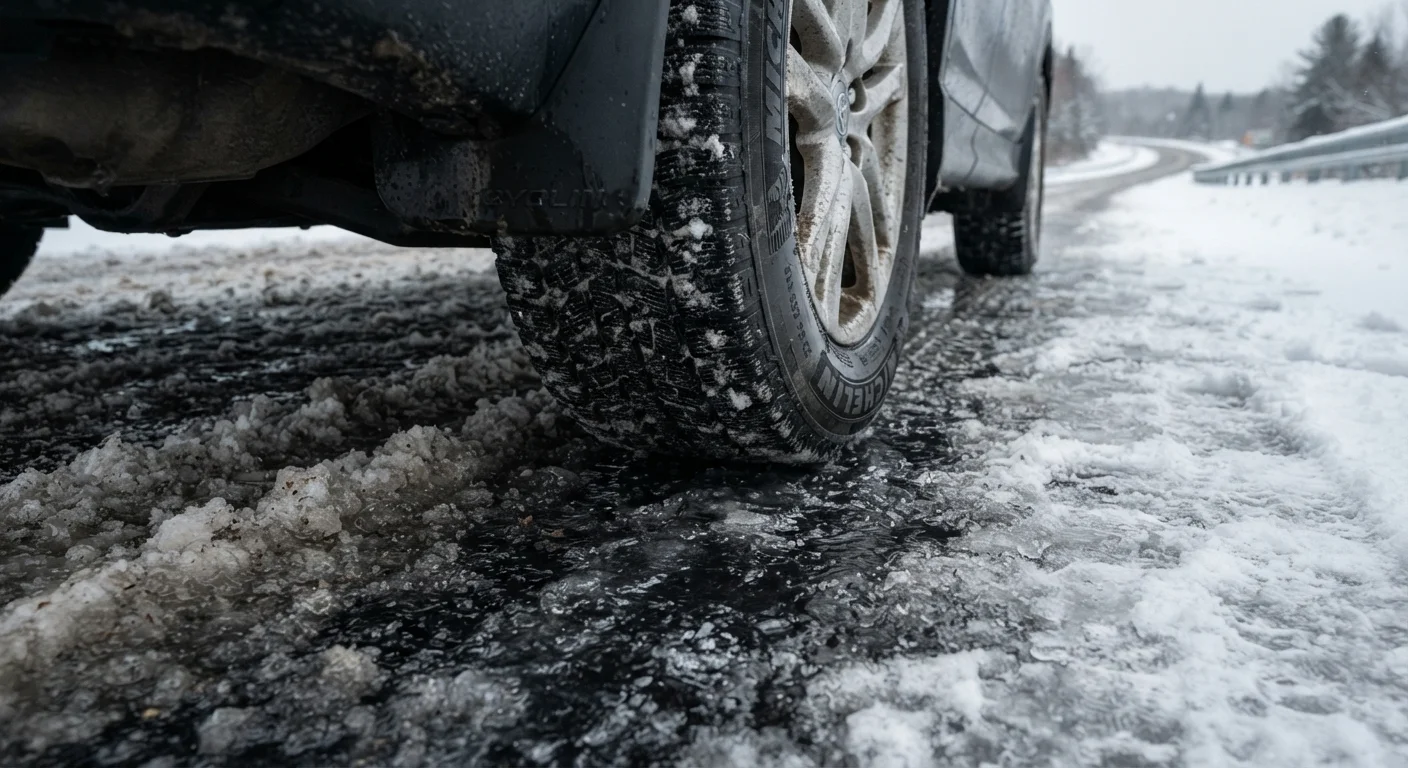
Black ice is the most dangerous of the three because it is nearly undetectable and eliminates almost all tire friction. Slush is unpredictable and can cause sudden directional changes. Packed snow, while more manageable, still demands significantly reduced speeds and longer stopping distances. In every case, the key is preparation before you reach the hazard — not reaction after.
| Best for | Recommended |
|---|---|
| Drivers who frequently commute in freezing temperatures | Black ice awareness and technique |
| Drivers navigating active snowfall and mixed conditions | Slush handling strategies |
| Drivers in regions with prolonged winter cold spells | Packed snow driving practices |
Why Winter Road Conditions Are Not Interchangeable
Most drivers treat winter roads as one uniform hazard and apply the same cautious driving style across the board. That's a reasonable starting point, but black ice, slush, and packed snow behave very differently under your tires — and the right response to one can be the wrong move for another.
Understanding the physics behind each surface helps you react correctly before panic kicks in. It also helps you recognize early warning signs, many of which are visible or feel-able before you're already in trouble. For broader cold-weather preparation, see our guide on seasonal car care for summer and winter.
| Black Ice | Slush | Packed Snow | |
|---|---|---|---|
| Visibility of hazard | Nearly invisible | Clearly visible | Clearly visible |
| Traction level | Extremely low | Variable, unpredictable | Low but workable |
| Primary risk | Uncontrolled slide | Sudden pull or grab | Extended stopping distance |
| Braking response | Ease off gas, no hard braking | Brake before entering slush | Slow, gradual braking only |
| Steering requirement | Minimal, smooth inputs only | Firm grip, no sharp turns | Smooth, deliberate turns |
| Where it commonly forms | Bridges, shaded roads, intersections | Active snow zones, thaw periods | High-traffic lanes, mountain roads |
| Temperature range | Near or below 32°F | Around 32°F, thawing | Well below 32°F, sustained cold |
Black Ice: The Hazard You Won't See Coming
Black ice is a thin, transparent layer of ice that forms on pavement — often after freezing rain or when temperatures drop after a wet period. Because it takes on the color of the road beneath it, it's extremely difficult to spot. Bridges, overpasses, shaded stretches of road, and intersections are common formation spots.
The friction coefficient on black ice can drop to roughly 0.1 — compared to around 0.7 on dry pavement — meaning your tires have almost nothing to push against. If you hit the brakes hard, you will slide. If you steer aggressively, you will spin.
What to do on black ice
- Ease off the gas — do not brake suddenly. Let engine braking slow you gradually.
- Keep steering inputs minimal and smooth. Sudden turns transfer weight and can cause a spin.
- Look for a way out — a gravel shoulder or unpaved edge offers far more grip than the ice itself.
- If you do start to slide, steer gently in the direction you want to go and resist the urge to overcorrect.
All-Wheel Drive Does Not Prevent Sliding on Ice
AWD and 4WD systems help you accelerate on slippery surfaces, but they do nothing to improve your braking or cornering on black ice. Many drivers overestimate their safety margin in AWD vehicles and end up traveling too fast for conditions. Traction control and stability systems help, but they have physical limits — especially on nearly frictionless surfaces like black ice.
Black ice forms most readily when temperatures hover just below 32°F and moisture is present. Morning commutes after a cold overnight are especially risky. Checking pavement temperature, not just air temperature, is more informative when making driving decisions.
Slush: Unpredictable and Underestimated
Slush forms when snow partially melts or mixes with road salt and water. It looks like a non-issue — after all, it's not solid ice. But slush is dangerous precisely because it's inconsistent. It can be an inch deep in one stretch and six inches deep around a curve, and deeper slush can grab a tire and yank your steering off course without warning.
Slush also hides the road surface beneath it. You may think you're on pavement and find ice underneath. It also accumulates in your wheel wells and can temporarily affect steering response.
What to do in slush
- Slow down before you enter it, not while you're in it. Braking in deep slush is unreliable.
- Hold the wheel firmly but don't fight sudden grabs — ease the wheel back to straight rather than jerking it.
- Avoid lane changes when possible. Crossing ridges of accumulated slush at an angle can cause abrupt directional changes.
- After clearing a slushy stretch, gently test your brakes to clear moisture from the rotors and check that steering feel has returned to normal.
Slush conditions often appear during daytime thaws in winter — the same shoulder-season conditions discussed in off-season travel considerations. If you're driving through mountain passes or northern routes in late winter, slush is often the dominant hazard.
Packed Snow: More Grip, Still Serious
Packed snow — the kind that gets compressed by repeated traffic into a firm, white layer — offers more traction than black ice or deep slush. Winter tires can generate useful grip on it, and experienced drivers often find packed snow the most manageable of the three. But it still dramatically increases stopping distances and can become glassy if temperatures drop further.
What to do on packed snow
- Reduce speed by at least one-third compared to what you'd drive on dry pavement at the same road.
- Increase following distance significantly — a 4-second gap on dry roads should expand to 8–10 seconds on packed snow.
- Accelerate and decelerate gently. Aggressive inputs can break traction even on packed snow that seems stable.
- Watch shaded areas — packed snow in shadow can develop an icy glaze, especially overnight.
Winter Tires Make a Measurable Difference
All-season tires stiffen in cold temperatures and lose grip. Dedicated winter tires use a softer rubber compound and different tread patterns designed specifically to channel slush and bite into packed snow. If you drive regularly in winter conditions, the difference in stopping distance between winter and all-season tires can be substantial — sometimes 30 to 40 feet on snow at moderate speeds. Check with a qualified tire professional about what's appropriate for your vehicle and region.
For newer drivers, packed snow can build false confidence because the road looks clear and defined. Our guide on building confidence in challenging driving situations addresses how to develop sound instincts without overestimating your control. Rain-slicked roads carry similar risks worth understanding — see why wet roads are more dangerous than they look for comparison.
The content on this site is for informational purposes only and is not a substitute for professional advice. Always consult a qualified professional for guidance specific to your situation.