

Start here
Why New Drivers Freeze
Common scenarios
Highway On-Ramps
Build your skills
Left Turns Across Traffic
Practice techniques
Parallel Parking
Next challenge
Roundabouts and Busy Intersections
Long-term growth
Building Confidence Over Time
Why New Drivers Freeze
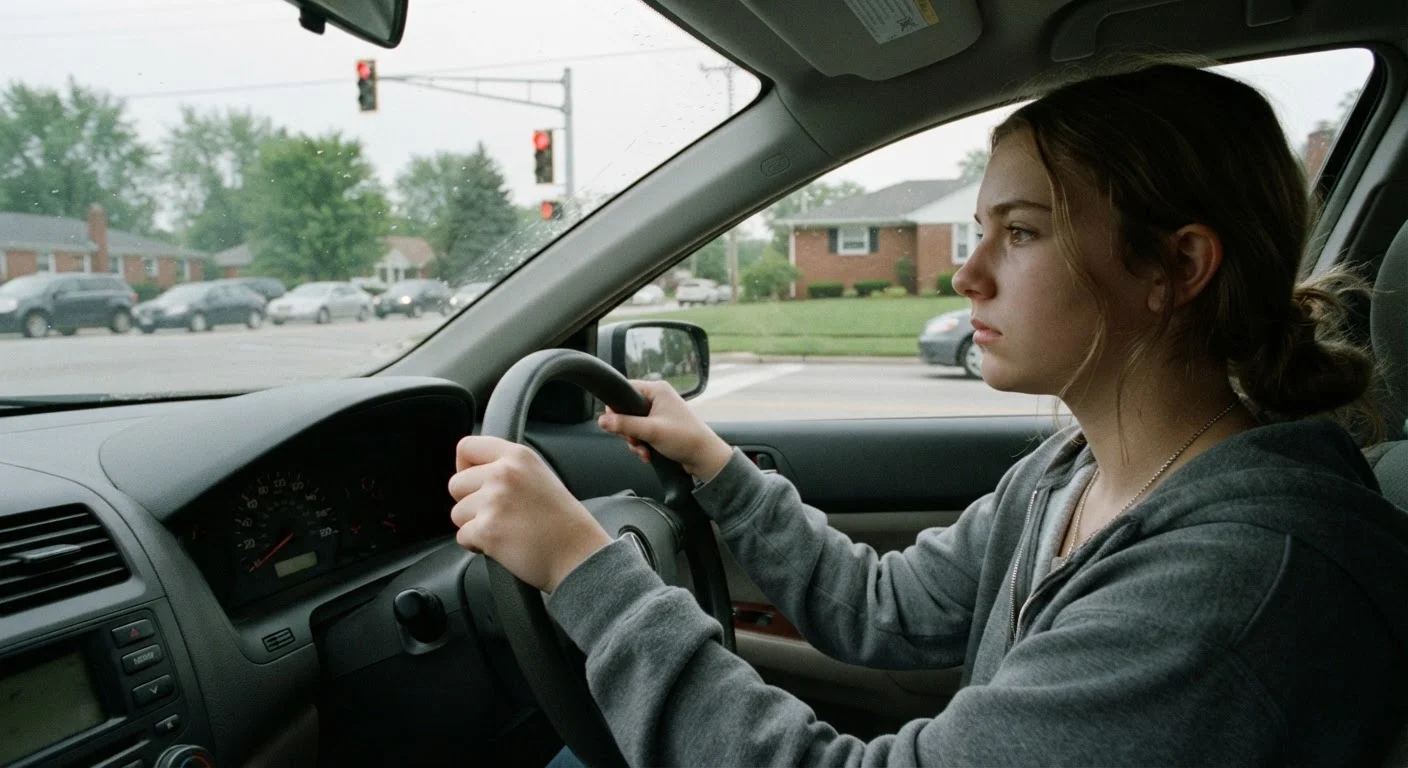
Driving asks your brain to track speed, distance, signs, mirrors, steering, and other drivers all at once. Early on, none of that is automatic yet — every task demands conscious attention. When inputs pile up faster than you can process them, your brain can stall. That's the freeze: a decision bottleneck, not a character flaw.
Understanding this helps. The goal isn't to eliminate nerves; it's to convert unfamiliar tasks into practiced habits so your brain has more bandwidth when it counts.
Cognitive overload
When your brain is asked to process more information than it can handle at once, causing slowdowns or errors in decision-making.
Gap judgment
The ability to estimate whether a space in moving traffic is large enough and safe to merge into or cross.
Reference points
Specific visual cues on or around your car — like where the hood aligns with a line — that help you judge position without measuring.
Graduated exposure
A learning method where you practice a skill in easy conditions first, then gradually increase difficulty as comfort grows.
Merge point
The specific location on an on-ramp or lane where you complete the transition into the flow of moving traffic.
Highway On-Ramps
The on-ramp is one of the most reported freeze points for new drivers. You're accelerating while scanning mirrors, judging gaps in fast-moving traffic, and timing your merge — all simultaneously. The pressure feels enormous because the speed differential between the ramp and highway traffic is real and unforgiving.
What helps: Practice matching highway speed before you reach the merge point, not after. Most on-ramps give you enough distance if you use it early. Pick a gap well in advance and commit to it. Waiting until the last moment forces a rushed, panicked move. If no gap exists, it's legal in most states to slow temporarily at the end of the ramp — but making this a habit creates its own risks, so work on earlier gap selection.
Use the Full Length of the On-Ramp
Many new drivers brake near the top of the on-ramp out of anxiety, which actually makes merging harder by increasing the speed difference with highway traffic. Accelerate steadily and use every foot of ramp available to reach a compatible speed before you commit to the merge.
For broader situational awareness after dark, night driving habits covers how low light amplifies the exact hazards new drivers already find challenging.
Left Turns Across Traffic
Left turns require you to judge oncoming speed and distance, watch for pedestrians, monitor the signal, and move through a gap decisively. New drivers often freeze mid-intersection because they second-guess their gap judgment at the last second.
What helps: Position your car properly first — front wheels straight until you move (so a rear-end bump doesn't push you into traffic). Then pick a gap, commit, and go. Hesitating in the intersection for too long creates its own hazard. Practice left turns on quiet side streets before tackling busy arterials. As your gap judgment sharpens, the hesitation shrinks naturally.
Parallel Parking
Parallel parking trips up new drivers because it combines reversing, tight spatial judgment, and steering reference points into one sequence — often with an audience of waiting cars. The social pressure makes the cognitive load feel even heavier.
What helps: Learn the reference points specific to your vehicle (every car is slightly different) in an empty lot first. Common technique: pull alongside the car ahead, reverse until your rear bumper aligns with theirs, cut the wheel, then adjust. Once you've internalized the sequence without pressure, street parking becomes far less stressful.
Don't Park in a Hurry Until You've Practiced
Rushing parallel parking because of waiting traffic is how bumpers get scraped and curbs get hit. If the pressure is too high in a particular spot, it's fine to drive around the block and try again — or find a different space. No parking spot is worth a collision.
Roundabouts and Busy Intersections
Roundabouts require yielding to circulating traffic while merging into flow — two tasks that many new drivers aren't used to combining. The lack of a traffic signal removes the familiar red-green cue, which is partly why they feel disorienting at first. Why roundabouts confuse so many American drivers breaks down the logic in more detail.
What helps: Remember one rule: yield to vehicles already in the circle, then enter when clear. Don't stop inside the roundabout unless traffic forces it. Treating it like a yield-controlled merge rather than a traditional intersection makes the behavior click faster.
Once you're comfortable with roundabouts and intersections, defensive driving principles give you a framework for anticipating what other drivers might do — the next step beyond just following rules.
Building Confidence Over Time
Confidence behind the wheel is built through graduated exposure: start with the easiest version of a challenging scenario and systematically add difficulty. Empty parking lots before quiet streets. Quiet streets before busy roads. Daytime before night. Low-traffic highways before rush hour.
Each successful repetition chips away at the freeze response. The maneuver that once felt impossible becomes routine. Keep a mental log of what made you uncomfortable on each drive — then specifically practice those situations rather than defaulting to routes where you already feel comfortable.
Winter road conditions introduce a separate layer of challenge once basic confidence is established. how black ice, slush, and packed snow each change your response is worth reading before cold weather arrives.
This article is for general informational purposes only. Always follow your local traffic laws and consult a licensed driving instructor for personalized guidance.
Frequently Asked Questions
Absolutely. When the brain is overwhelmed by too many simultaneous inputs, it can stall on decision-making — a normal stress response. With repeated, structured practice, the tasks that once caused panic become automatic and manageable.
It varies widely by person, but most new drivers report noticeably less anxiety after several dedicated on-ramp practice sessions under low-traffic conditions. There's no universal timeline — gradual exposure matters more than a specific number of hours.
If it's safe to do so, hold your position briefly, take a breath, and reassess the situation before moving. Do not make a sudden move out of panic. Pull into a parking lot to collect yourself if you're too rattled to continue safely.
Yes — and you should. Use cones, garbage cans, or empty parking spots in a quiet lot to practice the reference points and steering inputs before attempting it on a busy street.
For new drivers, roundabouts can feel disorienting because they require yielding and merging simultaneously. However, once the yield-and-flow logic clicks, most drivers find them less stressful than multi-phase signal intersections.
Starting on lower-speed roads makes sense, but indefinitely avoiding highways can reinforce avoidance habits. Aim to introduce highway driving in a structured way — light traffic, daytime, with a calm experienced passenger — as soon as your basic car control is solid.
The content on this site is for informational purposes only and is not a substitute for professional advice. Always consult a qualified professional for guidance specific to your situation.