

Why Late Merging Gets a Bad Rap — and Why That's Unfair
Most American drivers were taught to merge early: the moment you see a lane-closed sign, slide over and get in line. That instinct feels polite, and staying in a closing lane until the very end can look like cutting. But traffic engineers have studied this behavior for decades, and the data consistently points in a different direction.
When drivers merge early, they create one long, single-file queue in the open lane while the closing lane sits largely empty. That wasted road space extends the backup farther than necessary and increases the chance of rear-end collisions in the bottlenecked lane. See our guide to tailgating risks for a closer look at how stop-and-go queues raise rear-end collision rates.
The zipper merge — named for how a zipper's teeth interlock — asks drivers to use both lanes all the way to the merge point, then alternate one-for-one. Studies from the Minnesota Department of Transportation and similar agencies found that zipper merging can reduce merge-zone backups by roughly 40 percent compared to early-merge behavior. It's not rudeness; it's physics.
Read the Signs Before You React
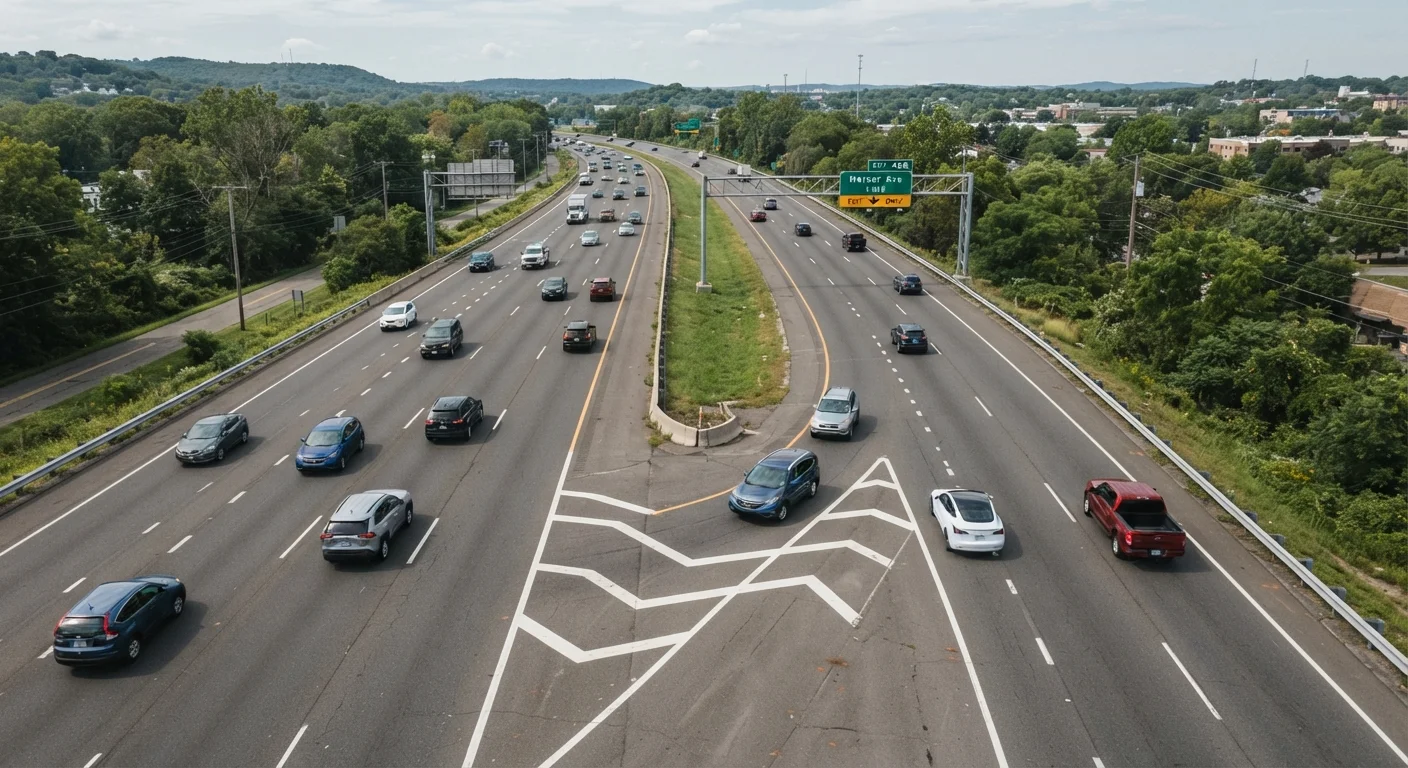
Many states now post explicit 'Use Both Lanes — Merge Here' signs in construction zones to encourage zipper behavior. When you see these, treat them as a directive: stay in your lane until the marked point and then alternate. Following posted guidance removes the guesswork and reduces conflict with other drivers.
When the Zipper Method Actually Applies
The zipper merge isn't a universal rule for every lane change. It works best under specific conditions:
- Heavy, slow-moving traffic — speeds under roughly 45 mph, where orderly alternating is practical.
- Construction or crash-related lane closures — situations where signage alerts drivers well in advance. For more on navigating these scenarios safely, see our construction zone driving guide.
- On-ramp merges during peak congestion — when highway traffic is slow enough that entering vehicles and mainline vehicles can clearly negotiate turns.
In light or free-flowing traffic, you don't need a formal protocol — simply merge when it's safe and courteous. The zipper method is a tool for congestion, not a license to accelerate past a long queue at highway speeds and force your way in at the last second. Timing and speed matter.
Speed Matching Is Non-Negotiable
Entering a merge zone significantly faster than surrounding traffic — even if your lane is technically open — creates a dangerous speed differential. Adjust your speed early so you arrive at the merge point at roughly the same pace as adjacent vehicles. This is the single most important factor in a safe merge.
How to Execute the Zipper Merge Step by Step
Whether you're in the closing lane or the through lane, your role in the zipper merge is well-defined. Follow the steps below to do your part safely.
What you will need
Identify the merge type and your lane position
When you see lane-closure signage, note which lane is closing and which is the through lane. Stay in your current lane — do not immediately shift over unless traffic is light and the move is clearly safe.
Match the speed of surrounding traffic
Whether you're in the closing or through lane, slow down to match the pace of the traffic around you. Arriving at the merge point at a dramatically different speed than other vehicles makes smooth alternating nearly impossible.
If you're in the closing lane: proceed to the merge point
Stay in the closing lane all the way to the marked merge point or the physical end of the lane. Signal your intent early — at least three to four seconds before merging — and make eye contact or use a hand wave if helpful to confirm the driver in the through lane is yielding.
If you're in the through lane: yield for one vehicle
When traffic is slow and a vehicle is beside you in the closing lane, allow exactly one vehicle to merge in front of you. Then proceed normally. The one-for-one alternating pattern is what makes the zipper work — yielding for more than one vehicle at a time disrupts the rhythm for drivers behind you.
After merging: maintain safe following distance
Once the merge is complete, leave adequate space between your vehicle and the one ahead. In slow-moving, stop-and-go conditions, a two-second following gap is a reasonable minimum. This buffer gives you reaction time and reduces the accordion effect that makes backups worse.
What Makes It Break Down — and How to Stay Safe When Others Don't Cooperate
The zipper merge depends on mutual cooperation. When one driver refuses to yield, speeds up to prevent a merge, or tailgates to close the gap, the whole system degrades. The right response is to stay calm, maintain a safe following distance, and avoid escalating. Never force a merge or match aggression with aggression.
Some states have begun posting signs explicitly instructing drivers to use both lanes and merge at the point — a signal that zipper behavior is legally endorsed in that zone, not just tolerated. If you see those signs, follow them with confidence. If you don't see them, use your judgment based on traffic conditions and proceed with care.
Aggression in Merge Zones Causes Crashes
Road rage incidents spike in merge zones because drivers misread zipper merging as queue-jumping. If another driver refuses to yield or attempts to block you, do not force the merge. Drop back, create space, and find the next safe gap. Protecting your safety matters more than maintaining your place in line.
The content on this site is for informational purposes only and is not a substitute for professional advice. Always consult a qualified professional for guidance specific to your situation.