

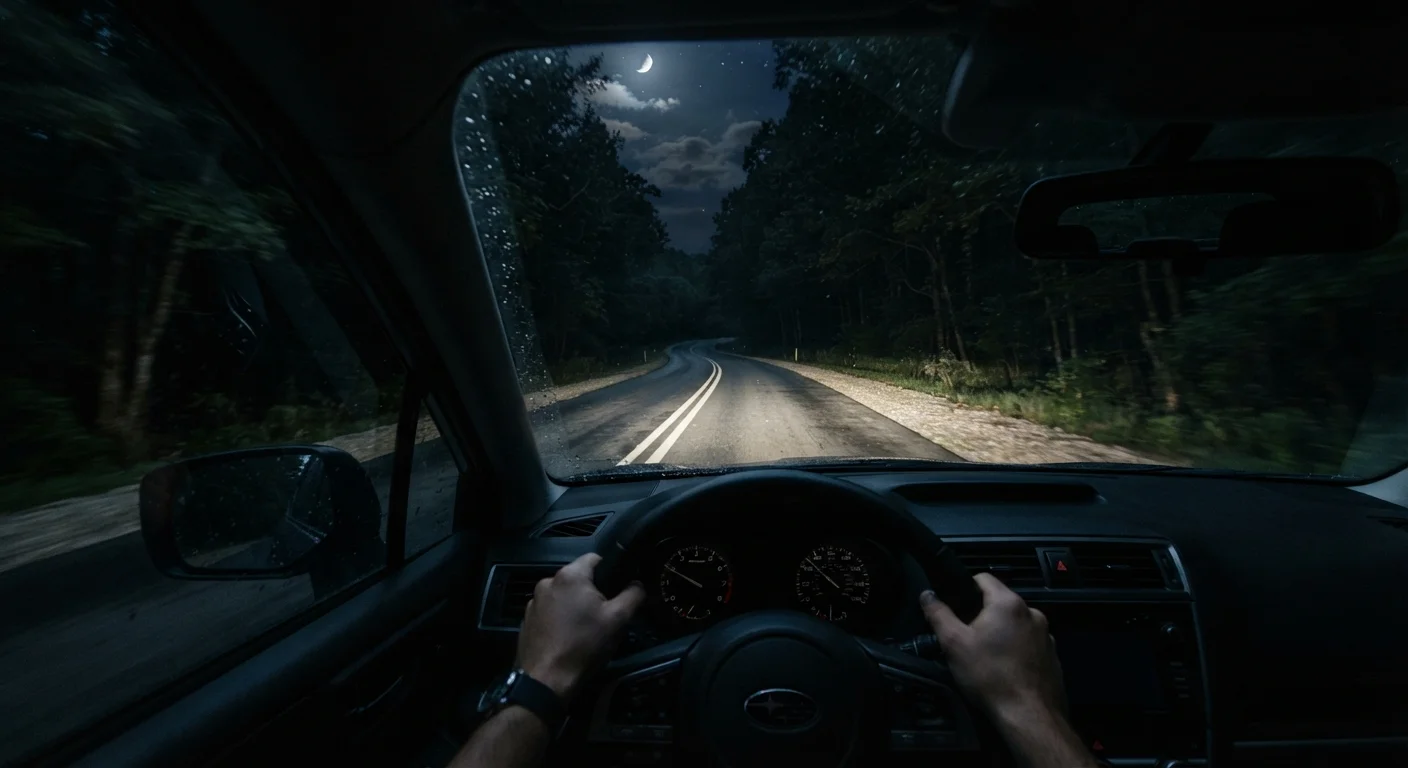
Why Night Driving Is Genuinely More Dangerous
Driving after dark isn't just uncomfortable — it's statistically riskier. According to the National Safety Council, traffic fatality rates per mile traveled are roughly three times higher at night than during daylight hours. That gap exists even though traffic volume drops significantly after sunset.
The core problem is visibility. Human eyes aren't built for darkness. Depth perception, peripheral vision, and color recognition all degrade in low light. At the same time, headlights illuminate only a limited cone of road ahead — often not far enough to stop safely at highway speeds. Add in pedestrians in dark clothing, deer, and debris, and the hazard picture fills up fast.
3×
Higher fatal crash rate at night vs. daytime
According to the National Safety Council, traffic deaths per mile driven are approximately three times higher at night than during daylight hours.
~250 ft
Typical low-beam headlight range
Most vehicles' low-beam headlights illuminate roughly 200–250 feet ahead — often less than the stopping distance needed at highway speeds.
Understanding the actual risks is the first step toward driving more deliberately after dark — not fearfully, but with sharper awareness of what's different.
Essential Habits That Actually Lower Your Risk
Most night driving safety comes down to a handful of consistent habits. These aren't complex — but they require deliberate attention, especially if you've grown used to driving on autopilot.
Use your headlights earlier than you think you need to.
Many drivers wait until it feels dark to turn on headlights, but visibility drops well before it registers consciously. Turning on your lights at dusk also makes your vehicle more visible to oncoming drivers and pedestrians — not just improves what you see.
Clean your windshield inside and out before driving at night.
A hazy or streaky windshield scatters oncoming headlight glare dramatically, turning manageable light sources into blinding halos. Interior film — from off-gassing plastics and condensation — is often the bigger culprit and is easy to overlook.
Increase your following distance to at least four seconds after dark.
Headlights cover roughly 200–250 feet ahead on low beam — often less distance than your stopping distance at highway speeds. More space between you and the car ahead gives you more time to react to brake lights, debris, or animals entering the road.
Dim your dashboard and avoid looking directly at oncoming headlights.
Bright interior lighting reduces your eyes' adaptation to darkness. When oncoming high beams hit, looking slightly right toward the road edge — rather than straight ahead — helps you maintain your lane position without the full brunt of glare.
Slow down in areas where your headlights don't reach far enough to stop safely.
This concept — called 'overdriving your headlights' — means you're traveling fast enough that a hazard could appear within your headlight range and you'd be unable to stop in time. It's a common and underappreciated risk on rural and winding roads.
Fatigue: The Hidden Multiplier After Dark
Night driving and drowsiness often go hand in hand. Your body's circadian rhythm naturally pushes you toward sleep in the late evening and pre-dawn hours — the same windows when night driving is most common. Fatigue slows reaction time and impairs judgment in ways that closely mimic alcohol impairment.
See our guide on driver fatigue vs. distracted driving for a deeper look at the warning signs and how to tell what's actually affecting you. The short version: if you're yawning repeatedly, drifting in your lane, or can't clearly remember the last few miles, stop driving. A rest area stop or a short nap is not wasted time — it's the right call.
If You Feel Drowsy, Don't Push Through
Fatigue compounds every other night driving risk. If you notice repeated yawning, difficulty keeping your eyes open, or lane drift, pull off safely at the next rest area or well-lit parking lot. Caffeine helps in the short term, but it doesn't replace actual rest. On long drives, switching drivers or taking a 20-minute nap is safer than relying on willpower alone.
On longer trips, plan night driving segments around natural rest stops, and consider whether a daytime route adjustment might reduce after-dark exposure altogether. See our pre-drive checklist for long road trips for help building those plans before you leave home.
Quick Actions You Can Take Before Tonight's Drive
You don't need to overhaul your routine to drive more safely at night. Several of the highest-impact changes take less than five minutes and require nothing more than attention and maybe a clean cloth.
Night driving becomes more manageable the moment you treat it as a distinct condition requiring distinct habits — not just a darker version of the same commute. Combined with smart following distance (more on that in our guide to safe following distances) and proper mirror use (covered in why your mirrors may not be eliminating blind spots), these habits give you a meaningful edge on dark roads.
The content on this site is for informational purposes only and is not a substitute for professional advice. Always consult a qualified professional for guidance specific to your situation.