

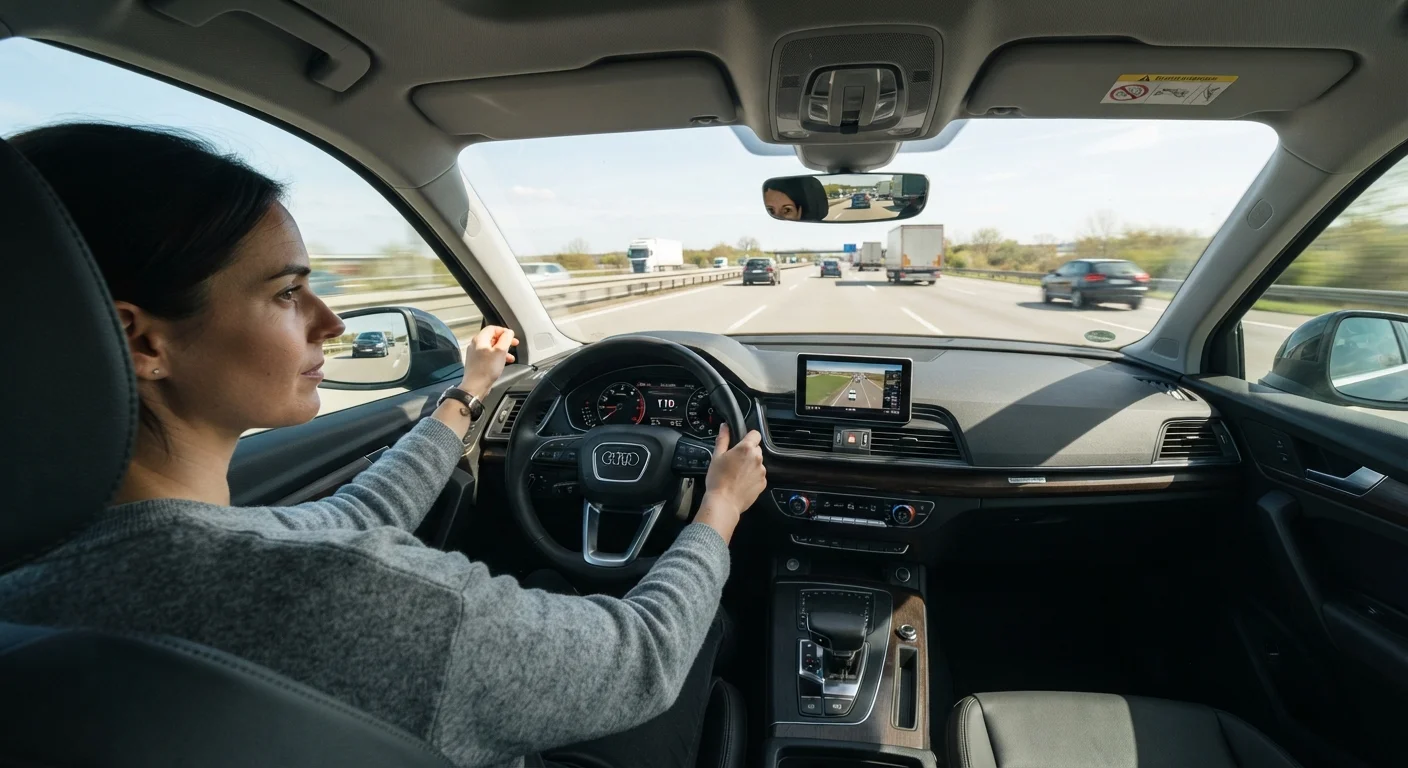
The Root of the Problem: Mirrors Aimed at the Wrong Thing
Ask most drivers how they set their mirrors and they'll say something like, "I can see the side of my car in both." That feels right — it's how most of us were taught, and it seems logical to use your own vehicle as a reference point. The problem is that the side of your car is already fully visible to you. You don't need a mirror for it. Pointing your side mirrors inward to show your rear quarter panels wastes coverage on space you already know about, while leaving genuine gaps on either side of your vehicle unmonitored.
The result is a blind spot — the zone roughly alongside your rear doors and back pillars where another vehicle can sit completely invisible to you. Drivers who change lanes relying only on these inward-pointed mirrors have no idea what they're missing until it nearly costs them.
Don't Adjust Mirrors While Moving
Adjusting your mirrors while driving pulls your eyes off the road and your hands away from the wheel. Set your mirrors before you put the car in gear. If you need to readjust mid-trip, pull safely off the road first.
Common Mistakes Drivers Make With Mirror Adjustment
Understanding exactly where mirror setup goes wrong helps you fix it. Here are the most frequent errors and what to do instead.
Angling side mirrors inward to show the rear quarter panel of your own car.
Why it happens: Driver's ed and habit reinforce using the car's body as a reference point, making this feel correct even though it creates a gap alongside the vehicle.
Setting the rearview mirror to favor one side or tilting it down toward the rear seat.
Why it happens: Drivers often adjust mirrors casually or after someone else has driven the car, then never reset them to the correct neutral position.
Relying on mirrors alone without performing a shoulder check before changing lanes.
Why it happens: Drivers assume well-positioned mirrors cover everything, or they develop habits that skip the physical check when traffic feels light.
Adding a wide-angle or convex mirror clip-on without learning how it changes depth perception.
Why it happens: Convex mirrors expand your field of view, which sounds straightforwardly better, but they make objects appear farther away than they actually are — a tradeoff many drivers don't realize.
Once you've corrected your mirror angles, the system works like a continuous band of visibility: your rearview handles the center, and each side mirror picks up where it leaves off. A car overtaking you should appear in your rearview, drift into a side mirror, and then become directly visible as it pulls alongside — with no gap in between. If that handoff isn't happening, your mirrors still need adjustment.
What Mirrors Can't Do — And What Still Falls on You
Even with textbook mirror positioning, blind spots don't disappear entirely. A-pillars (the structural posts framing your windshield), headrests, passengers, and cargo all create obstructions that no mirror setting addresses. Larger vehicles — trucks, SUVs, vans — have more pronounced blind zones than sedans, especially at the rear corners.
~$1 million
Annual lane-change crashes in the U.S.
The National Highway Traffic Safety Administration has consistently identified improper lane changes and blind-spot failures as a leading factor in sideswipe and merging crashes.
1 second
Time required for a shoulder check
Traffic safety researchers note that a brief head turn before a lane change catches objects in the blind zone that even correctly adjusted mirrors cannot see.
The shoulder check remains non-negotiable. Before any lane change, a quick glance over your shoulder takes about one second and fills in the gap no mirror can cover. Think of your mirrors as your first line of awareness and the shoulder check as your confirmation step — not the other way around.
Visibility challenges multiply after dark. Night driving habits that sharpen your awareness become especially important when glare, shadows, and fatigue make it harder to track vehicles in your mirrors. Similarly, wet-road hazards reduce your reaction time if a blind-spot miss forces a sudden correction.
If you're new to intersections with unconventional layouts, knowing your mirrors are dialed in builds confidence. See how roundabouts work for another layer of situational awareness on the road.
This article provides general driving safety information for educational purposes. Always follow the traffic laws applicable in your state and consult your vehicle's owner manual for mirror adjustment guidance specific to your car.
The content on this site is for informational purposes only and is not a substitute for professional advice. Always consult a qualified professional for guidance specific to your situation.