

Our Verdict
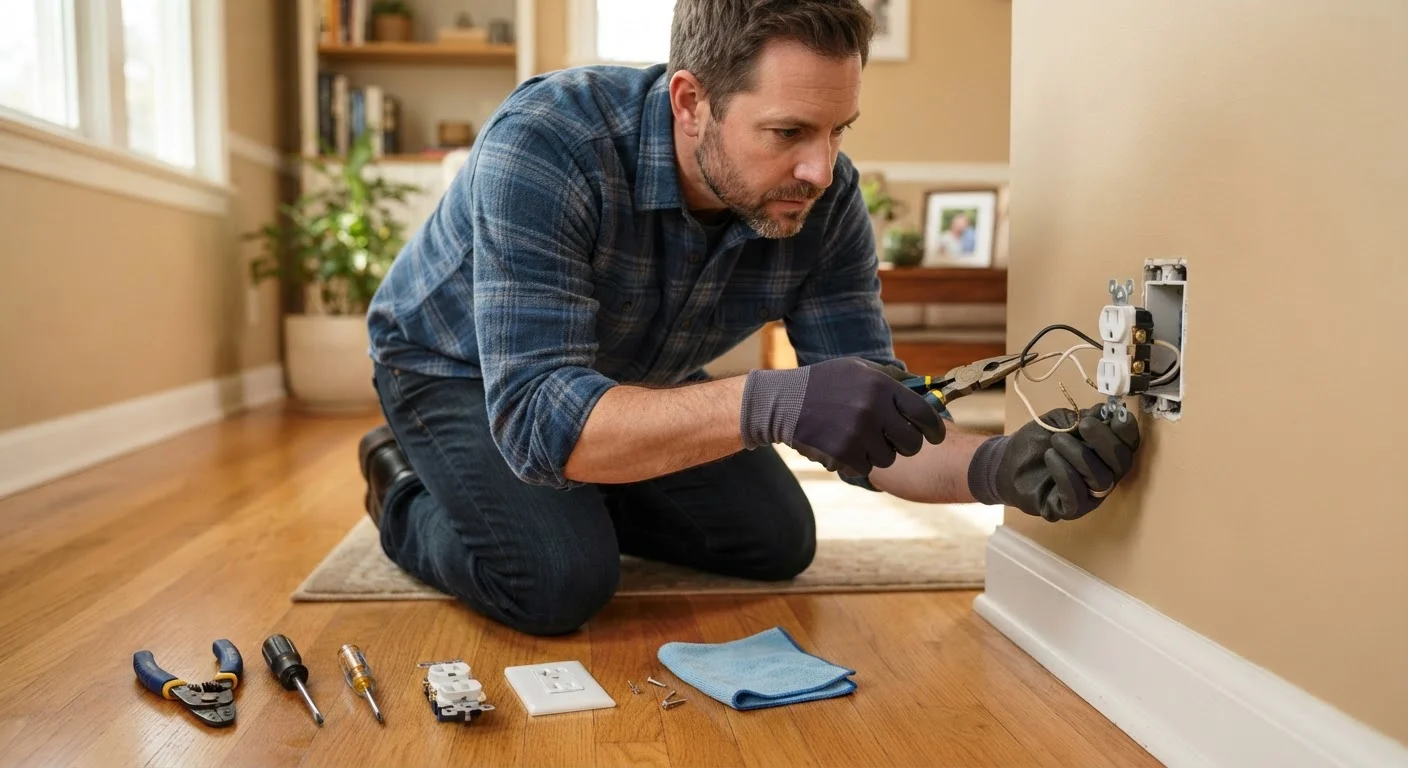
DIY electrical work occupies a narrow but real middle ground. Straightforward tasks — swapping a receptacle, replacing a light switch, or installing a ceiling fan on an existing circuit — are genuinely manageable for a methodical homeowner willing to follow safety protocols. However, anything involving the service panel, new wiring runs, or structural changes carries risks that go well beyond a typical DIY skill set. The gap between 'realistic' and 'risky' is not about confidence; it's about the physics of electricity and the stakes of getting it wrong.
Best suited to homeowners with basic tool comfort who want to handle minor repairs and fixture swaps — not for those eyeing panel upgrades, new circuit installation, or full-room rewiring.
The Case for Doing Some Electrical Work Yourself
For everyday homeowners, a handful of electrical tasks genuinely sit within a manageable skill range — provided you approach them with the right preparation and respect for the hazards involved. The core appeal is straightforward: simple repairs can be completed on your own schedule without waiting on an electrician's availability, and the material costs for tasks like replacing an outlet or swapping a light switch are typically modest.
Save on labor costs for minor repairs
Electrician labor rates can be substantial, especially for short jobs. Swapping a faulty outlet or replacing a light switch yourself can be completed in under an hour with inexpensive materials.
Work on your own schedule
Electricians in many areas have limited availability. Handling minor repairs yourself means you're not waiting days or weeks for a service call.
Builds useful working knowledge of your home
Understanding your home's circuits, panel layout, and outlet types gives you better context when something goes wrong and helps you communicate clearly with professionals when you do need them.
Many simple tasks are well-documented
Replacing outlets, switches, and fixtures has been standardized for decades. Clear instructions, wiring diagrams, and code-compliant procedures are widely available from reputable sources.
The key is understanding the scope. Replacing a standard 15- or 20-amp outlet on an existing circuit, installing a new light switch in place of an old one, swapping a ceiling light fixture, or adding a GFCI (ground fault circuit interrupter) outlet in a bathroom are all tasks with clear, well-documented procedures. If you can shut off the correct breaker, confirm the circuit is dead with a non-contact voltage tester, and follow wiring diagrams carefully, these jobs are achievable. For a broader orientation on tackling home projects at this level, see the First-Timer's Roadmap to Home Improvement Projects.
Where Homeowner Electrical Work Gets Genuinely Dangerous
The line between manageable and dangerous in electrical work is less about confidence and more about the nature of the task itself. Certain categories of work carry risks — electric shock, fire, or structural damage — that are difficult to mitigate without professional training and equipment.
Electrocution risk if safety steps are skipped
Even a standard 120-volt household circuit can deliver a lethal shock. Failing to properly verify the circuit is dead before touching wires is the most common and most dangerous mistake.
Wiring errors can cause fires long after the job
A loose connection or improper wire gauge may not trip a breaker immediately but can generate heat over time, leading to a fire inside a wall cavity days, months, or years later.
Older homes present hidden complications
Homes with knob-and-tube wiring, aluminum wiring, or outdated panels don't behave like modern systems. A task that appears simple can quickly become a code and safety problem.
Permits and inspections are frequently required
Work done without required permits may not be insurable, may need to be redone to sell the home, and can expose homeowners to liability. Requirements vary significantly by municipality.
Mistakes can void homeowner's insurance coverage
Insurance policies often include clauses related to code compliance. An electrical fire linked to unpermitted or improper DIY work may result in a denied or reduced claim.
Work that nearly always belongs to a licensed electrician includes: adding or extending circuits, upgrading your main service panel, installing a subpanel, working with aluminum wiring (common in homes built between roughly the mid-1960s and early 1980s), and any work requiring you to touch the main panel's service entrance, which remains energized even when your breaker is off. These are not tasks where a detailed YouTube tutorial fills the gap. The consequences of a wiring error in these contexts range from tripped breakers to house fires.
Aluminum Wiring Requires Special Attention
Homes built roughly between 1965 and 1973 may have aluminum branch-circuit wiring rather than copper. Aluminum wiring requires specific outlets, switches, and connection methods rated for it — using standard copper-rated devices can create a serious fire hazard. If you're unsure what type of wiring your home has, have it inspected by a licensed electrician before doing any outlet or switch work.
It's also worth noting that electrical codes — governed locally by adoptions of the National Electrical Code (NEC) — change on a regular cycle. Wiring methods that were acceptable in older homes may not meet current code, and bringing work into compliance often reveals more complexity than a homeowner bargained for.
The Permit Question You Can't Ignore
Many homeowners are surprised to learn that even seemingly minor electrical work may require a permit in their jurisdiction. Permit requirements vary by municipality, but as a general rule, any work that goes beyond like-for-like fixture replacement — meaning you're altering or extending the electrical system — typically triggers a permit requirement.
Why does this matter? Unpermitted work can complicate homeowner's insurance claims if an electrical fire occurs, raise red flags during a home sale inspection, and leave you personally liable for code violations. Our detailed article on when a DIY repair needs a permit walks through what's typically regulated and why skipping the process carries real consequences. Before you start any electrical project beyond a direct fixture swap, contact your local building department to confirm what's required in your area.
~51,000
Home electrical fires reported annually in the US
According to the U.S. Fire Administration, electrical fires cause thousands of injuries and significant property damage each year, underscoring why code compliance matters.
~$50–$100/hr
Typical electrician labor rate range
Labor costs vary widely by region and job complexity; this general range illustrates why homeowners are motivated to handle simple tasks themselves where it's safe to do so.
A Practical Framework: Stop Before You Start
Before picking up a screwdriver on any electrical task, run through this mental checklist:
- Identify the circuit. Know exactly which breaker controls the outlet, switch, or fixture you're working on.
- Shut off the breaker and test. Use a non-contact voltage tester — not just a visual check — to confirm the circuit is truly dead. Test multiple times.
- Photograph the existing wiring. Before disconnecting anything, photograph how wires are currently connected. This is your roadmap for reconnection.
- Know your wire colors. In standard US residential wiring, black is hot, white is neutral, and bare copper or green is ground. However, wiring in older homes may not follow this convention reliably.
- Recognize when to stop. If you open a junction box and find unexpected wiring configurations, signs of burning or melting, or wires you can't identify, close it up and call an electrician.
This kind of deliberate approach is similar to the discipline recommended in DIY auto maintenance vs. taking it to a shop — knowing which column a task belongs in before you invest time and risk.
This article is for general informational purposes only and does not constitute professional electrical or safety advice. Always verify local permit requirements with your municipal building department, and consult a licensed electrician for any work that exceeds straightforward fixture replacement.
The content on this site is for informational purposes only and is not a substitute for professional advice. Always consult a qualified professional for guidance specific to your situation.