

Start here
Choosing the Right Spot
Next
Understanding Your Soil
Then
Planning What to Grow
Gear up
Essential Tools for Beginners
Keep it going
Watering, Spacing, and Early Care
Choosing the Right Spot
Before you buy a single seed, walk your yard at different times of day and observe where sunlight falls. Most vegetables and flowering plants require a minimum of six hours of direct sun daily — and eight is better for fruiting crops like tomatoes and peppers. Shady spots can support herbs like mint or leafy greens like spinach, but they'll limit your options significantly.
Proximity to a water source matters almost as much as sunlight. Carrying heavy watering cans across a large yard becomes a chore that discourages consistency. Choose a spot within reasonable reach of an outdoor spigot or hose connection.
Also consider drainage. Avoid low spots where water pools after rain, as consistently waterlogged soil suffocates roots. Flat or gently sloping ground with good runoff is ideal. If you're working with a challenging yard, a raised bed lets you sidestep poor drainage and poor native soil at once — a popular choice for beginners across the country.
Container Gardening Is a Valid Option
If you're renting, working with a concrete patio, or simply short on yard space, containers and fabric grow bags can support a productive garden. Large pots with drainage holes work well for tomatoes, peppers, herbs, and leafy greens. The principles of sunlight, soil, spacing, and watering apply just the same.
Understanding Your Soil
Soil is the foundation of every healthy garden, and most beginner problems trace back to it. Before adding anything, get a basic soil test — your local cooperative extension office often provides low-cost testing — to learn your soil's pH and nutrient levels. Most vegetables prefer a slightly acidic to neutral pH, roughly between 6.0 and 7.0.
If your soil is compacted, sandy, or clay-heavy, work in generous amounts of organic matter like compost. Compost improves drainage in clay soils, helps sandy soils retain moisture, and feeds beneficial soil organisms that support plant health. For raised beds, a mix of quality topsoil, compost, and a small portion of coarse material creates a loose, nutrient-rich growing medium.
Making your own compost is easier than most people expect. See our guide on turning kitchen scraps into garden compost for a practical starting point. Healthy soil built once keeps rewarding you for seasons to come.
Soil pH
A measure of how acidic or alkaline your soil is, on a scale from 0 to 14. Most vegetable gardens do best in soil with a pH between 6.0 and 7.0.
Compost
Decomposed organic material — such as food scraps, leaves, and yard waste — that enriches soil with nutrients and improves its texture.
Days to Maturity
The approximate number of days from planting until a crop is ready to harvest, as listed on seed packets. It helps you time planting with your growing season.
Raised Bed
A contained garden structure — typically a wooden or metal frame — filled with a custom soil mix. It sits above the native ground, giving you full control over soil quality and drainage.
Mulch
A layer of material — straw, wood chips, or shredded leaves — spread over garden soil to conserve moisture, suppress weeds, and moderate soil temperature.
Cooperative Extension
A network of land-grant university programs across the U.S. that provides research-based, region-specific gardening advice and low-cost soil testing services.
Planning What to Grow
Resist the urge to grow everything at once. A focused first garden teaches you far more than an overwhelming one. Pick three to five crops you'll actually eat or use, and choose varieties suited to your region and season.
Beginners tend to do well with fast-maturing crops that give quick feedback: radishes are ready in about three weeks, lettuce in four to six, and green beans in around seven to eight. Success with these builds confidence for longer-season crops in year two.
Check the back of seed packets carefully — they list days to maturity, recommended spacing, and sun requirements. These details are your planning blueprint. Group plants with similar water needs together, and keep taller plants on the north side of the bed so they don't shade shorter neighbors.
Start with Transplants, Not Just Seeds
Buying starter plants from a nursery gives you a head start and reduces the risk of failed germination — a common early frustration. Once you're comfortable with the rhythm of the garden, you can experiment with growing more plants from seed. Many gardeners do both simultaneously.
Essential Tools for Beginners
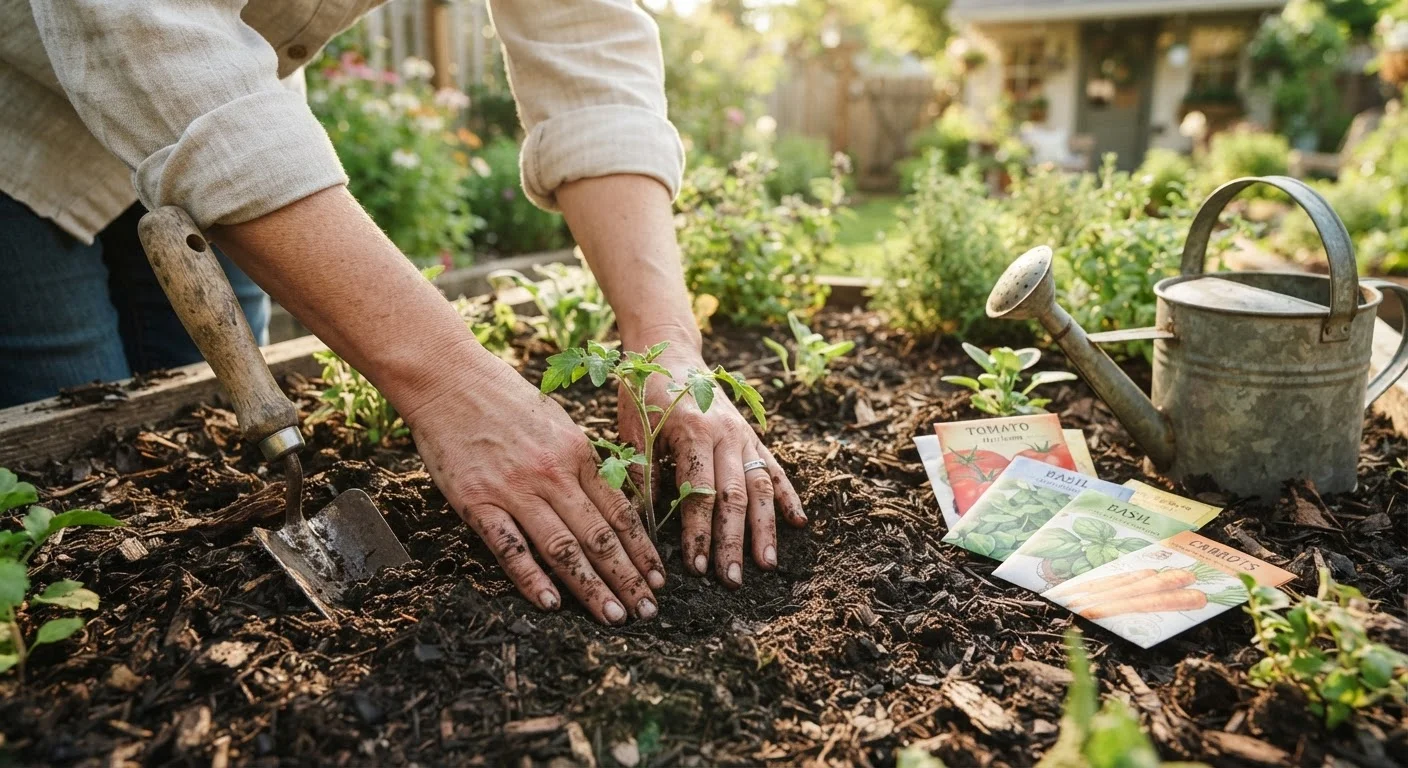
You don't need a shed full of equipment to get started. A short list of quality, versatile tools handles nearly every beginner task. The following items will carry you through planting, maintenance, and harvest:
- Hand trowel — for digging planting holes and transplanting seedlings
- Garden fork or cultivator — for loosening and aerating soil before planting
- Hoe — for weeding between rows without bending over constantly
- Watering can or garden hose with an adjustable nozzle — for gentle, targeted watering
- Garden gloves — to protect your hands and improve grip
- Kneeling pad — a small comfort that makes a big difference in longer sessions
For broader home improvement projects that complement your outdoor work, our DIY Home Improvement hub covers helpful skills like building raised beds, installing drip irrigation, or setting up simple outdoor structures.
Watering, Spacing, and Early Care
Two mistakes account for most first-garden failures: overwatering and planting too close together. Both are easy to avoid with a bit of upfront knowledge.
Most vegetable gardens need roughly one inch of water per week. Water deeply and less frequently rather than shallowly every day — this encourages roots to grow downward, making plants more drought-tolerant. A simple moisture check: push your finger two inches into the soil. Dry? Water thoroughly. Damp? Wait another day.
Spacing is just as critical. Crowded plants compete for nutrients, block airflow, and become more vulnerable to disease. Always follow the spacing guidelines on seed packets or plant tags. It feels counterintuitive to leave so much bare soil when plants are small, but they grow fast, and that space fills in quickly.
Pull weeds while they're young and shallow-rooted — a weekly pass through the bed takes only minutes and prevents major competition. Mulching the soil surface with a few inches of straw or wood chips suppresses weeds, retains moisture, and keeps soil temperature stable.
Gardening and home ownership go hand in hand. If you're tackling other projects around the house, check out the first-timer's roadmap to home improvement projects for the same kind of grounded, step-by-step guidance.
Don't Ignore Drainage and Root Rot
Overwatering is one of the top causes of plant death in beginner gardens. Yellowing leaves, wilting despite wet soil, and a musty smell near the roots are common signs of waterlogged conditions. Always ensure your bed or containers can drain freely, and let the soil partially dry between waterings rather than staying constantly saturated.
Frequently Asked Questions
The right start time depends on your local climate and what you want to grow. Cool-season crops like lettuce and spinach can go in while frost is still possible; warm-season plants like tomatoes need soil temperatures above 60°F. Check your region's last frost date and seed packet instructions to time planting correctly.
A 4×4-foot raised bed or a few large containers is plenty for a first garden. Starting small makes it easier to manage watering, weeding, and learning. You can always expand once you've had a successful season.
For in-ground beds, testing and amending your existing soil is often the best approach. For raised beds, a blend of topsoil, compost, and other organic matter gives plants an excellent start. Bagged potting mix works well for containers but is not designed for in-ground use.
Most vegetable gardens need about one inch of water per week, whether from rain or irrigation. Rather than watering a little every day, water deeply a few times a week so roots grow downward. Stick your finger two inches into the soil — if it feels dry, it's time to water.
Radishes, lettuce, zucchini, green beans, and cherry tomatoes are widely considered beginner-friendly because they grow quickly and tolerate minor mistakes. Herbs like basil, chives, and mint are also forgiving and useful choices for a starter plot.
If your soil is rich in organic matter, early fertilization may not be necessary. Adding compost before planting is one of the most effective natural ways to supply nutrients. As plants mature, a balanced all-purpose fertilizer can help sustain growth — follow label rates and avoid over-applying.
The content on this site is for informational purposes only and is not a substitute for professional advice. Always consult a qualified professional for guidance specific to your situation.