

Our Verdict
Neither natural nor synthetic textiles win outright — each excels in different rooms, use cases, and budgets. Natural fabrics bring breathability and timeless texture; synthetics deliver resilience and ease of care. For most everyday American homes, a thoughtful mix of both offers the best of both worlds.
| Best for | Recommended |
|---|---|
| Bedrooms and skin-contact items like bedding and throws | Natural fibers (cotton, linen, wool) |
| High-traffic areas and households with children or pets | Synthetic fabrics (polyester, microfiber) |
| Budget-conscious decorating with low-maintenance priorities | Synthetic or blended fabrics |
| Allergy-sensitive households seeking breathable materials | Natural fibers (cotton, wool) |
What Sets Natural and Synthetic Textiles Apart
The core difference between natural and synthetic textiles comes down to origin. Natural fibers — cotton, linen, wool, silk, jute — come from plants or animals and have been used in homes for centuries. Synthetic fibers — polyester, nylon, acrylic, microfiber — are engineered from petrochemicals and became widespread in the mid-20th century.
Both categories have genuine strengths, and neither is universally superior. Understanding what each brings to your living space helps you make choices that hold up to real life — not just look good in a showroom. If you're also refining your overall decorating direction, it helps to know which interior design style suits your home before committing to fabrics.
| Cotton | Linen | Wool | Polyester | Microfiber | |
|---|---|---|---|---|---|
| Breathability | High | Very high | High | Low | Low–medium |
| Durability | Moderate | High | Very high | High | Moderate–high |
| Stain resistance | Low | Low–moderate | Moderate | High | Very high |
| Ease of care | Easy | Moderate | Delicate | Easy | Easy |
| Typical cost | Low–moderate | Moderate–high | High | Low | Low |
| Best home use | Bedding, curtains | Curtains, throws | Rugs, upholstery | Upholstery, curtains | Sofas, cleaning |
Natural Fibers: Comfort, Breathability, and Character
Cotton is the workhorse of home textiles — widely available, washable, and soft enough for bedding, curtains, and slipcovers. It breathes well and tends to feel comfortable in warm climates. The trade-off: cotton wrinkles easily and can fade with repeated washing if not treated.
Linen, made from the flax plant, is stronger than cotton and develops a relaxed, lived-in look over time that many homeowners find appealing. It's naturally moisture-wicking and gets softer with every wash, making it a durable long-term investment for tablecloths, curtains, and throw covers.
Wool excels as a rug and upholstery material. It's naturally resilient, flame-resistant, and has a built-in ability to bounce back from compression — which means a wool area rug holds its texture under furniture longer than many alternatives. Wool does require more careful cleaning and may not suit households with wool allergies.
Getting More Life from Natural Fiber Textiles
Wash natural fiber items in cool or cold water on a gentle cycle to reduce shrinkage and color loss. Air-dry when possible rather than using high dryer heat. For linen and cotton, washing before first use removes manufacturing residues and pre-shrinks the fabric — so your finished pieces keep their shape after future washes.
Synthetic Fabrics: Durability, Stain Resistance, and Value
Polyester is probably the most common synthetic in home décor. It resists fading, holds color well, dries quickly, and is significantly more affordable than comparable natural fabrics. Polyester upholstery and curtains are practical choices for busy rooms — though they can trap heat and feel less breathable in warm weather.
Microfiber — an ultra-fine polyester weave — has earned its place in American households for sofa upholstery and cleaning cloths. Its tight weave makes it highly resistant to spills and pet hair, and it wipes clean easily. The texture can feel plush and soft, though over time some microfibers can develop a worn, pilling appearance with heavy use.
Acrylic is often used as a wool alternative in area rugs and outdoor textiles. It mimics wool's softness at a lower price point and resists moisture well, making it a practical option for covered porches or sunrooms.
~52%
Global share of polyester in textile production
According to industry data cited by the Textile Exchange, polyester accounts for more than half of global fiber production, reflecting its wide use in home furnishings and apparel.
2–3×
Longer lifespan of wool rugs vs. synthetic alternatives
Wool fibers can flex thousands of times before breaking, giving quality wool rugs a significantly longer service life than many synthetic counterparts under comparable foot traffic.
How to Match Fabrics to Rooms and Lifestyles
The smartest textile decisions are room-specific. Here's a practical framework:
- Bedrooms: Prioritize breathability. Natural cotton or linen sheets and pillowcases tend to regulate temperature better than polyester alternatives — especially helpful for hot sleepers.
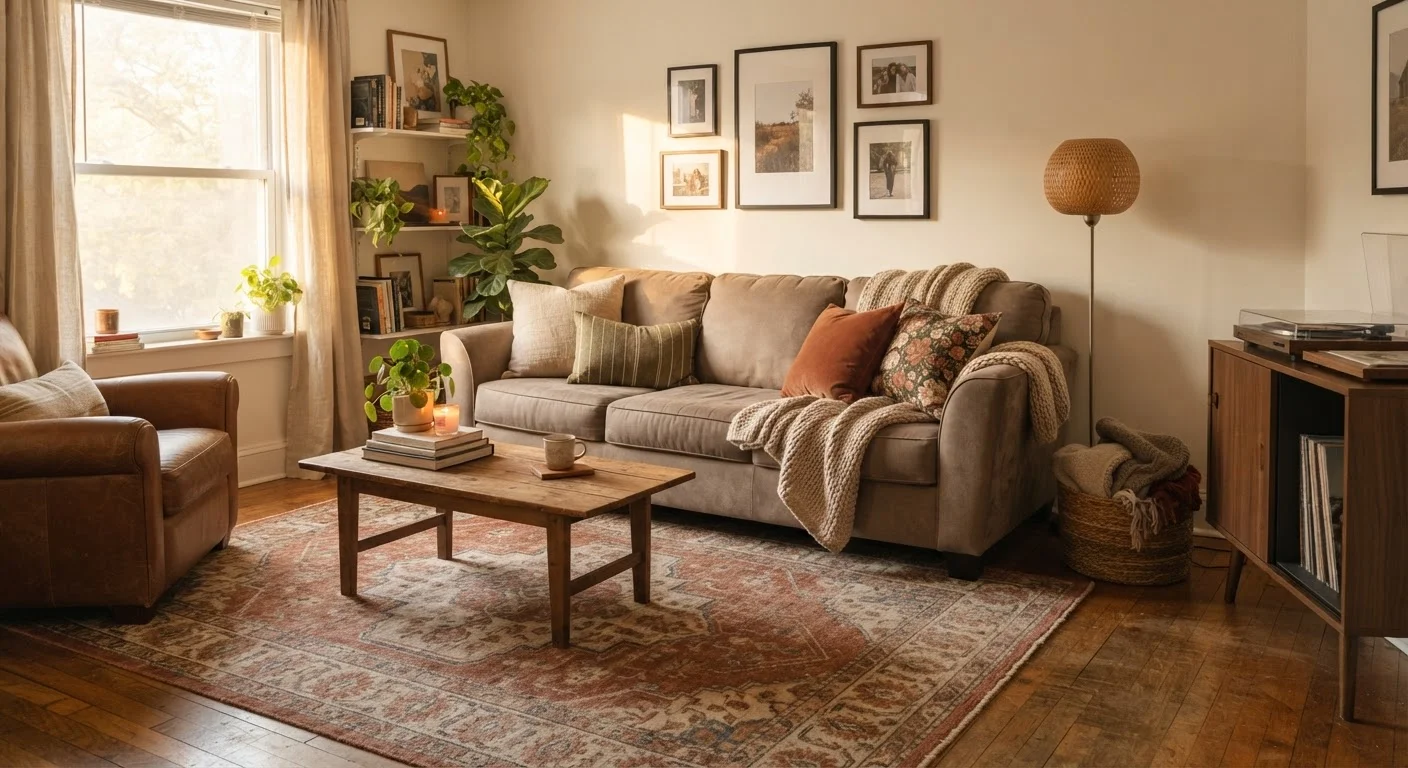
- Living rooms: Balance look and practicality. A linen or cotton throw adds texture and warmth; a microfiber or blended upholstery on the sofa handles daily wear without showing every mark.
- Dining areas: Consider washability first. Linen tablecloths look elegant and launder well; polyester blends resist staining from spills.
- High-traffic or family spaces: Synthetic or blended fabrics generally hold up better under frequent use and are easier to spot-clean.
Just as flooring choices involve trade-offs between durability and character — explored in our guide to laminate vs. hardwood flooring — textile choices involve similar balancing acts between feel, longevity, and upkeep.
If budget is a primary concern, blended fabrics (e.g., a cotton-polyester mix) often deliver a livable compromise: the softness of natural fiber with the durability and wrinkle-resistance of synthetic. They're worth exploring before defaulting to either extreme.
Watch for Misleading Fabric Labels
Terms like 'natural feel' or 'organic look' on a product tag don't mean the fabric itself is made from natural fibers — they may simply describe texture or color. Always check the fiber content label (required on textile products sold in the U.S.) to confirm what a fabric is actually made of before purchasing. This matters especially if you or a household member has known sensitivities to synthetic materials or specific natural fibers like wool.
The content on this site is for informational purposes only and is not a substitute for professional advice. Always consult a qualified professional for guidance specific to your situation.