

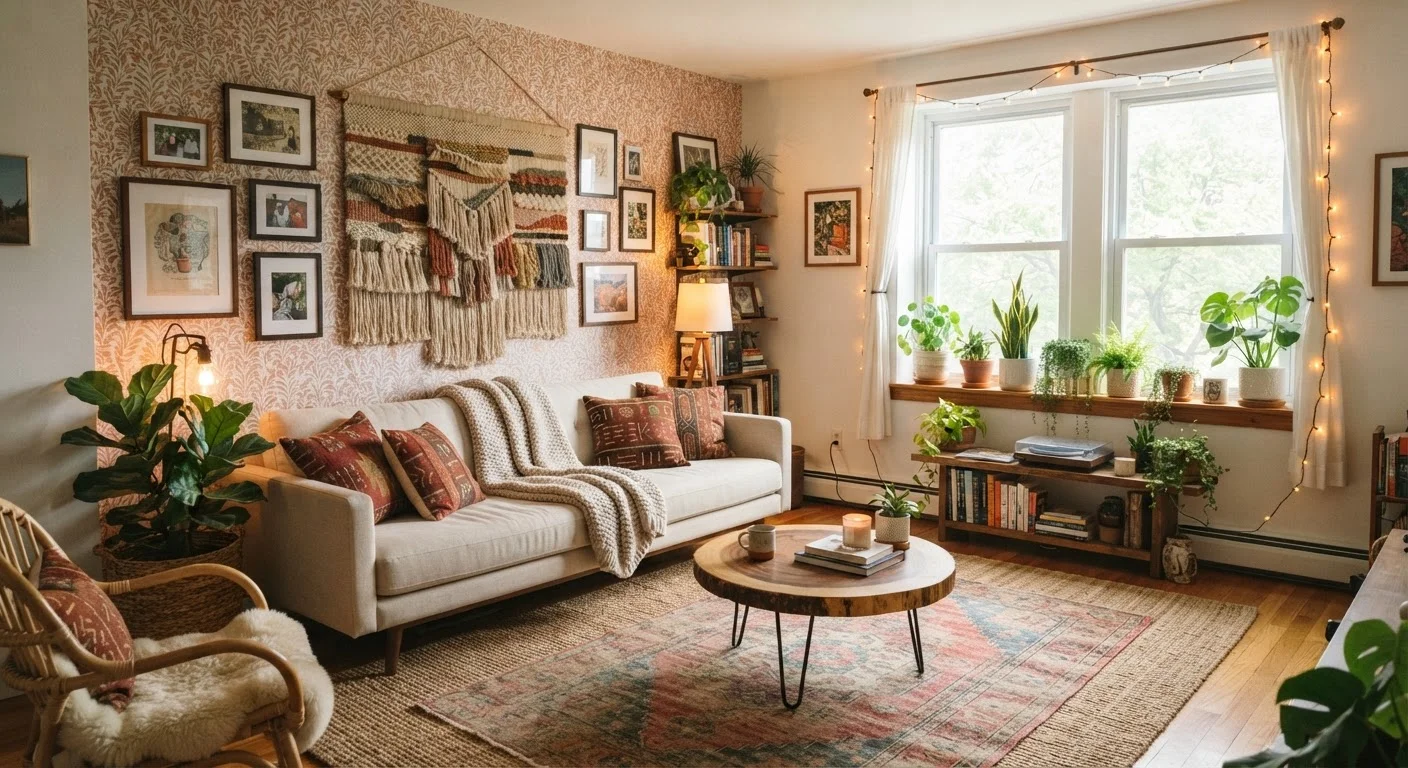
Making a Rental Yours — Without Losing Your Deposit
Renting comes with real constraints — no painting the walls terracotta, no tiling the backsplash, no knocking down the half-wall between the kitchen and living room. But those constraints don't mean you're sentenced to a space that feels blank and temporary. Plenty of decorating moves are fully reversible, surprisingly affordable, and genuinely transformative.
Before you start, do two things: re-read your lease to understand exactly what modifications are prohibited, and complete a thorough move-in inspection. See our move-in documentation checklist to protect yourself when you eventually move out. With that foundation in place, here are eight practical approaches that work with your rental — not against it.
Use removable wallpaper for a real accent wall
Peel-and-stick removable wallpaper has improved dramatically in recent years. It now comes in hundreds of patterns — grasscloth textures, geometric prints, botanical designs — and removes cleanly from most painted drywall when the time comes. One accent wall behind a bed or sofa is enough to shift a room's personality entirely without touching a paint can.
A few practical notes: apply it to clean, dry walls and let freshly painted surfaces cure for at least 30 days first. Always test a small corner before doing the full wall, and keep a note of the pattern name in case you need replacement panels.
One removable wallpaper accent wall can completely change a room's personality.
Layer rugs to define zones and add warmth
Bare floors are one of the fastest ways a rental reads as temporary. A large area rug — sized so that front legs of furniture sit on it — grounds the living room and makes it feel intentional. In open-plan spaces, layering a smaller patterned rug over a larger neutral one adds visual depth without crowding.
Rugs also do acoustic work: hard floors in rentals can make spaces feel echoey, and a substantial rug absorbs enough sound to make a room feel warmer and quieter. Natural fiber rugs (jute, sisal) work well under furniture; softer wool or synthetic blends are better underfoot in seating areas.
A properly sized rug makes a rental living room feel grounded and intentional.
Swap out lighting to set the right mood
Overhead lighting in most rentals is functional at best — often a single ceiling fixture that floods the room with flat, harsh light. You can't rewire anything, but you can supplement strategically. Floor lamps, table lamps, and plug-in sconces dramatically shift a room's atmosphere in the evening without any permanent changes.
Store the original fixture carefully if you do swap out a ceiling light for one you own — you'll need to reinstall it when you leave. For any electrical work beyond swapping a bulb or a fixture at an existing junction box, consult a licensed electrician; amateur wiring is both dangerous and a common lease violation.
Layered lamps transform flat rental lighting into something genuinely atmospheric.
Hang things with adhesive strips and hooks
Modern adhesive hanging strips are rated to hold anywhere from a few ounces to over 15 pounds depending on the product type, making them suitable for gallery walls, mirrors, small shelves, and even curtain rods. Follow weight ratings carefully and always prep the wall surface first — adhesives fail on dusty, textured, or freshly painted walls.
For heavier items like large mirrors, look for adhesive-backed picture hooks designed for that weight range. When in doubt about a wall's surface or a fixture's weight, opt for a leaning arrangement instead — a leaning mirror or ladder shelf requires no hardware at all.
Adhesive strips handle most hanging needs without leaving damage behind.
Treat windows with renter-friendly curtains
Standard mini blinds are a rental staple, and they're rarely charming. Hanging full-length curtains above and slightly wider than the window makes ceilings read as taller and rooms as larger. Tension rods work inside window frames for lightweight panels; for floor-length drapes, a ceiling-mounted adhesive curtain rod holder or a freestanding curtain rod stand avoids any drilling.
For more decorating context on making small spaces feel bigger through layout and light, see decorating a small living room. Store the original blinds — most leases require them to be in place at move-out.
Floor-length curtains hung high make ceilings look taller and rooms feel larger.
Bring in plants at every scale
Nothing reads as more lived-in than healthy greenery. A tall floor plant — a fiddle-leaf fig, a snake plant, a pothos in a large pot — fills corners that furniture can't reach and brings vertical interest to a room. Smaller plants on windowsills, shelves, and countertops add texture throughout.
If natural light is limited, focus on low-light-tolerant varieties like pothos, ZZ plants, and peace lilies. Decorative planters and pots do as much visual work as the plant itself — a terracotta pot on a rattan stand reads very differently from a mass-market plastic nursery container.
A single large floor plant fills corners and brings a room to life instantly.
Use peel-and-stick tiles in kitchens and bathrooms
Peel-and-stick backsplash tiles and floor tiles have become a genuine renter's tool. Applied over clean, existing tile or smooth surfaces, they update a dated kitchen or bathroom without grout, mortar, or tools. Most products are repositionable during installation and removable without damaging the original surface beneath — though testing a corner first is always wise.
This pairs well with other low-impact bathroom updates. See bathroom refresh ideas for further inspiration on non-structural improvements.
Peel-and-stick tiles can update a dated kitchen or bathroom in an afternoon.
Edit and arrange what you already have
Before buying anything, experiment with furniture arrangement. Moving a sofa away from the wall, angling a chair, or repositioning a bookshelf costs nothing and can completely change how a room functions and feels. Decluttering is equally powerful — a rental with fewer, more intentional objects almost always looks more like a home than one filled with mismatched items competing for attention.
If you're new to renting and setting up a space for the first time, the broader guide at renting your first apartment covers the full picture from application to move-in day.
Rearranging furniture costs nothing and can make a room feel entirely new.
Putting It All Together
The most livable rental spaces layer several of these approaches together — a statement rug anchors the room, curtains frame the windows, plants add life, and thoughtful lighting does the heavy lifting after dark. None of these moves require a contractor, a permit, or significant risk to your deposit.
Take Photos Before and After Every Change
Whenever you add something adhesive or make any modification — even minor ones — photograph the wall or surface before and after. This creates a clear record that any pre-existing damage was there when you arrived and that your changes were reversed properly. Store these photos somewhere you won't lose them, like a dedicated folder in cloud storage.
If a room still feels off after decorating, it's often a layout or scale issue rather than a lack of stuff. Our guide on common decorating missteps walks through the most fixable errors. And when you're ready to think bigger — whether you eventually own or rent a larger space — a room-planning checklist can save you from costly mistakes before you spend a dollar.
The content on this site is for informational purposes only and is not a substitute for professional advice. Always consult a qualified professional for guidance specific to your situation.