

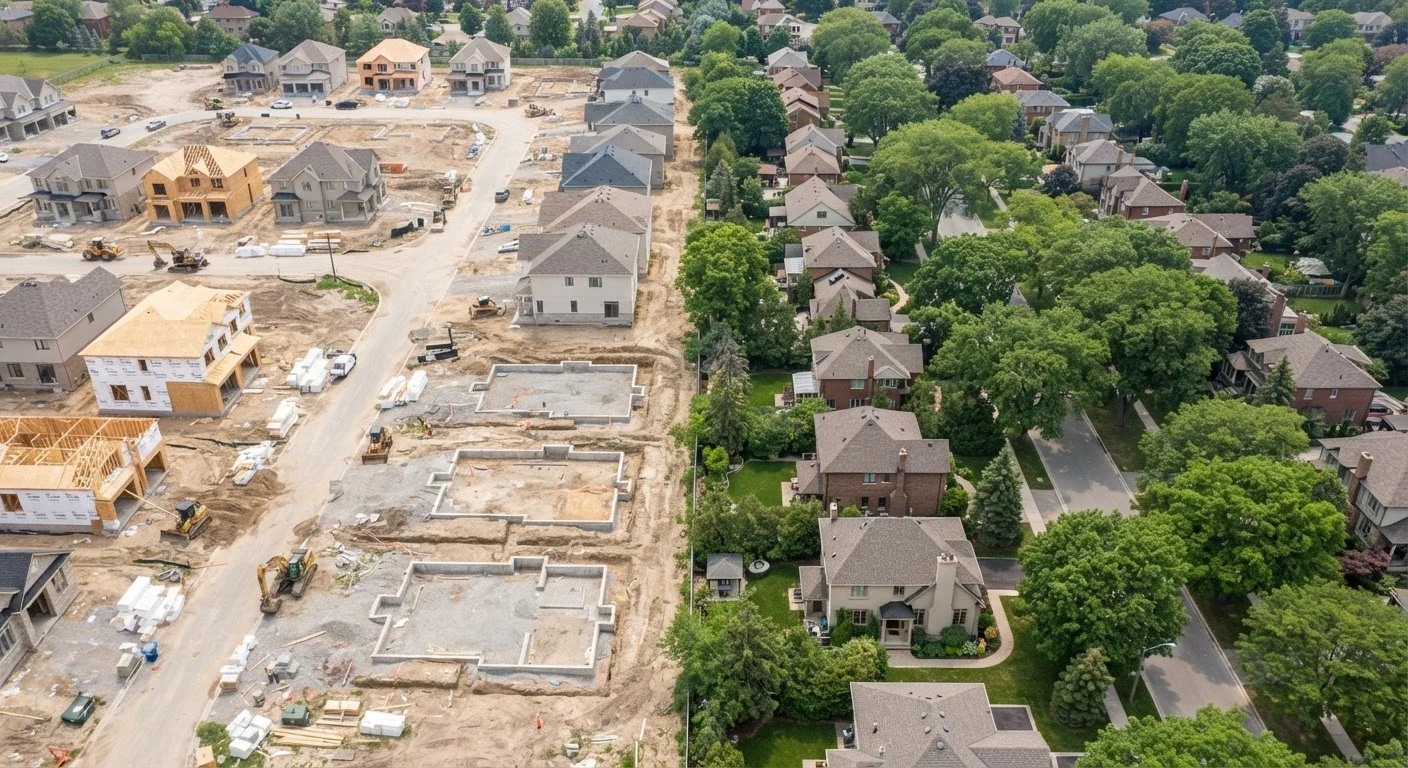
Our Verdict
Neither new construction nor existing homes is the objectively better choice — each suits a different buyer profile. New builds reward those with flexibility on timing and a preference for move-in-ready, customized spaces with fewer immediate repairs. Existing homes suit buyers who prioritize location, faster closing, and negotiating leverage. Understanding the true cost of each path is essential before committing.
| Best for | Recommended |
|---|---|
| Buyers who want modern layouts, energy efficiency, and builder warranties | New Construction |
| Buyers prioritizing established neighborhoods, mature landscaping, and faster closing | Existing Homes |
| Those with flexible timelines and willingness to manage a build process | New Construction |
| Buyers with limited upfront budget seeking price negotiation room | Existing Homes |
The Price Tag Is Just the Starting Point
When comparing new construction to existing homes, the listed price rarely tells the full story. New builds often carry a premium — sometimes 10–20% above comparable resale homes in the same market — reflecting modern materials, energy-efficient systems, and builder profit margins. However, that higher sticker price may come bundled with appliances, smart home features, and builder incentives that reduce out-of-pocket costs at move-in.
Existing homes, by contrast, tend to offer more negotiating flexibility. Sellers of resale properties are often motivated by life circumstances — job relocation, divorce, downsizing — that give buyers real leverage. Price reductions, seller-paid closing costs, and credits for known repairs are all common tools in a resale negotiation. That said, older homes carry the risk of immediate repair needs that quickly erode any savings.
For a deeper look at what expenses extend beyond the purchase price itself, see the full breakdown of buying costs beyond the purchase price.
~$120K
Median price gap, new vs. existing homes
According to National Association of Realtors data, the median new construction home has historically sold at a significant premium over existing homes, though this gap fluctuates with market conditions.
1%
Annual maintenance rule of thumb
Housing experts commonly recommend budgeting approximately 1% of a home's purchase price per year for ongoing maintenance — a figure that tends to skew higher for older properties.
Build Timelines vs. Move-In Ready: The Scheduling Reality
One of the most underappreciated factors in new construction is time. A standard single-family new build in the U.S. typically takes 7 to 12 months from groundbreaking to closing — and that assumes no supply chain delays, labor shortages, or permit backlogs, all of which remain common. Semi-custom or fully custom homes can extend well beyond 18 months.
That timeline creates compounding challenges: maintaining a current lease while managing a build schedule, locking in mortgage rates that may shift over months, and managing the emotional weight of an uncertain move-in date. Buyers who need to be settled by a school year or job start date should weigh this risk carefully.
Existing homes, on the other hand, typically close in 30 to 60 days once an offer is accepted. That predictability has real value for buyers operating under personal or professional constraints.
Mortgage Rate Locks Have Limits on Long Timelines
Most lenders offer rate locks of 30 to 90 days — far shorter than a typical new construction timeline. If your build runs long, you may need to pay for a rate lock extension or risk floating into a higher-rate environment. Ask builders about preferred lender programs, but compare those offers independently; builder-affiliated lenders don't always offer the most competitive terms.
Warranties, Condition, and the Maintenance Equation
New construction comes with structural warranties — typically a one-year workmanship warranty, a two-year systems warranty (electrical, plumbing, HVAC), and a ten-year structural defect warranty, though specifics vary by builder and state. These protections mean that early ownership is relatively low-cost to maintain, an advantage that's easy to undervalue when budgeting.
Existing homes carry no such guarantees. A pre-purchase home inspection is essential and can surface issues ranging from aging roofs and outdated electrical panels to foundation concerns. Buyers should budget for deferred maintenance — a general rule of thumb is to set aside 1% of the home's value annually for upkeep, though older homes or those in harsher climates may require more. For a fuller picture of what new owners often don't anticipate, see why new homeowners frequently underestimate the true cost of ownership.
Always Hire an Independent Inspector for New Builds
Many buyers skip inspections on new construction, assuming a freshly built home is problem-free. In practice, construction defects — improper grading, plumbing leaks, insulation gaps — are not uncommon even in brand-new homes. Hiring an independent licensed inspector before your final walkthrough is a low-cost safeguard against expensive surprises. Some buyers also commission a phase inspection during framing, before walls are closed up.
Location, Community, and What the Neighborhood Actually Offers
New construction communities are frequently built on the suburban or exurban fringe — where land is available and affordable for developers. That often means longer commutes, fewer walkable amenities, and schools or infrastructure that are still being established. HOA fees in new developments are also common, and they can add hundreds of dollars monthly to ownership costs.
Existing homes in established neighborhoods offer something new builds rarely can: mature trees, proven school districts, proximity to urban cores, and the lived-in character that comes with decades of community development. For buyers with school-age children or strong preferences about commute and walkability, location often tips the scales decisively toward resale.
It's also worth considering customization. New builds allow buyers to select finishes, layouts, and upgrades during construction — though builder upgrade costs can escalate quickly. Existing homes require buyers to either accept what's there or invest in renovations post-purchase. If you're considering whether homeownership itself is the right move, the renting vs. buying comparison offers a useful framework first.
| New Construction | Existing Homes | |
|---|---|---|
| Typical Price Premium | 10–20% above comparable resale | More negotiable; seller-motivated pricing common |
| Time to Close | 7–18+ months from build start | 30–60 days after accepted offer |
| Warranty Coverage | Structural & systems warranties included | No warranty; inspection-dependent |
| Maintenance at Move-In | Minimal; modern systems throughout | Variable; may require immediate repairs |
| Location Options | Often suburban/exurban fringe | Established neighborhoods, urban proximity |
| Customization | Finishes and layouts selectable during build | Accept existing or renovate post-purchase |
| HOA Likelihood | Common in new developments | Varies widely by property and community |
Making the Right Call for Your Situation
The decision between new construction and an existing home ultimately comes down to your individual priorities: timeline flexibility, budget discipline, location needs, and tolerance for uncertainty. Neither path is inherently superior, and both carry risks that careful preparation can mitigate.
Before committing, get pre-approved for financing, research builder reputations thoroughly if going new, and always retain an independent inspector — even for new builds, which can have construction defects that a builder's own walkthrough may miss. Whether you're just beginning to explore the process or approaching an offer, the home-buying process from offer to closing outlines what to expect at every stage.
This article is for general informational purposes only and does not constitute financial, legal, or real estate advice. Consult a licensed real estate professional or financial adviser for guidance specific to your circumstances.
The content on this site is for informational purposes only and is not a substitute for professional advice. Always consult a qualified professional for guidance specific to your situation.