

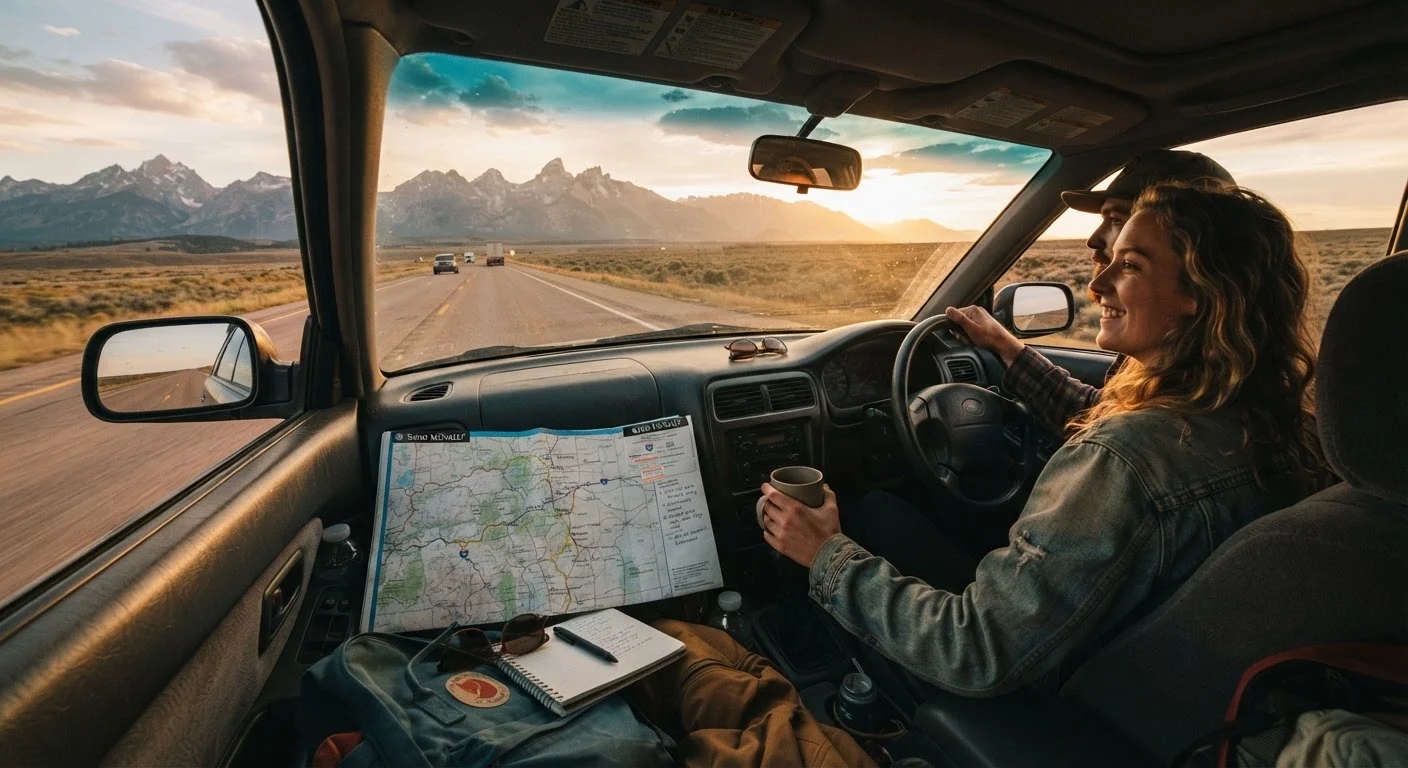
Start With the Big Picture: Route and Goals
Every great road trip starts with a simple question: what do you actually want out of this drive? Whether it's chasing coastlines, hitting a handful of national parks, or visiting family across three states, your goal shapes everything — route choice, daily mileage, and how much flexibility you need.
Sketch a loose framework before drilling into specifics. Identify your start and end points, any non-negotiable stops, and a rough number of driving days. From there, look at what's along the way. The National Scenic Byways program designates hundreds of routes across the country specifically for their cultural, historical, or natural appeal — a useful filter when you're choosing between alternatives.
For deeper destination inspiration, US destination guides can help you discover regions worth building a route around, from the American Southwest's canyon country to New England's backroads. Just resist the urge to over-schedule — leave room for detours and you'll almost always be glad you did.
55%
Americans who prefer road trips over flying
According to an AAA survey, more than half of American travelers say driving is their preferred mode of vacation travel for domestic trips.
400–500 mi
Comfortable daily driving range for most travelers
Transportation safety researchers generally recommend this range as a sustainable daily limit for alert, rested drivers on mixed roads.
1 in 3
Road trippers who experience a vehicle issue en route
AAA roadside assistance data suggests a significant share of trips involve at least one vehicle-related delay, many of which are preventable with pre-trip checks.
Vehicle Prep: Don't Skip This Step
Your car is your home base, your transport, and your lifeline all in one. Skipping pre-trip vehicle checks is the single most common reason road trips go sideways before they hit their stride.
At minimum, check tire pressure and tread depth, engine oil and coolant levels, wiper blades, brake function, and that all lights work. If your vehicle is due for routine service — oil change, tire rotation — schedule it before you leave rather than during the trip. A detailed walkthrough is available in our pre-drive safety checklist.
Before a long trip, inflate tires to the pressure listed on the driver's door jamb — not the maximum on the tire sidewall. These are different numbers and the door jamb figure is what your vehicle is tuned for.
Running at the wrong pressure affects fuel economy, handling, and tire wear, all of which matter more over hundreds of miles than on a daily commute.
Program your route into your navigation app and then download the offline map for every region you'll pass through. Cell dead zones on rural American highways are far more common than most urban drivers expect.
Offline maps function without any data signal, keeping you navigating confidently even in remote stretches where coverage drops entirely.
Also consider the specific demands of your route. Desert driving in summer puts intense stress on cooling systems; mountain passes in spring can mean snow even in May. Match your prep to your terrain.
Mapping Overnight Stops and Rest Breaks
A common rookie mistake is underestimating driving time and overestimating daily stamina. A realistic ceiling for most drivers is around 8 hours or roughly 400–500 miles per day, and that's on a good day with highway driving. Factor in fuel stops, meals, and sightseeing and the math changes fast.
Map your overnight stops before you leave and book accommodation where possible, particularly if you're traveling in summer or over major holidays when options fill up quickly. Campgrounds in national parks often require reservations months in advance — check each park's reservation system directly.
Book Campgrounds Early — Very Early
Popular national park campgrounds can sell out within minutes of the reservation window opening, sometimes six months in advance. Check the specific park's reservation portal as soon as your dates are firm. If your first choice is full, look for nearby national forest or Bureau of Land Management (BLM) sites, which often have more availability and fewer restrictions.
For solo travelers especially, sharing your overnight itinerary with someone at home is a simple but valuable safety habit. Our guide to solo travel in America covers this and other practical considerations for first-timers heading out alone.
Packing Smart: Supplies and Emergency Gear
What you pack beyond clothes and snacks can genuinely determine how a rough situation plays out. Every road trip vehicle should carry a basic emergency kit: jumper cables or a jump-starter pack, a spare tire in working condition (plus the tools to change it), a flashlight, a first-aid kit, and a reflective warning triangle or road flares.
Add a physical map or atlas as a backup — GPS apps fail in dead zones, and rural stretches of the US can have surprisingly poor cell coverage. A portable phone charger and a water supply (at least a gallon per person per day in hot or remote areas) round out the essentials.
Never Rely Solely on Your Phone for Navigation
Smartphones can overheat, run out of battery, or lose signal at the worst possible moment — particularly in remote desert or mountain terrain. Carry a physical road atlas or printed turn-by-turn directions as a genuine backup. In areas with known poor coverage, a dedicated GPS device adds another layer of reliability your phone alone cannot guarantee.
For the full planning framework behind any trip — not just road trips — the anatomy of a well-planned trip breaks down every stage from research to day-of logistics in detail.
Staying Safe and Flexible on the Road
Even a perfectly planned route will throw surprises at you — road construction, unexpected weather, a town that's just too interesting to pass through in 20 minutes. The travelers who enjoy road trips most aren't the ones with the tightest itineraries; they're the ones who built in margin to absorb the unexpected.
Keep an eye on weather forecasts for the regions ahead, especially if your route crosses mountain passes or known storm corridors. Understand the meaning of road sign markings so you're never caught off guard by warnings on unfamiliar roads. And if fatigue sets in, stop — drowsy driving is genuinely dangerous and no destination is worth the risk.
For those planning something more ambitious, our long-distance road trip planning guide goes deeper on contingency planning and multi-week logistics. Whatever your scale, the road is most rewarding when you're prepared enough to relax and actually enjoy it.
The content on this site is for informational purposes only and is not a substitute for professional advice. Always consult a qualified professional for guidance specific to your situation.