

The Desert Southwest: Geology on a Grand Scale
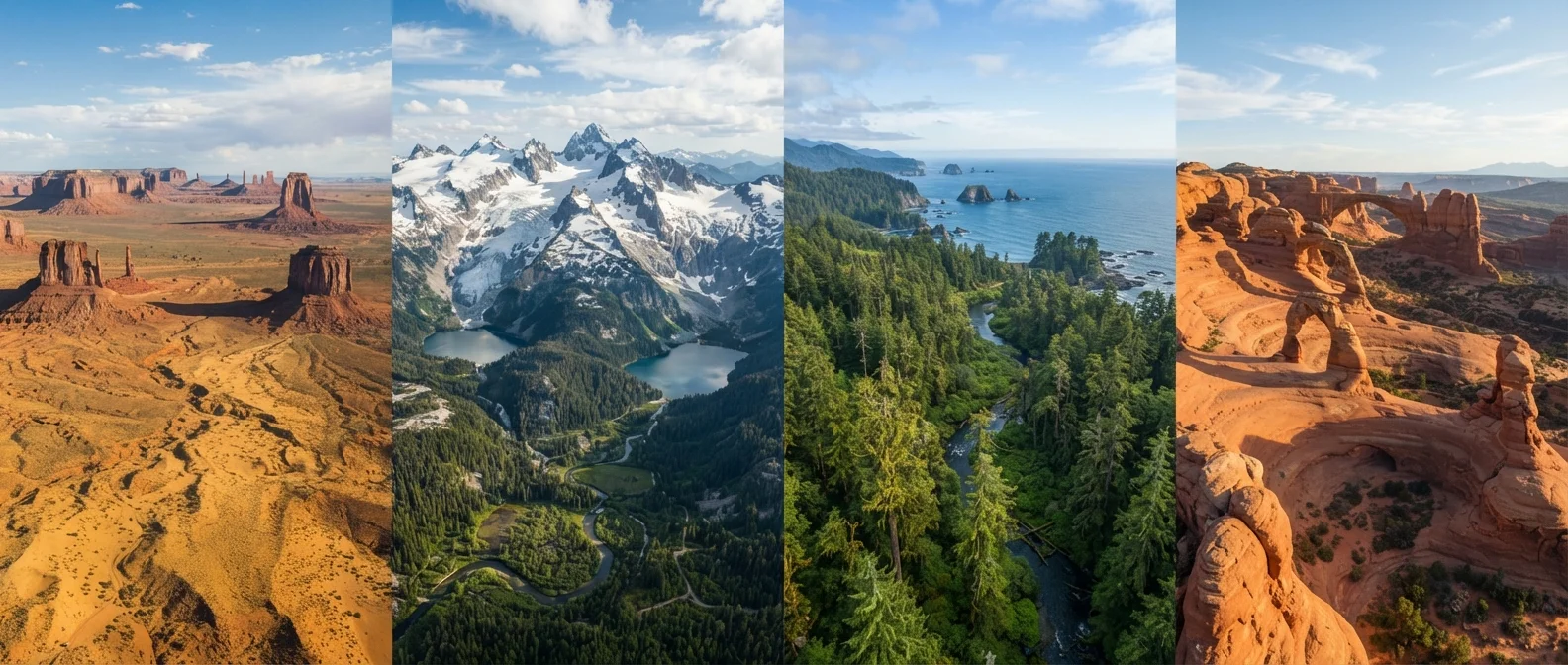
No region announces itself more boldly than the desert Southwest. Spanning parts of Utah, Arizona, Nevada, Colorado, and New Mexico, this stretch of red rock country holds some of the most photographed landscapes on Earth. The Grand Canyon, Zion, Bryce Canyon, Arches, and Capitol Reef sit within a relatively compact area, making multi-park road trips genuinely achievable.
What defines this region is its geology. Millions of years of erosion have sculpted sandstone into fins, hoodoos, arches, and canyon walls that change color through the day. Wildlife is adapted and subtle — look for desert bighorn sheep, ravens, and canyon wrens rather than the megafauna you'd expect elsewhere. Spring and fall tend to offer the most comfortable temperatures, though higher-elevation parks like Bryce Canyon can see snow even in May.
Plan Around Timed-Entry Permits
Several high-demand Southwest parks — including Zion and Arches — have introduced timed-entry reservation systems during peak months. Check the official NPS website well in advance of your trip to see whether a permit is required for the dates you're considering. Our guide on common national park planning mistakes covers what to watch for.
The Pacific Northwest and West Coast: Rainforests, Volcanoes, and Wild Coastlines
Move north and west and the world transforms entirely. Olympic National Park on Washington's Olympic Peninsula contains three distinct ecosystems — glacier-capped mountains, a rugged Pacific coastline, and one of the only temperate rainforests in North America — all within a single park boundary. Mount Rainier and North Cascades round out a region defined by dramatic volcanic geology and serious precipitation.
California adds its own chapters: the ancient giant sequoias of Sequoia and Kings Canyon, the granite domes of Yosemite, and the otherworldly lava landscape of Lassen Volcanic. The Pacific Coast overall is wilder and more weather-variable than the Southwest, and summer is peak season for most high-elevation trails. This region rewards those willing to layer up and accept that clouds are part of the scenery.
Wildfires and Seasonal Closures
Pacific Northwest and California parks can experience significant wildfire-related closures and air quality issues during summer and early fall. Always check current alerts on the NPS website before departure and have a flexible backup plan. Road and trail conditions can also change quickly due to snowpack and weather.
The Southeast and Appalachians: Lush, Green, and Deeply Historical
The Southeast surprises visitors who expect only swamps and heat. Great Smoky Mountains National Park — the most visited park in the entire system — offers dense deciduous forest, wildflower-packed meadows, and extraordinary fall color. Shenandoah in Virginia stretches along the Blue Ridge with panoramic ridge-top drives and accessible hikes.
The Southeast also encompasses coastal and subtropical parks: Everglades in Florida is unlike anywhere else in the US, a slow-moving river of grass teeming with alligators, wading birds, and manatees. Biscayne National Park protects a largely aquatic environment of mangroves and coral reefs, best explored by boat or snorkel. The region blends natural and cultural history in ways few other areas can match.
400+
NPS units across the country
The National Park Service manages over 400 park units, including national parks, monuments, seashores, and recreation areas across all 50 states.
13M+
Annual visits to Great Smoky Mountains
Great Smoky Mountains National Park consistently receives the highest visitation of any national park in the system, according to NPS public use statistics.
13.2M acres
Size of Wrangell–St. Elias National Park
Wrangell–St. Elias in Alaska is the largest national park in the US, larger than the entire country of Switzerland, according to NPS data.
The Midwest and Alaska: From Prairie to Pure Wilderness
The Midwest's national parks are underappreciated gems. Indiana Dunes, Cuyahoga Valley in Ohio, and Voyageurs in Minnesota offer accessible nature close to major population centers — ideal for travelers who can't make a cross-country trek. Badlands in South Dakota and Theodore Roosevelt in North Dakota deliver dramatic, austere beauty alongside rich Native American and frontier history.
Then there's Alaska — a category unto itself. Denali, Wrangell–St. Elias (the largest national park in the system), Gates of the Arctic, and Katmai represent some of the most remote protected land on the planet. Most Alaska parks have no paved roads into them. Bears, moose, caribou, and wolves roam freely. Planning an Alaska park visit requires significant advance preparation; our complete visitor's reference covers the logistics in detail.
Wherever you start, a national park pass can stretch your travel budget across multiple regions. And if you're weighing when to go, peak vs. shoulder season timing is worth understanding before you book. Before any visit, verify current entry requirements, road conditions, and reservation rules directly through the official NPS website, as these details can change seasonally.
Frequently Asked Questions
The National Park Service divides its units into seven administrative regions. Travelers often think in broader geographic terms — Southwest, Southeast, Pacific Northwest, Midwest, Northeast, and Alaska — which can be more intuitive for trip planning purposes.
The Intermountain and Southwest regions are popular starting points because parks like the Grand Canyon, Zion, and Arches offer iconic scenery with well-developed visitor infrastructure. That said, 'best' depends on your interests, home state, and budget.
It varies significantly by region. Desert Southwest parks are often most comfortable in spring and fall. Pacific Northwest parks shine in summer when trails are snow-free. Southern Appalachian parks glow in fall. Always check current conditions through the official NPS website before you go.
Not all park units charge fees, but many of the most visited ones do. The America the Beautiful annual pass covers entrance at all fee-charging federal lands for one year and is worth considering if you plan to visit multiple parks.
Accessibility varies widely by park and trail. Many parks offer paved accessible paths, accessible visitor centers, and programs for visitors with disabilities. The NPS website provides detailed accessibility information for each park unit before you visit.
The content on this site is for informational purposes only and is not a substitute for professional advice. Always consult a qualified professional for guidance specific to your situation.