

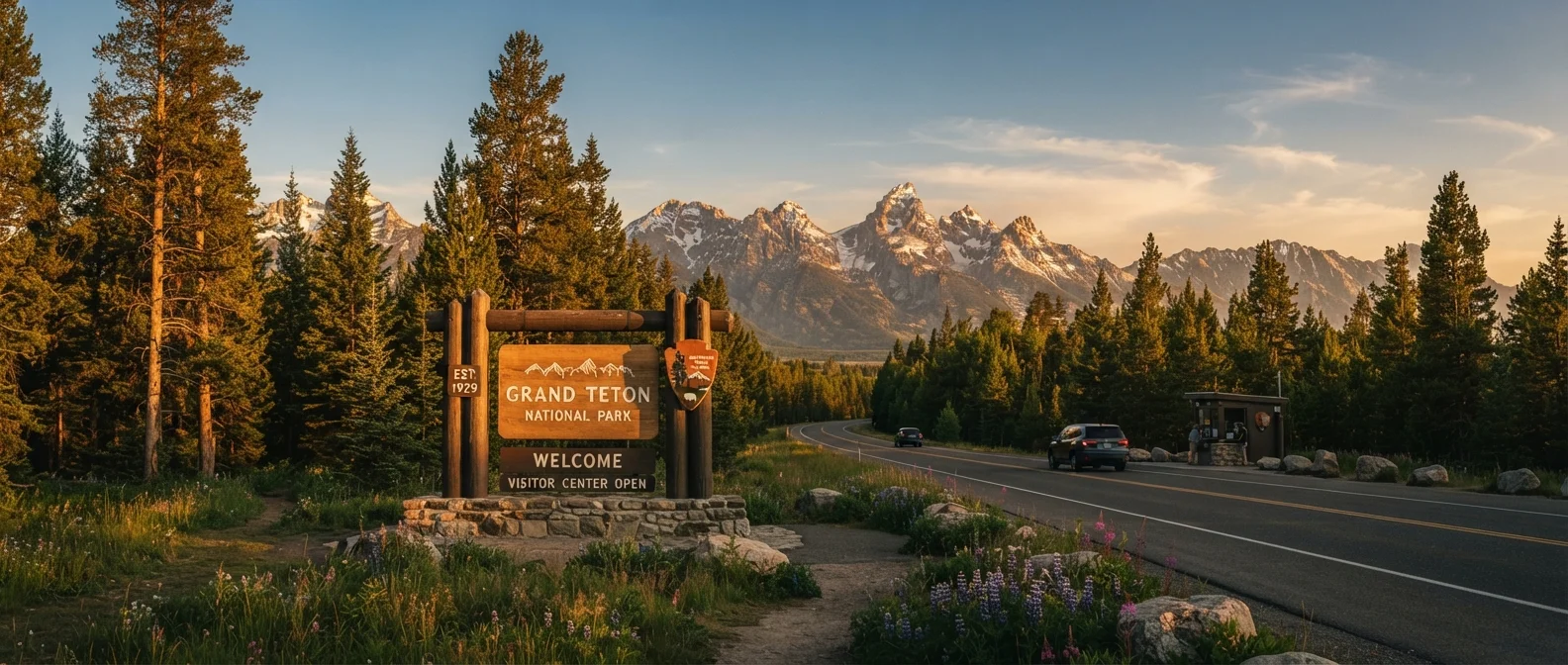
America the Beautiful: The Federal Interagency Pass
The America the Beautiful — National Parks and Federal Recreational Lands Pass (commonly called the Interagency Pass) is the flagship federal pass program. Issued by a consortium of federal land-management agencies — including the National Park Service, U.S. Forest Service, Bureau of Land Management, U.S. Fish and Wildlife Service, Bureau of Reclamation, and Army Corps of Engineers — it covers entrance fees and standard amenity fees at more than 2,000 federal recreation sites nationwide.
| Federal pass name | America the Beautiful — National Parks and Federal Recreational Lands Pass (U.S. Geological Survey / Interagency Pass Program) |
| Sites covered (federal) | More than 2,000 federal recreation areas (National Park Service) |
| Pass validity | 12 months from month of purchase (Interagency Pass Program) |
| Age threshold for Senior Pass | 62 years old (U.S. citizen or permanent resident) (National Park Service) |
| Free youth pass program | Every Kid Outdoors (4th grade) (U.S. Department of the Interior) |
| State park pass coverage | State-specific; does not include federal NPS sites (Individual state parks agencies) |
One pass admits the pass holder and up to three additional adults in a single, non-commercial vehicle. Children under 16 always enter free at NPS sites. The pass is valid for 12 months from the month of purchase, not a calendar year.
What it does not cover: camping fees, special-use permits, concession-operated tours, or fees at sites managed exclusively by state or local agencies. Always confirm fee specifics with the specific site before visiting, as policies can change. For deeper planning details — including reservation windows and permit systems — see our National Parks Trip Planning reference.
Discounted and Free Pass Tiers
Several reduced-cost or no-cost versions of the Interagency Pass exist for qualifying individuals:
- Senior Pass (Age 62+): Available as a lifetime pass or an annual pass. U.S. citizens or permanent residents aged 62 and older qualify. The lifetime version represents a one-time fee; the annual version renews yearly. Both versions provide the same access as the standard pass.
- Access Pass (Free): For U.S. citizens or permanent residents with permanent disabilities. Applicants must provide documentation of a permanent disability or eligibility for federal benefits. It carries the same coverage as the standard pass.
- Military Pass (Free): Available to active duty military personnel and their dependents, as well as Gold Star Families. No annual fee; renewed annually through participating agencies.
- Fourth Grade Pass (Free): Part of the Every Kid Outdoors program, this pass is available to all U.S. fourth graders and their accompanying household members. It covers one academic year (fall through the following summer).
- Volunteer Pass (Free): Earned after accumulating a qualifying number of volunteer hours with a participating federal agency.
Verify Before You Go
Fee structures, pass pricing, and reciprocity agreements are subject to change by the managing agencies. Always confirm current costs, accepted documentation, and site-specific coverage directly with the relevant federal or state parks agency website before your trip. Do not rely solely on third-party sources for pass eligibility details.
Passes can be purchased in person at federal recreation sites or through the U.S. Geological Survey's online store. Processing and shipping times apply for mail orders. Verify current purchase options and documentation requirements at official government websites before applying.
State Park Pass Programs
Nearly every U.S. state operates its own annual pass program covering entrance fees at state parks, forests, or recreation areas — systems that are entirely separate from the federal Interagency Pass. Coverage, cost, and naming conventions vary widely by state.
Interagency Pass
A single pass issued jointly by multiple U.S. federal land-management agencies that covers entrance and standard amenity fees at more than 2,000 federal recreation sites. It is valid for 12 months from the month of purchase.
Entrance Fee
A per-visit or per-vehicle charge collected at the gate of a federal or state recreation site. Annual passes typically waive this fee for the pass holder and qualifying companions.
Amenity Fee
A fee charged for use of specific facilities or services at a recreation site — such as a boat launch, swimming area, or shuttle — beyond basic site access. Pass programs cover only 'standard' amenity fees as defined by the managing agency.
Reciprocity Agreement
A formal arrangement between two or more state park systems under which each state honors the other's annual pass for day-use access. Participation and terms vary and should be verified before travel.
Every Kid Outdoors
A federal program that provides free annual land access passes to all U.S. fourth graders and accompanying household members, valid for one academic year.
Key distinctions to keep in mind:
- Reciprocity agreements: Some states participate in reciprocal pass arrangements — for example, the America's State Parks passport program, through which participating states honor each other's passes for day-use access. Participating states and terms change periodically, so confirm current reciprocity with each state's parks agency before traveling.
- Coverage scope: Most state passes cover entrance or day-use fees but not camping, equipment rentals, or special programming. A handful of states bundle limited camping discounts into premium tiers.
- Residency requirements: Some states offer resident and non-resident pricing tiers. Out-of-state visitors can still purchase passes but may pay a higher annual rate.
If you're planning a multi-state itinerary — say, through the South or along a scenic corridor — it may make more financial sense to purchase individual state passes for the states you'll visit most. Our guide on planning a multi-state road trip across the American South walks through itinerary-structuring logic that can inform those decisions.
To explore what distinguishes different national park regions — and decide which federal lands deserve priority on your itinerary — see America's National Parks: What Makes Each Region Distinct.
Choosing the Right Pass for Your Trip
Matching a pass to your travel style involves a few honest questions:
- How many federal sites will you visit? If you plan to visit three or more NPS or federal sites with entrance fees in a single year, the standard Interagency Pass typically offsets its cost.
- Are you traveling between states? Federal passes work across all participating federal sites regardless of state lines. State passes are generally state-specific unless a reciprocity agreement applies.
- Do you qualify for a discounted tier? If you are 62 or older, have a qualifying disability, or are an active military member, the discounted tiers offer significant value over the standard pass.
- Are your primary destinations state parks? The Interagency Pass does not cover state-managed lands. If state parks form the core of your itinerary, a state pass may serve you better — or you may need both.
For a fuller picture of timing your visits — whether to avoid peak-season crowds or to maximize open facilities — the peak vs. shoulder season comparison is a practical companion to this guide. And for broader trip planning resources, our hub covers budgeting, booking, and organizing any American adventure.
The content on this site is for informational purposes only and is not a substitute for professional advice. Always consult a qualified professional for guidance specific to your situation.