

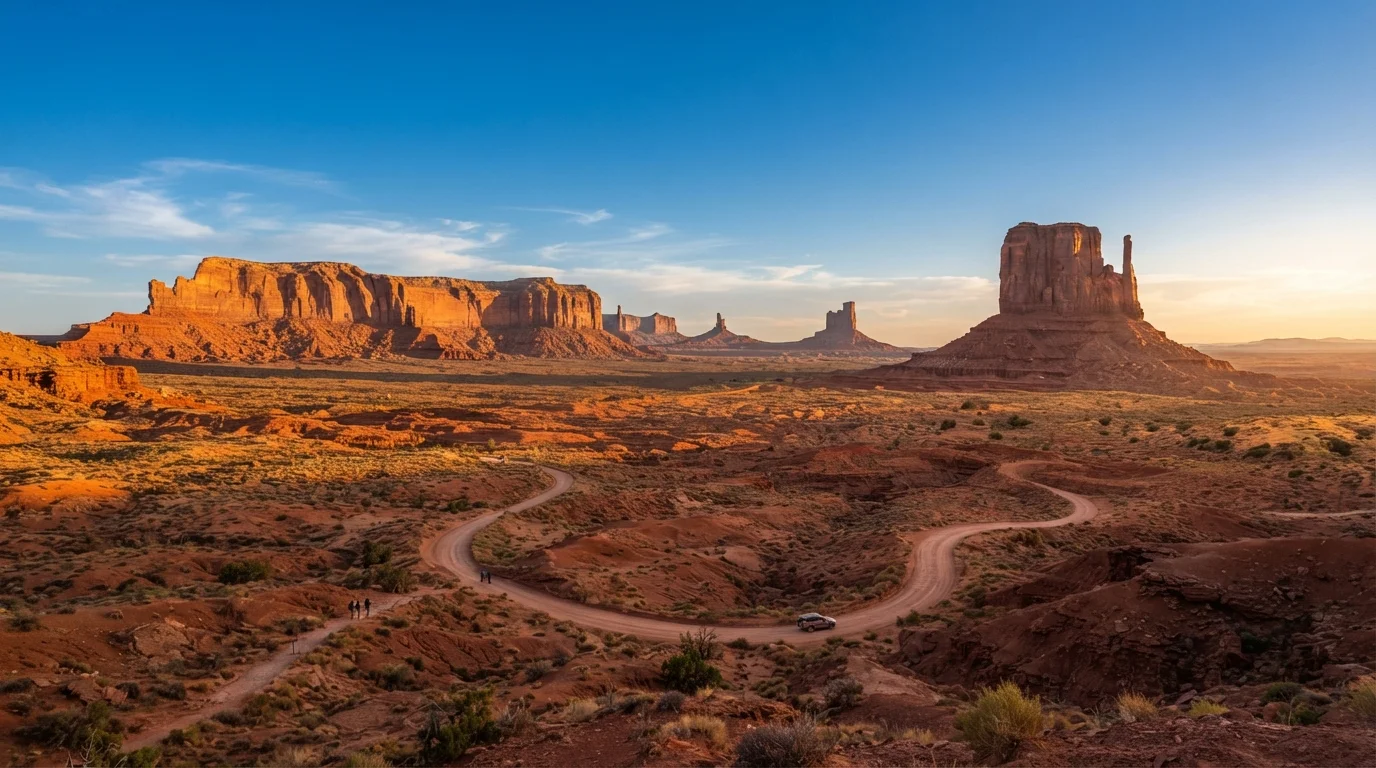
Our Verdict
Peak season delivers the most predictable conditions and widest access, making it a strong choice for first-time visitors and families. Shoulder season rewards flexible, experienced travelers with fewer crowds, lower demand, and often more memorable scenery. Neither season is objectively better — it depends on your priorities.
| Best for | Recommended |
|---|---|
| First-time visitors and families with school-age children | Peak Season |
| Travelers who prioritize solitude and dramatic seasonal scenery | Shoulder Season |
| Wildlife watchers and photographers seeking golden-light conditions | Shoulder Season |
| Visitors needing full facility access and reliable road conditions | Peak Season |
The Core Trade-Off: Access vs. Atmosphere
America's national parks draw roughly 325 million visits per year, and the lion's share arrive between Memorial Day and Labor Day. That concentration is the central tension every park traveler faces: summer offers the widest access, the longest daylight hours, and the most reliable weather — but it also means packed trailheads, overflowing parking lots, and reservation systems that can feel like a second job to navigate.
Shoulder season — broadly defined as April through May in spring and September through October in fall — flips that equation. Crowds thin noticeably, entry fees don't change, and the scenery often peaks. Aspen groves turn gold in Rockies parks come September. Wildflowers erupt across desert parks in April. But some high-elevation roads stay closed, certain visitor centers run reduced hours, and weather can turn fast.
Understanding which trade-off fits your trip requires knowing what you're actually after. For a deeper look at the general principles behind off-peak travel, see our guide to off-season travel trade-offs before committing to a season.
| Peak Season (Jun–Aug) | Shoulder Season (Apr–May & Sep–Oct) | |
|---|---|---|
| Crowd levels | High to very high | Moderate to low |
| Reservation pressure | Timed-entry often required weeks ahead | Less common, easier to secure |
| Road & facility access | Full access at most parks | Some high-elevation roads still closed |
| Weather reliability | Generally stable and predictable | Variable; can change rapidly |
| Wildlife & scenery | Lush but busy; midday light harsh | Fall foliage, wildflowers, active wildlife |
| Accommodation availability | Books out months in advance | Greater flexibility, especially weekdays |
| Ranger programs & services | Full schedule, maximum staffing | Reduced hours at some visitor centers |
Peak Season: What You Gain and What You Give Up
Summer is when the national park system is fully open and fully staffed. High-elevation passes like Trail Ridge Road in Rocky Mountain and Tioga Pass in Yosemite are clear. Ranger programs run daily. Shuttle systems operate at full frequency. For families with school-age kids, this window may be non-negotiable — and the parks genuinely deliver in summer.
The downside is real, though. Yosemite Valley, Zion Canyon, and the South Rim of the Grand Canyon regularly see gridlocked entry corridors in July. Many parks now require timed-entry reservations that sell out weeks in advance. Arriving without one can mean turning around at the gate. Common planning errors like skipping timed-entry reservations catch thousands of visitors off guard every summer.
Timed-Entry Reservations Sell Out Fast
Several of the most visited parks — including Yosemite, Rocky Mountain, and Glacier — have implemented timed-entry reservation systems for summer entry windows. These slots frequently sell out within minutes of becoming available, often weeks before your target date. Always check the specific park's reservation requirements on the official National Park Service website well before your trip.
Lodging inside park boundaries — already limited year-round — books up six months to a year out for summer dates at many parks. Gateway towns see accommodation demand spike correspondingly. Planning early isn't just recommended; for peak-season parks visits, it's effectively required.
Shoulder Season: The Case for Spring and Fall
Shoulder season travelers at parks like Great Smoky Mountains, Arches, or Olympic often describe a qualitatively different experience — one closer to what early national park advocates imagined. Trails that were elbow-to-elbow in July become genuinely peaceful. Wildlife is more active at dawn and dusk without throngs of visitors disturbing behavior patterns. Photographers consistently favor the lower-angle light of fall mornings and the soft greens of early spring.
Spring shoulder season works particularly well for lower-elevation desert parks: Saguaro, Big Bend, and Joshua Tree are at their most vibrant and accessible before summer heat becomes a safety consideration. Fall is prime time in the mountain parks of the Rockies and Appalachians.
Time Your Visit Around the Park, Not the Calendar
Shoulder season timing varies significantly by park elevation and region. Desert parks in the Southwest often peak in spring (March–April), while mountain parks in the Rockies and Appalachians are most compelling in September and early October. Research your specific destination's seasonal pattern before assuming a general shoulder-season window applies.
The practical caveat: not every park region has a clean shoulder window. Parks in Alaska and Hawaii operate under entirely different seasonal logic — island and remote-state travel has its own distinct demands that don't map neatly onto the lower-48 peak/shoulder framework. And even within the contiguous US, what makes each park region distinct shapes when shoulder season actually delivers on its promise.
Practical Planning Regardless of Season
Whether you travel peak or shoulder, a few principles consistently separate smooth park visits from frustrating ones. Reservation systems, permit requirements, and entrance fees apply year-round at most major parks, so understanding them early matters. The complete visitor's reference for national parks trip planning covers permit timelines, timed-entry windows, and entrance fee structures in full detail.
Pass programs like America the Beautiful can offset entrance costs for frequent park visitors regardless of season — our reference guide covers who qualifies and what's covered. And once you're inside a park, the temptation to over-schedule is real in both seasons. Principles for pacing a destination visit apply especially well to parks, where the experience of being present often matters more than checking off every viewpoint.
325M+
Annual visits to US national parks
The National Park Service reports visits consistently in this range, with summer months accounting for the largest share.
~40%
Share of annual visits occurring in summer
NPS visitation data consistently shows June through August drawing a disproportionate share of total annual park traffic.
The content on this site is for informational purposes only and is not a substitute for professional advice. Always consult a qualified professional for guidance specific to your situation.