

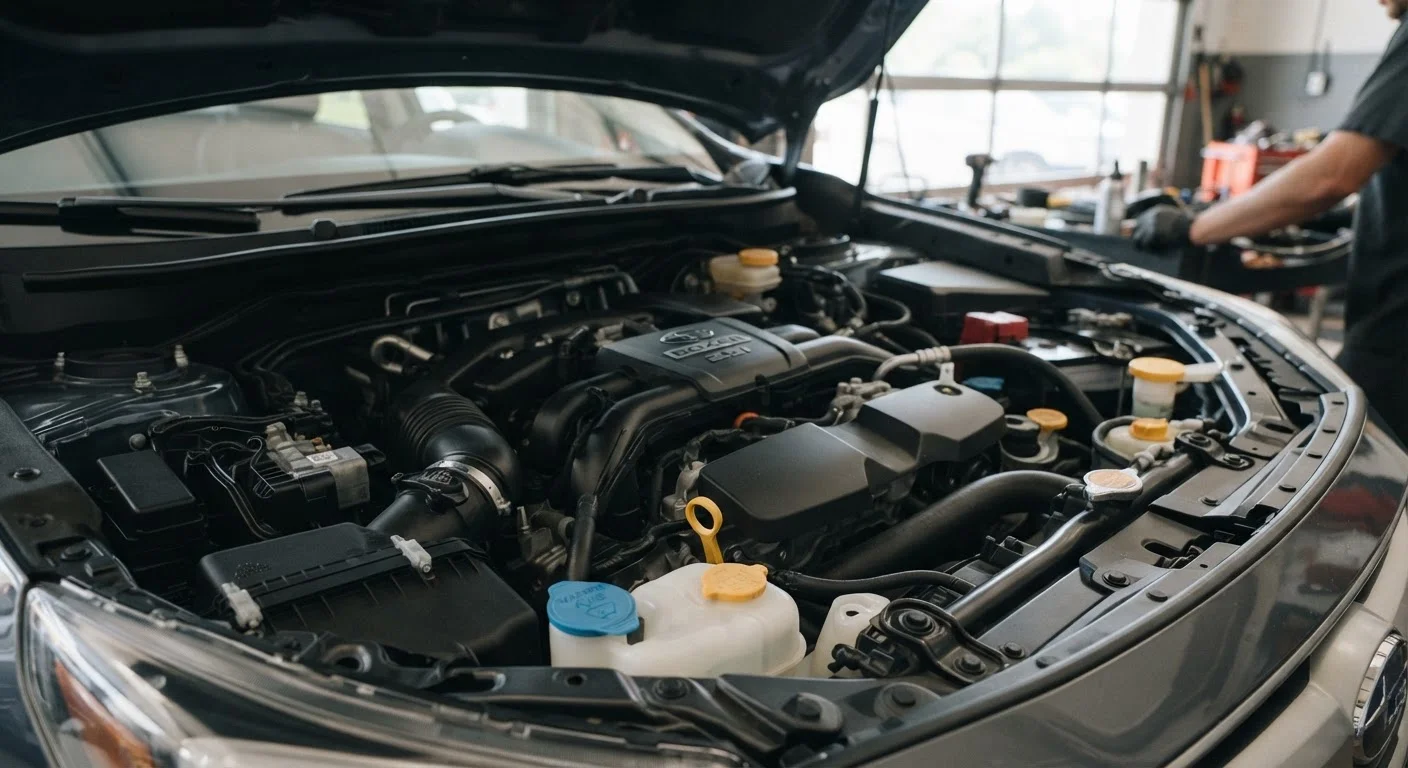
Why Fluid Checks Are Worth Your Time
Your car depends on a handful of fluids working properly at all times. Each one does a specific job: engine oil reduces friction, coolant keeps temperatures in check, brake fluid transmits the pressure that stops your wheels, and so on. When any of these drops too low or degrades past its useful life, the consequences range from accelerated wear to outright component failure.
The good news is that checking these fluids is one of the most accessible forms of car maintenance there is. No mechanical background required - just a few minutes, a rag, and your owner's manual. This kind of basic awareness is a key part of practical car ownership that pays off over time.
What you will need
Before you pop the hood, gather what you'll need:
Owner's Manual
Identifies the exact location of each fluid reservoir and specifies the correct fluid type for your vehicle.
Clean Rag or Paper Towels
Needed to wipe dipsticks clean before taking a reading and to handle any spills.
Flashlight
Helps you see fluid levels and colors clearly in a dark engine bay.
Nitrile Gloves
Protects your hands from fluids that can irritate skin, particularly brake fluid and coolant.
How to Check Each Fluid
Work through these steps in order. Most checks take just a minute or two once you know where to look. If something seems off - wrong color, strange smell, level significantly below the minimum line - note it and decide whether it needs immediate attention or a scheduled service appointment.
Park on a Level Surface and Let the Engine Cool
Pull onto flat, level ground and turn off the engine. Wait at least 30 minutes before checking any fluids - longer if you've been driving at highway speeds. An uneven surface skews dipstick readings, and a hot engine creates safety hazards with pressurized coolant and scalding components.
Check Engine Oil
Locate the oil dipstick - it usually has a brightly colored handle (often yellow or orange) near the front of the engine. Pull it out, wipe it clean with a rag, reinsert it fully, then pull it out again. The oil level should fall between the two marks at the bottom of the dipstick. Healthy oil is amber to light brown. Black, gritty, or milky oil suggests it's overdue for a change or there's a more serious issue.
Check Coolant (Antifreeze)
The coolant reservoir is a translucent plastic tank, usually near the radiator. You can read the level through the side of the tank without opening it - look for the MIN and MAX lines. Coolant should be bright green, orange, or pink depending on the type your vehicle uses. If it looks brown or rusty, it's degraded and needs flushing.
Check Brake Fluid
The brake fluid reservoir is typically a small, semi-transparent plastic container on top of the brake master cylinder, located near the back of the engine bay on the driver's side. Check the level through the reservoir walls - it should be between MIN and MAX. Brake fluid is pale yellow when new and darkens with age and moisture absorption. If it's very dark or the level is low, schedule a mechanic visit.
Check Transmission Fluid
Many automatic transmissions have a dipstick similar to the oil dipstick - consult your owner's manual for its location, as some newer vehicles require a dealership tool to check it. For vehicles with a dipstick, check with the engine warmed up and running (in Park). Healthy transmission fluid is bright red and slightly translucent. Dark brown or burnt-smelling fluid needs attention.
Check Power Steering Fluid (If Applicable)
Many newer vehicles use electric power steering and have no fluid to check. If your car has hydraulic power steering, the reservoir is usually a small capped container near the front of the engine bay. Some have a dipstick attached to the cap; others have MIN/MAX markings on the side. The fluid should be clear to light amber. If steering feels stiff or you hear whining when turning, check this fluid first.
Top Off Windshield Washer Fluid
The washer fluid reservoir is usually a blue-capped tank that's easy to spot. This is the one fluid you can fill yourself without concern - just use a washer fluid solution rated for your climate. In winter, use a formula rated for freezing temperatures. Plain water can crack the reservoir or freeze in the lines.
Never Open a Hot Radiator Cap
Coolant in a hot engine is under pressure. Opening the radiator cap or coolant reservoir when the engine is warm can cause scalding fluid to spray out instantly. Always wait at least 30 minutes after turning the engine off before touching any coolant cap. When in doubt, let it sit longer.
Low Brake Fluid Isn't Always a Simple Fix
If your brake fluid is consistently low, topping it off isn't a complete solution. Low brake fluid often signals worn brake pads or a leak in the system - both of which need a mechanic's attention. Driving with a compromised brake system is a genuine safety risk.
Make It a Monthly Habit
Pick one day each month - the first of the month works well - to do a quick fluid check under the hood. It takes about 15 minutes and can catch developing problems long before they become expensive repairs or roadside emergencies. Pair it with a tire pressure check for a complete quick inspection. See our tire pressure guide for how to do that efficiently.
If you find yourself uncertain whether a reading is normal or need help understanding what a mechanic tells you about your fluids, our guide to talking to a mechanic can help you ask the right questions.
What to Do When Something Looks Wrong
Not every off reading is an emergency, but none should be ignored. Here's a quick framework for deciding what comes next:
- Level slightly low, fluid looks healthy: Top it off with the correct fluid type (always check your owner's manual) and monitor it over the next few weeks.
- Level consistently dropping: This points to a leak or consumption issue. Have a mechanic inspect the system - don't just keep adding fluid.
- Fluid is discolored or has an unusual smell: Schedule a fluid flush or service appointment. Degraded fluid often does more harm than low fluid.
- Brake or coolant concerns: These systems directly affect safety. Don't delay getting a professional evaluation.
Fluid checks pair naturally with other routine inspections. Seasonal temperature swings - particularly extreme heat or cold - can affect fluid performance significantly. Our seasonal car care guide covers how weather affects your vehicle's maintenance needs throughout the year.
If you're ever unsure whether a particular task belongs in your hands or a professional's, our breakdown of DIY maintenance vs. shop work can help you draw that line sensibly.
The content on this site is for informational purposes only and is not a substitute for professional advice. Always consult a qualified professional for guidance specific to your situation.