

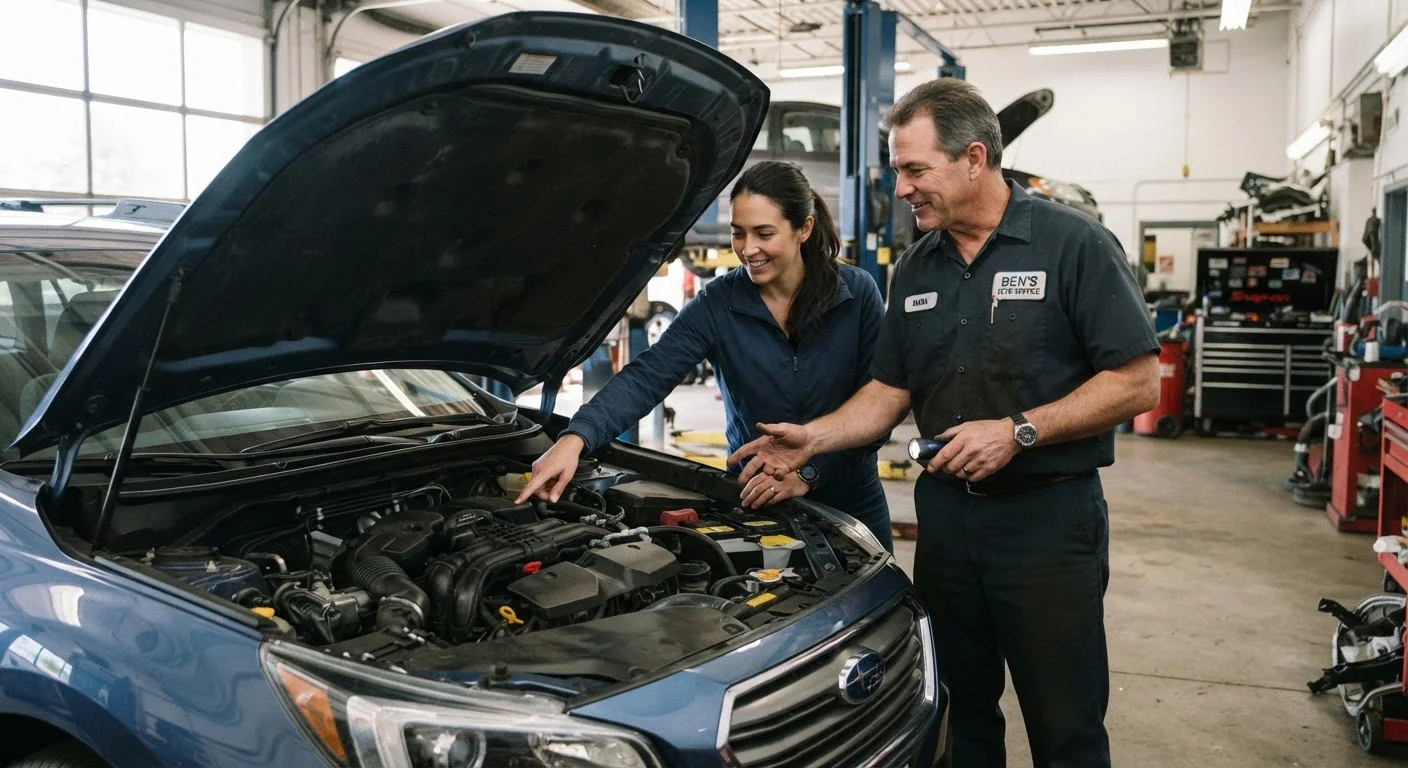
Why the Language Gap Matters
Most drivers aren't mechanics, and that's completely fine. The problem shows up when a shop throws terms like "CV axle," "serpentine belt," or "catalytic converter" at you and expects a quick decision - often involving several hundred dollars. Feeling rushed or confused in that moment can lead to agreeing to work you didn't need, or dismissing something you actually did.
The goal isn't to become a car expert overnight. It's to communicate clearly enough that you and your mechanic are working together, not talking past each other. A few simple habits make that possible regardless of your mechanical background. For a broader look at what car upkeep actually involves over time, see our practical owner's overview.
Before You Walk In: Prep That Pays Off
The most useful thing you can bring to a shop visit isn't a technical vocabulary - it's a clear description of what's happening with your vehicle. Mechanics call this "symptom history," and it's exactly what helps them narrow down the problem before they ever open the hood.
Write down your symptoms before you call or arrive at the shop.
Mechanics rely on symptom descriptions to build a starting hypothesis before running any tests. Vague descriptions like 'it sounds funny' are harder to act on than 'there's a grinding noise from the front left when I brake at low speeds.' The more specific you are, the less diagnostic time - and potentially less diagnostic cost - is required.
Always ask for a written estimate before authorizing any work.
A written estimate documents what the shop plans to do, which parts they'll use, and the expected cost - protecting both you and the shop from misunderstandings. Reputable shops routinely provide these, and many states require them by law for auto repairs above a certain dollar threshold.
Describe what you experience, not what you think the cause is.
Drivers often arrive with a diagnosis in mind - 'I think it's the alternator' - but mechanics need to verify that independently. Jumping to a cause can sometimes lead a conversation in the wrong direction. Your observations about when, where, and how a problem occurs are more reliable starting data than a guess about the fix.
Ask what happens if you wait on a recommended repair.
Not every repair is equally urgent. Some issues - like a worn cabin air filter - are inconvenient but not dangerous. Others - like worn brake pads or a failing wheel bearing - carry real safety implications if deferred. Asking 'what's the risk if I hold off for a few weeks?' helps you prioritize without blindly agreeing to everything at once.
Request the old parts back when major components are replaced.
Seeing the part that was removed - and its condition - confirms that the work was done and helps you understand why it was needed. Many shops offer this as a routine option, and it's a reasonable request to make for higher-cost repairs.
If you're already keeping an eye on your car's fluids and dashboard lights at home, you'll have even more useful information to share. Our guide on fluid levels every driver should know how to check can help you spot and describe issues before they escalate.
Questions Worth Asking at the Shop
A good mechanic should be able to explain any repair in plain terms when asked. If the explanation still doesn't click, ask them to show you - most shops are willing to walk you over to the vehicle and point out exactly what they're talking about. Seeing a worn brake pad or a cracked hose makes the repair recommendation much easier to evaluate.
You Can Always Ask for Time to Decide
If a mechanic recommends unexpected work, you're not obligated to approve it on the spot. It's completely reasonable to say, 'Can I think about it and call you back?' Shops work with this regularly. Getting a second opinion on large or unexpected repairs is also a standard practice - not an insult to the shop.
Decoding the Terms You'll Hear Most Often
You don't need a complete glossary, but a handful of common terms come up constantly. Knowing them takes the edge off the conversation:
- Diagnostic fee: A charge for the time a mechanic spends identifying what's wrong. This is separate from the repair cost and is standard practice.
- OBD-II code (On-Board Diagnostics): A standardized error code your car's computer generates when it detects a problem. These codes point mechanics toward a system, not always a single fix.
- Labor rate: The per-hour cost of a mechanic's time, separate from parts costs. Shops post this rate and it varies by region and shop type.
- Original equipment (OE) vs. aftermarket parts: OE parts come from your vehicle's manufacturer or its approved suppliers; aftermarket parts are made by third parties. Both can be appropriate depending on the repair.
- Inspection vs. repair: An inspection tells you what's wrong; a repair fixes it. These are billed separately, so confirm what you're authorizing.
Your State May Have Consumer Protections
Many U.S. states have auto repair laws that require written estimates, limit charges that exceed estimates by more than a set percentage, and mandate that shops return old parts on request. Requirements vary by state, so it's worth checking your state's consumer protection office or attorney general website to know your rights before a major repair.
Navigating these conversations gets easier with experience. Knowing when a job is reasonable to handle yourself vs. when to hand it over is a related skill - our breakdown of DIY maintenance vs. taking it to a shop covers exactly that.
77%
Drivers who feel uncertain at the repair shop
A survey by the AAA found that roughly 77% of U.S. drivers distrust auto repair shops to some degree, with unclear communication cited as a leading factor.
$400+
Average unplanned car repair bill
Industry estimates suggest the average unexpected auto repair runs several hundred dollars, underlining why clear pre-work communication about scope and cost matters.
“The single most valuable thing a customer can do is describe the problem clearly - not guess at the diagnosis. A good description of symptoms is worth more than any amount of technical vocabulary.”
— ASE Education Foundation, Nonprofit organization supporting automotive technician training and consumer education
The content on this site is for informational purposes only and is not a substitute for professional advice. Always consult a qualified professional for guidance specific to your situation.