

Why Registration Matters and What It Actually Proves
Vehicle registration is the government's way of linking a car to an owner and confirming that the vehicle meets minimum legal requirements to operate on public roads. It's separate from your title (which proves ownership) and your driver's license (which proves you're authorized to drive). Registration proves that your specific vehicle is legal to drive in your state right now.
Law enforcement can check registration status in real time. If yours is expired, you can be cited on the spot — even in a parking lot in some jurisdictions. Beyond the legal risk, an unregistered vehicle may complicate insurance claims. Think of registration as your car's permission slip to be on the road.
Registration is also one of the ongoing costs of car ownership that many buyers underestimate. For a full picture of what you'll spend beyond the purchase price, see the real cost of owning a car.
What you will need
What You'll Need Before You Start
The exact document list varies by state, but most registrations require a few consistent items. Having them in hand before you visit the DMV — or before you start an online application — saves significant time.
Vehicle Title
Proves legal ownership of the vehicle — required to complete initial registration.
Proof of Auto Insurance
Most states require you to show minimum liability coverage before issuing registration.
Government-Issued Photo ID
Verifies your identity and establishes residency for registration in your state.
Emissions or Safety Inspection Certificate
Required in many states before a vehicle can be registered or renewed.
Lien Release or Lienholder Information
Needed if you financed the vehicle — the lender may hold the title until the loan is paid off.
If your vehicle is brand new and you bought from a dealership, the dealer typically submits the title application on your behalf. In that case, ask the dealer for a breakdown of exactly what they're handling versus what you'll need to do independently. First-time owners should also review what to handle before hitting the road for a broader checklist.
Step-by-Step: Registering Your Vehicle
Follow these steps whether you're registering a newly purchased car or re-registering after moving to a new state. The process is similar in most states, though the order of some steps may vary.
Confirm what your state requires
Registration rules are set at the state level, so start by visiting your state's official DMV or motor vehicle agency website. Look up what documents are required for your specific situation — new vehicle purchase, used vehicle purchase, or transfer from another state. Some states also require a smog check or safety inspection before they'll issue a registration.
Get any required inspections done first
Many states require an emissions test (also called a smog check) and/or a safety inspection before registration. Confirm whether your county or zip code requires one — some states only mandate inspections in densely populated areas. Schedule the inspection at an approved testing station and keep the certificate you receive; you'll need to present it at the DMV.
Gather your documents
Bring your vehicle title (or the manufacturer's certificate of origin for a brand-new car), your proof of insurance card, a valid photo ID, and the odometer reading. If there's a lienholder — meaning you financed the vehicle and a lender holds the title — you may need a letter from the lender or their name and address on hand. Having everything together before you go prevents multiple trips.
Submit your application and pay the fee
Visit your local DMV office, or use your state's online portal if it's available for your situation. Complete the vehicle registration application form (available in person or to download in advance). Pay the required fee — amounts vary widely by state, vehicle weight, and vehicle age. Keep your payment receipt as proof until your registration documents and plates arrive.
Affix your plates and registration sticker
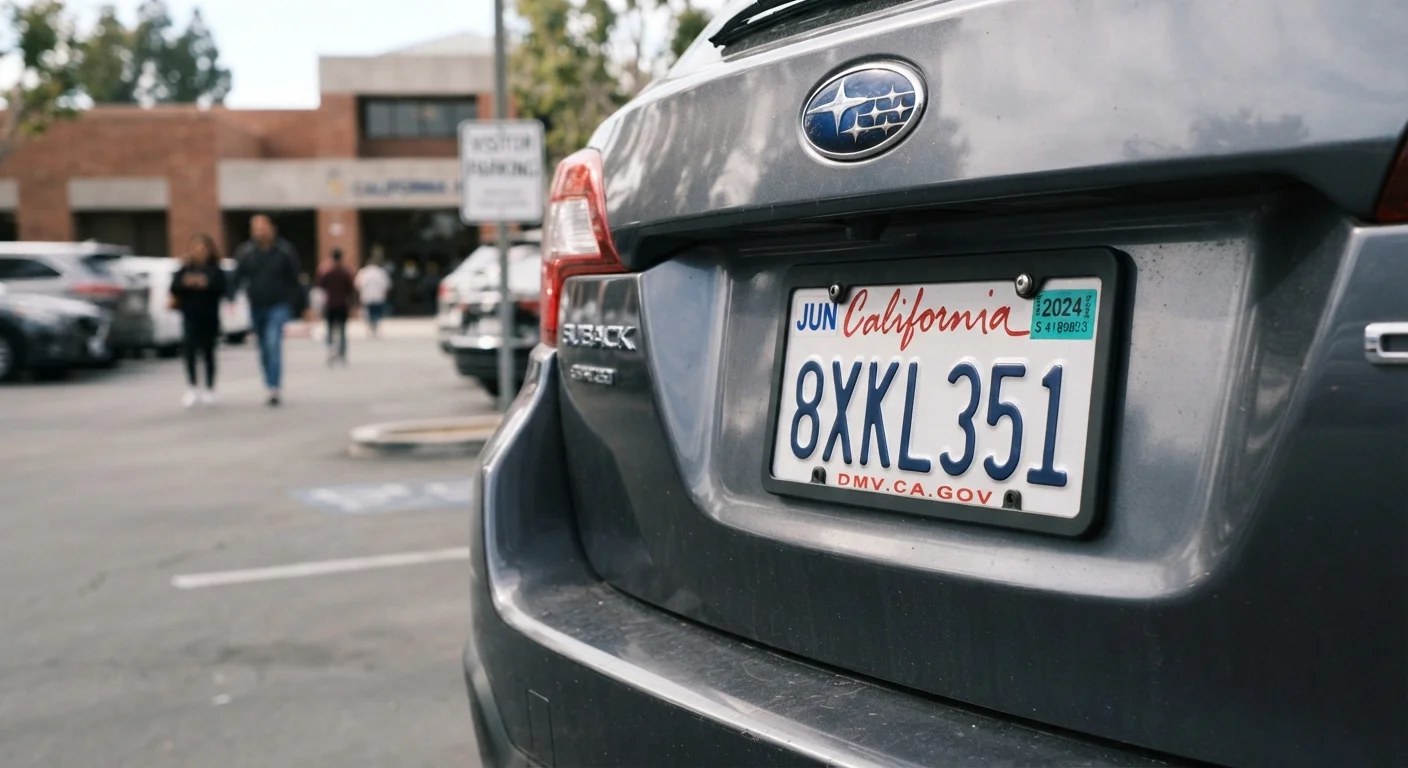
Once you receive your license plates and registration sticker (sometimes called a tab or decal), mount the plates on the front and rear of the vehicle as required in your state — note that some states only require a rear plate. Affix the registration sticker to your license plate in the location shown on the instructions. Keep your registration card inside the vehicle at all times.
Track your renewal deadline and renew on time
Registration typically expires annually or every two years depending on your state. Your expiration date is printed on both the registration card and the sticker. Most states mail a renewal notice 30–60 days before expiration. You can usually renew online, by mail, or in person. Some states require a new emissions test at each renewal.
Set a Renewal Reminder Before You Need It
Many states send renewal notices by mail, but they can get lost or go to an old address. Set a calendar reminder a month before your registration expiration date — it's printed right on your registration card or renewal sticker. Many DMVs now offer email or text reminders if you opt in.
Late Registration Has Real Consequences
Driving with an expired registration is a traffic violation in every U.S. state. Penalties range from fines to vehicle impoundment depending on how long the registration has lapsed. If you're stopped, an officer can issue a citation even if you simply forgot to renew. Don't wait — most states allow online renewal in minutes.
Common Situations and How They're Handled
Buying from a private seller
When you purchase a used vehicle from a private individual rather than a dealer, the title transfer and registration fall entirely on you. The seller signs the back of the title, you take it to the DMV, pay a title transfer fee, and apply for registration. Some states require a bill of sale as well.
Registering a vehicle you've inherited
Inherited vehicles require probate documentation or an affidavit of heirship in most states before the title can be transferred. Contact your state DMV for the specific forms required — the process varies considerably by state law.
Relocating from another state
When you move, your existing registration doesn't automatically transfer. Most states give you 30–90 days to re-register. You'll need to surrender your old plates in some states, pass a new inspection if required, and pay your new state's registration fees.
Moving to a New State? Act Quickly
Most states require you to re-register your vehicle within 30 to 90 days of establishing residency. Failing to do so can result in fines and may complicate your insurance coverage. Check your new state's DMV website immediately after your move to confirm the exact deadline and required documents.
And when your car is legal, current, and road-ready, you might be thinking about putting some miles on it. Our road trip planning guide walks through everything to consider before you head out.
The content on this site is for informational purposes only and is not a substitute for professional advice. Always consult a qualified professional for guidance specific to your situation.