

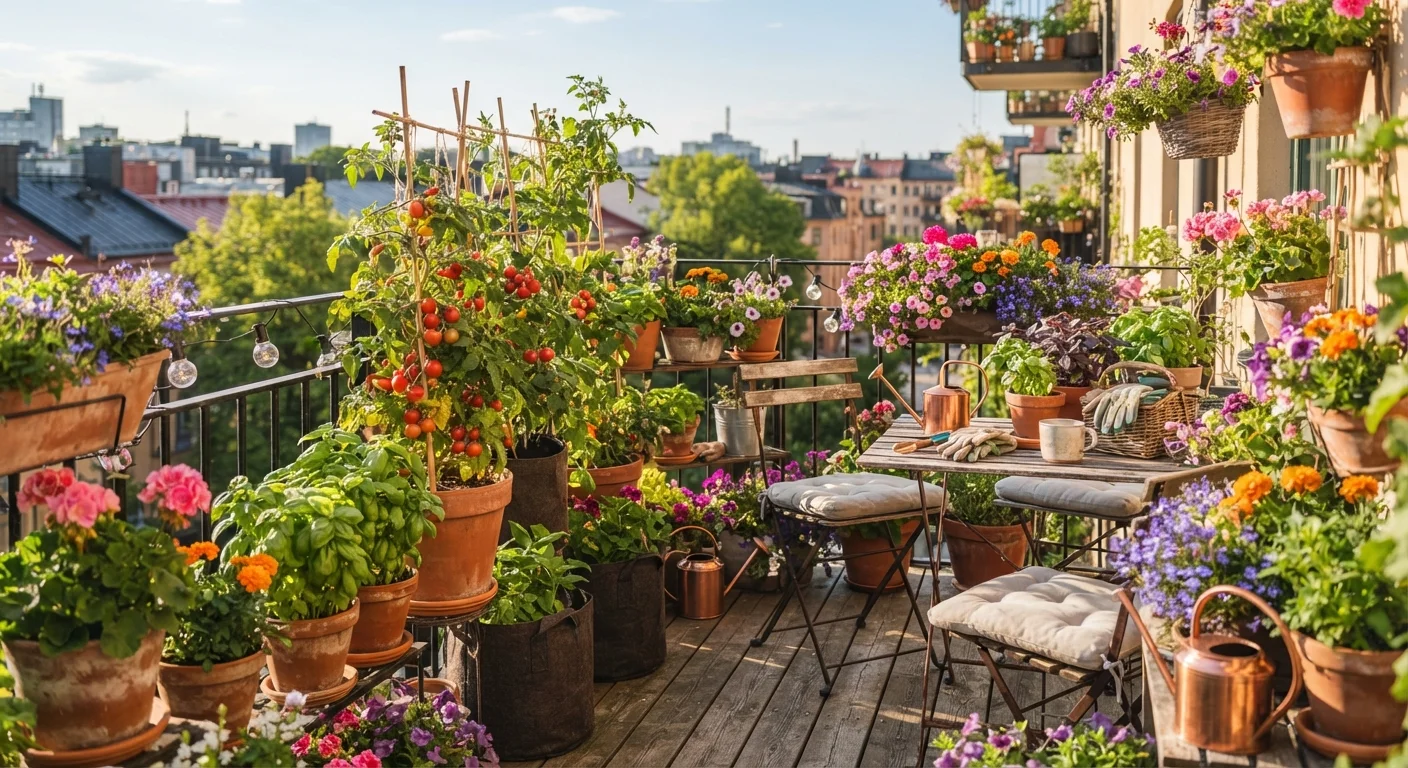
Why Container Gardening Works for Patios and Balconies
Container gardening removes the biggest barrier most people face when they want to grow their own food or flowers: the absence of a yard. Whether you have a narrow apartment balcony or a paved townhouse patio, containers give you complete control over your growing environment — the soil, the location, and the drainage. That control is actually an advantage over traditional in-ground planting. For a broader comparison of growing methods, see our look at raised beds vs. in-ground planting.
The approach also scales gracefully. You can start with two pots of herbs on a windowsill ledge and expand to a full balcony kitchen garden over a single season — no digging, no tilling, no major commitment. If you're completely new to growing things, our beginner garden guide covers foundational concepts worth reviewing before you start.
Containers (5–15 gallon)
Provide the growing space for your plants; size determines what you can grow.
Potting mix
Delivers the right balance of drainage, aeration, and nutrients for container roots.
Slow-release granular fertilizer
Supplements the nutrients that frequent watering flushes out of containers.
Saucers or drip trays
Catch excess water to protect balcony surfaces and floors below.
Trowel or hand shovel
Makes planting and transplanting into containers easier and more precise.
Watering can with a rose head
Delivers a gentle, even stream that won't displace soil or damage seedlings.
Liquid fertilizer
Provides a fast nutrient boost during peak growing season between slow-release applications.
Plant stakes or small trellises
Support tall or vining plants like tomatoes, cucumbers, or pole beans.
Step-by-Step: Setting Up Your Container Garden
Follow these steps in order for the best results. Each decision — from container size to soil choice — builds on the last, so skipping ahead often leads to preventable problems down the line.
What you will need
Assess your space and sunlight
Before buying a single pot, observe your outdoor area throughout the day. Most vegetables and herbs need 6–8 hours of direct sunlight daily. South- and west-facing balconies typically receive the most sun. If you have partial shade (4–6 hours), lean toward leafy greens, herbs like mint and parsley, and shade-tolerant flowers rather than fruiting crops like tomatoes or peppers, which demand full sun.
Also consider weight. Soil, water, and large pots add up quickly. If you're on a balcony, check with your building management or a structural guide to understand load limits before filling a dozen large containers.
Choose the right containers
Container size is non-negotiable. Here's a quick reference:
- Herbs (basil, chives, thyme): 6–8 inch pots
- Lettuce, spinach, radishes: 8–12 inch pots or a wide window box
- Peppers, compact tomato varieties: 5-gallon containers minimum
- Standard tomatoes, cucumbers, squash: 10–15 gallon containers
Every container must have drainage holes at the bottom. Without them, roots sit in standing water and rot. If you fall in love with a pot that lacks holes, drill at least three ½-inch holes before planting.
Material affects watering frequency: terracotta dries out faster than plastic or glazed ceramic, which is actually useful in rainy climates but demands more attention in hot, dry summers.
Fill with the right growing medium
Standard garden soil is too dense for containers — it compacts, impedes drainage, and suffocates roots. Instead, use a quality potting mix formulated for containers. Look for mixes that include ingredients like perlite or vermiculite for aeration and a base of compost or coir for moisture retention.
For vegetables and heavy-feeding plants, consider mixing in a slow-release granular fertilizer at planting time according to the product's label. This gives plants a steady nutrient supply for the first several weeks. If you're interested in enriching your mix further, finished compost from your own kitchen scraps is an excellent amendment.
Select and plant your crops
Choose plants suited to container life. Compact or dwarf varieties of vegetables are bred specifically for limited root space. Good beginner choices include cherry tomatoes, bush beans, lettuce, kale, basil, mint, and marigolds. For a fuller list of forgiving options, see easy vegetables for first-time growers.
When planting, set transplants at the same depth they were growing in their nursery containers. Gently loosen any tightly bound roots. Leave about an inch of space between the soil surface and the rim of the pot — this prevents water from running straight off instead of soaking in. Water thoroughly after planting until it drains freely from the bottom.
Water consistently and feed regularly
Containers dry out far faster than garden beds, especially during summer heat. Check soil moisture daily by pressing a finger an inch into the mix — if it feels dry, water thoroughly until it drains from the bottom. Many container gardeners find they need to water once a day or even twice during heat waves.
Because frequent watering flushes nutrients out of the mix, you'll need to feed your plants every two to three weeks with a balanced liquid fertilizer once the initial slow-release charge begins to fade (typically after 6–8 weeks). Follow label directions and avoid over-fertilizing, which can burn roots and reduce fruit production.
Monitor, maintain, and troubleshoot
Inspect plants a few times a week for yellowing leaves (often a nutrient or watering issue), leggy growth (usually a sign of insufficient light), or pest damage. Catching problems early makes them far easier to address. For non-chemical approaches to common pests, try these proven strategies first before reaching for sprays.
Deadhead flowering plants regularly to encourage continued blooms. Pinch back herbs like basil before they bolt (go to seed) to keep them bushy and productive. At the end of the season, refresh or replace your potting mix before replanting — used mix compacts over time and depletes nutrients.
Group Containers for Easier Care
Clustering pots together raises the local humidity around your plants, which many vegetables and herbs appreciate during dry summer stretches. It also makes watering and monitoring more efficient — you can address all your plants in one spot rather than hunting them down across the balcony.
Watch Out for Wind on High Balconies
Upper-floor balconies can expose plants to drying, damaging winds that ground-level patios don't experience. Wind speeds up moisture loss and can snap stems or tip over tall containers. Position large pots against a wall or railing for shelter, and stake tall plants early in the season before they become top-heavy.
Never Use Garden Soil in Containers
Garden soil — even high-quality in-ground soil — compacts severely in pots, cutting off oxygen to roots and blocking drainage. This is one of the most common and costly mistakes container gardeners make. Always use a potting mix specifically labeled for containers, and replace or refresh it each growing season.
Keeping Your Container Garden Thriving All Season
A container garden doesn't run on autopilot, but it doesn't demand hours of daily attention either. The key is building small habits: a quick visual check every morning, a finger-test for soil moisture, and a weekly once-over for pests or disease. Most issues that kill container plants — overwatering, underfeeding, root-bound conditions — are easy to prevent once you know what to look for.
Consider planting a mix of annuals and perennial herbs together. Annuals like basil and marigolds give you a big, productive show for one season; perennial herbs like thyme, rosemary, and chives return year after year in mild climates. Understanding how annuals and perennials differ helps you plan a container garden that evolves rather than starting from zero each spring.
The content on this site is for informational purposes only and is not a substitute for professional advice. Always consult a qualified professional for guidance specific to your situation.