

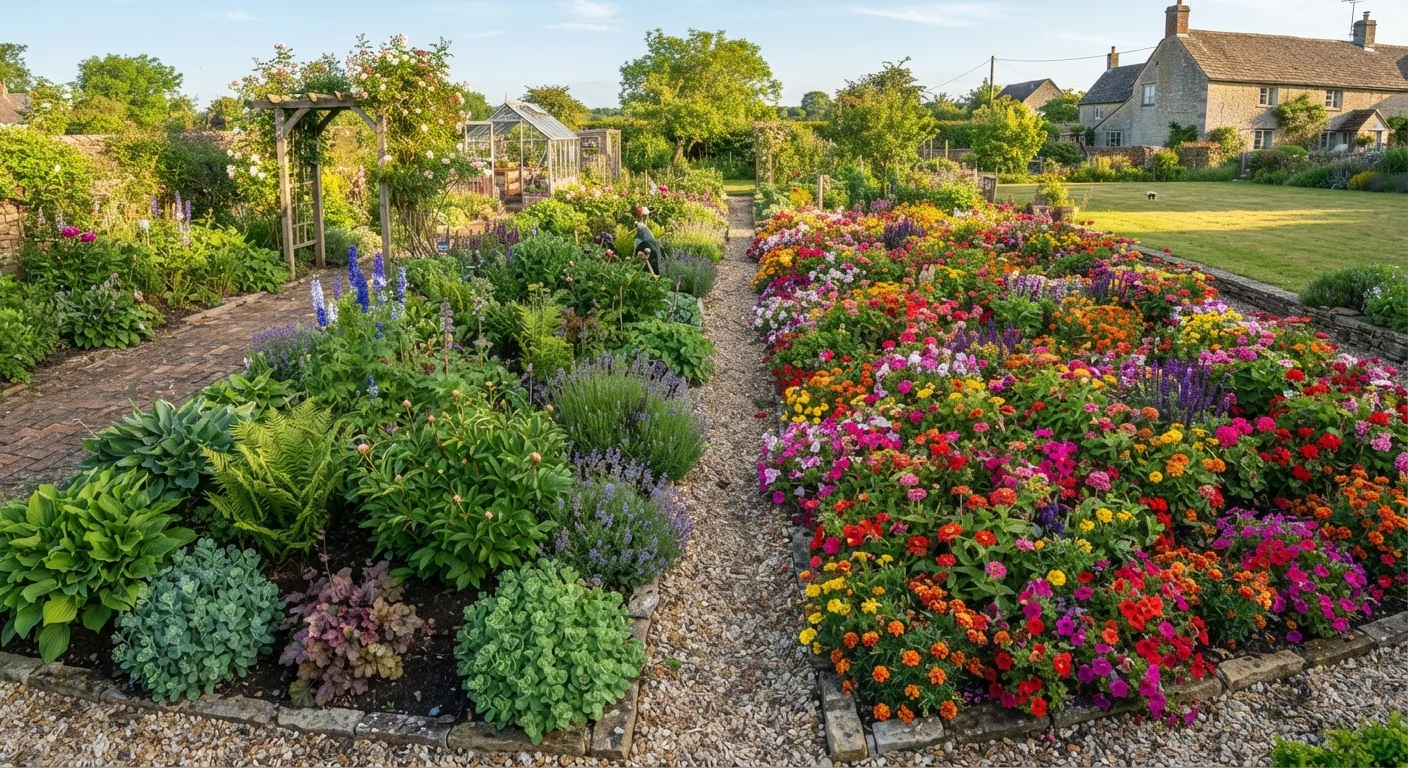
Option A
Annuals
The high-impact, one-season showstopper.
Best for: Gardeners who want maximum color and flexibility each year, or who are still experimenting with layout and plant choices.
Option B
Perennials
The reliable, low-maintenance backbone of any garden.
Best for: Homeowners looking to build lasting structure with plants that return and spread on their own each season.
What Makes a Plant Annual or Perennial?
The distinction comes down to life cycle. An annual germinates, grows, flowers, sets seed, and dies — all within a single growing season. Common examples include zinnias, marigolds, petunias, and impatiens. Because the plant puts its full energy into reproduction before dying, annuals tend to bloom heavily and for a long time.
A perennial, by contrast, lives for three or more years. It flowers, then dies back to its roots in fall, and re-emerges in spring. Coneflowers, daylilies, black-eyed Susans, and hostas are familiar perennials across American yards. Some perennials also self-seed, meaning volunteer seedlings pop up nearby each year — effectively spreading the planting without any effort on your part.
There is also a middle category worth knowing: biennials (like foxglove and hollyhock) complete their life cycle over two years, blooming in the second year before dying. They are less commonly discussed but behave somewhat like short-lived perennials in practice.
If you are just getting started, see our beginner's garden guide for foundational advice on soil, sunlight, and spacing before deciding which plants to buy.
Cost, Labor, and Long-Term Planning
Understanding the financial and time trade-offs is key to building a garden that fits your life.
| Criterion | Annuals | Perennials |
|---|---|---|
| Life span | One growing season | 3+ years |
| Upfront cost | Low per plant | Higher per plant |
| Ongoing cost | Replant every year | Minimal after establishment |
| Bloom duration | Long, continuous | Weeks per season |
| Maintenance level | Higher (annual replanting) | Lower once established |
| Design flexibility | Change look each year | Fixed placement long-term |
| Best use | Color, containers, borders | Structure, backbone planting |
Annuals upfront: Individual transplants or seed packets are generally inexpensive, but you purchase and plant them every single year. Over a decade, that adds up — both in dollars and time spent at the garden center. On the positive side, if a variety underperforms, you simply don't buy it again next spring.
Perennials upfront: A single perennial plant often costs more than an annual transplant, and it may take two to three seasons to reach its full size and flowering potential (hence the old gardener's saying: first year sleeps, second year creeps, third year leaps). However, once established, perennials require far less annual investment. Many can also be divided every few years to create free new plants for other spots in the yard.
A practical approach for budget-conscious gardeners: use annuals to fill beds while your perennials establish. This keeps the garden looking full and colorful during the slower early seasons. For broader strategies on balancing seasonal home expenses, you might find our yearly budgeting guide a useful companion resource.
2–3 years
Time for perennials to reach full maturity
Most perennial plants take two to three growing seasons to establish deep roots and produce their best flowering displays.
~30–50%
Potential reduction in replanting costs over 5 years
As perennials spread and fill beds, many gardeners report spending significantly less on new plants each successive season.
Designing a Garden That Uses Both
The most resilient and visually interesting home gardens typically combine both types strategically. Think of perennials as the structure and annuals as the filler and accent.
A simple layered approach:
- Backbone layer: Plant mid-to-tall perennials (coneflowers, ornamental grasses, black-eyed Susans) toward the back or center of a bed. These provide consistent shape and return reliably each year.
- Mid-layer color: Use lower perennials or compact shrubs (daylilies, salvia) for reliable mid-season interest.
- Front-edge flexibility: Fill the border with annuals. Swap them seasonally — pansies in early spring, marigolds through summer, ornamental kale in fall.
This structure lets your garden evolve rather than require a complete redesign each year. As perennials mature and spread, you may find you need fewer annuals to fill gaps — naturally lowering maintenance over time.
Pairing this approach with a seasonal task schedule makes the workload manageable. Our gardening calendar outlines what to do month by month. If you're working with a small outdoor footprint, container gardening is an excellent way to feature annuals without committing any ground space.
Know Your Hardiness Zone
Whether a perennial reliably returns depends heavily on your local climate. The USDA Plant Hardiness Zone Map divides the country into zones based on average minimum winter temperatures. A plant labeled 'perennial' in Georgia may behave as an annual in Minnesota. Always check the hardiness zone listed on a plant tag — or ask at a local nursery — before expecting a perennial to overwinter in your area.
Soil and Feeding Considerations
Because annuals grow fast and bloom hard, they are typically heavier feeders than perennials. Amending your soil before planting annuals — and feeding them through the season — helps sustain their performance. Perennials, especially once established, often thrive with less frequent fertilization, though they benefit from a spring top-dressing of compost to support new growth.
Whichever route you choose, healthy soil is the foundation. Our guide on organic vs. synthetic fertilizers explains how different feeding strategies affect soil biology and long-term plant health — a worthwhile read before you reach for any bag at the garden center.
One other variable worth considering is your planting setup. Raised beds vs. in-ground planting each suit annuals and perennials differently: raised beds offer drainage and warmth that can help perennials establish faster, while in-ground plots give perennial root systems unlimited depth to spread.
Whatever combination you choose, the goal is a garden that rewards your effort over time — getting easier to manage, not harder, as the seasons stack up.
The content on this site is for informational purposes only and is not a substitute for professional advice. Always consult a qualified professional for guidance specific to your situation.