

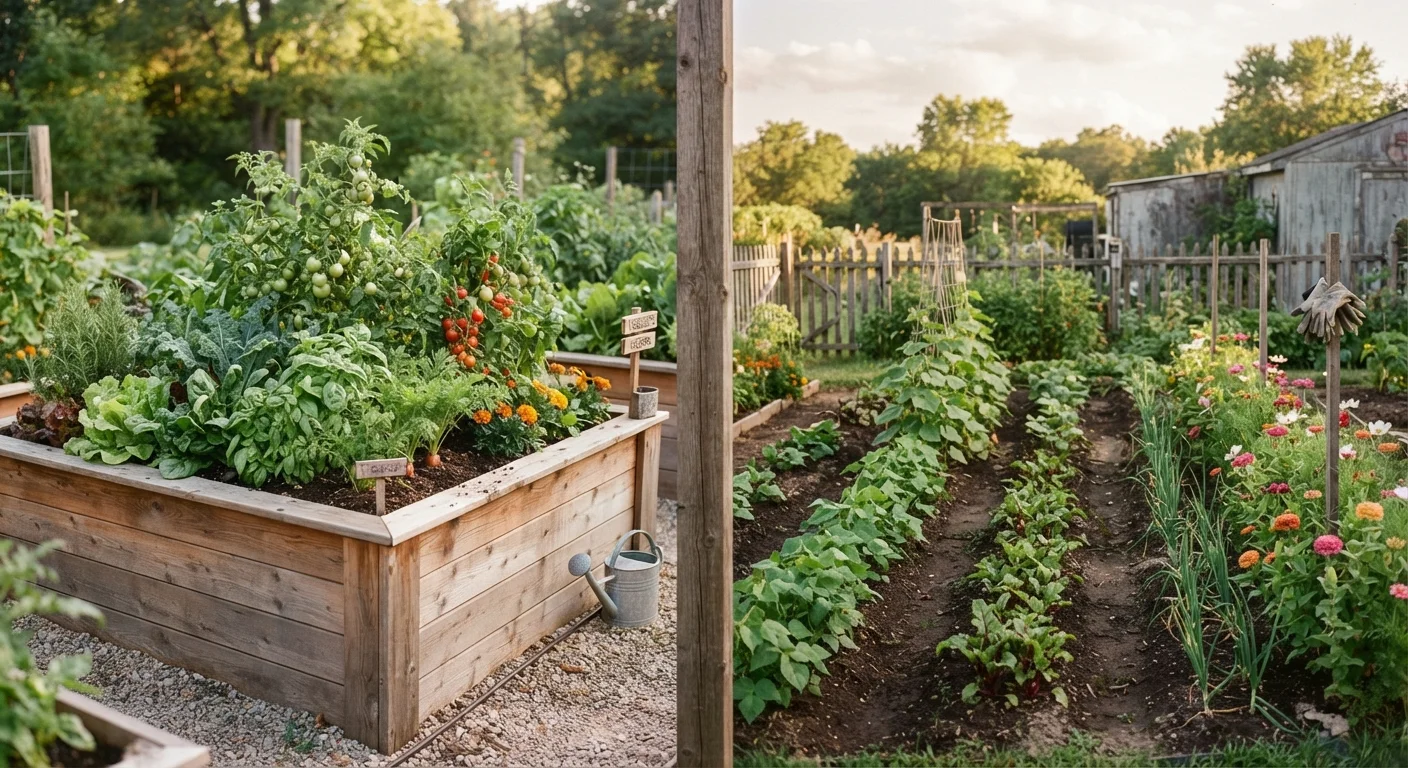
Option A
Raised Beds
The controlled, high-performance setup.
Best for: Gardeners dealing with poor native soil, drainage problems, or physical limitations who want fast results and precise growing conditions.
Option B
In-Ground Planting
The spacious, low-cost traditional approach.
Best for: Homeowners with healthy native soil and room to grow who want to cultivate larger plots without significant upfront investment.
What Sets These Two Approaches Apart
Before you break ground — literally — it helps to understand what each method actually involves. Before you start, check out our beginner's guide to starting a garden for a solid foundation on soil, sunlight, and spacing.
Raised beds are contained growing areas built above ground, typically framed with wood, stone, or composite materials and filled with a custom soil mix. They sit anywhere from 6 to 24 inches tall, depending on what you're growing and who's doing the gardening.
In-ground planting uses the native soil in your yard, amended and prepared as needed. Rows, hills, or broadcast planting patterns expand freely across the landscape without structural boundaries. It's the oldest form of home gardening, and it remains the most widely used for good reason.
The differences in drainage, soil temperature, cost, and physical demands are where the real trade-offs emerge — and those trade-offs map directly to different types of gardeners and yards.
| Criterion | Raised Beds | In-Ground Planting |
|---|---|---|
| Upfront cost | Moderate to high (materials + soil) | Low (amendments only) |
| Soil control | Complete — you choose the mix | Limited to native soil + amendments |
| Drainage | Excellent by design | Varies by native soil type |
| Spring warm-up | Faster — soil heats earlier | Slower in cold climates |
| Physical accessibility | High — reduced bending required | Lower — ground-level work |
| Growing space | Limited by frame size | Scales to yard size |
| Weed pressure | Generally lower | Higher, especially early on |
| Long-term soil improvement | Requires periodic replenishment | Builds naturally with organic matter |
Soil Quality and Drainage
Soil is where this decision often gets made. If your native soil is dense clay, sandy and nutrient-poor, or potentially contaminated (common near older homes), raised beds are a practical solution. You fill them with a blend of topsoil, compost, and other amendments, giving plants an optimized start from day one.
In-ground gardening asks you to work with what you have — though that's not as limiting as it sounds. With consistent additions of compost and organic matter over one to three growing seasons, most native soils improve significantly. This gradual improvement, known as soil building, creates a long-term growing environment that actually supports a wider ecosystem of beneficial organisms.
Drainage is a standout advantage of raised beds. Because they sit above grade, water moves through more freely, which is especially valuable in regions prone to heavy spring rain or clay-heavy yards where pooling is common. In-ground plots can be improved with drainage trenches or raised rows, but they take more work to manage in wet conditions.
6–8 weeks
Earlier spring planting in raised beds
University extension services commonly note that raised bed soil can warm up several weeks ahead of in-ground soil in northern climates, allowing earlier planting dates.
50%+
Reduction in water use with defined beds
Research from university cooperative extension programs suggests that intensive, defined-bed gardening can reduce water use compared to traditional row gardening in open ground.
3–5 years
Time to significantly improve native soil
Soil scientists generally estimate that consistent organic matter additions over multiple seasons are needed before depleted native soil reaches optimal growing structure.
Cost, Setup, and Long-Term Maintenance
Upfront costs differ substantially. A basic 4x8 raised bed framed in untreated cedar can run anywhere from $50 to $200 or more depending on materials and depth, not including the soil needed to fill it. Larger or multi-bed setups multiply that investment quickly.
In-ground gardens, by contrast, require little more than tools and soil amendments to get started — making them significantly more accessible for budget-conscious gardeners. The tradeoff is labor: tilling, weeding, and amending in-ground soil typically demands more ongoing effort, particularly in the first few years before the soil ecology is well-established.
Raised beds can actually reduce long-term weeding because you're not disturbing native weed seed banks the same way tilling does. Their defined borders also make crop rotation and seasonal cleanup more straightforward. For a full seasonal task breakdown, the gardening calendar is a helpful planning companion.
For either approach, solid bed prep before planting pays dividends. Prepping your garden bed properly — whether raised or in-ground — is one of the highest-leverage steps any gardener can take.
Space, Scale, and What You Want to Grow
The scale of your gardening ambitions matters here. Raised beds are well-suited to compact yards, defined planting zones, and intensive plantings of vegetables and herbs. However, crops that sprawl — think pumpkins, sweet corn, or indeterminate tomato varieties — can quickly outgrow a standard 4x8 frame.
In-ground plots scale as far as your yard allows. They're the more natural fit for large-scale vegetable gardens, fruit trees with deep root systems, or naturalistic planting styles where plants spread freely over time. If you're considering a different kind of limited-space setup entirely, container gardening on patios and balconies is worth exploring as a complementary or alternative approach.
Perennial planting strategies also interact differently with each method. Raised beds work well for annual crops that get replanted each season, while in-ground beds are often better suited to perennials that establish deep root systems over years. Understanding the difference between annuals and perennials can help you plan which method supports your long-term vision.
A Hybrid Approach Is Entirely Valid
Many experienced gardeners use both methods in the same yard — raised beds for vegetables and herbs that need precise conditions, and in-ground plots for fruit shrubs, perennials, or large crops that benefit from unrestricted root space. There's no rule requiring you to choose just one. Assessing your yard in zones and assigning each method where it performs best is a practical, flexible strategy.
The content on this site is for informational purposes only and is not a substitute for professional advice. Always consult a qualified professional for guidance specific to your situation.