

Start by Identifying the Problem — Not Reaching for a Solution
The single most common garden mistake is treating a symptom before understanding its cause. Chewed leaves could mean caterpillars, slugs, earwigs, or even a nutrient deficiency. Yellowing foliage might be aphids — or overwatering. Taking ten minutes to investigate before acting saves time, money, and the beneficial insects that are already working in your garden.
Get into the habit of checking plants in the early morning or at dusk, when many pests are most active. Flip leaves over to look for eggs or soft-bodied insects on the undersides. Bring a hand lens if you have one. Once you know what you're dealing with, the non-chemical toolkit becomes much more targeted — and far more effective.
Keep a Simple Pest Log
A notebook or phone photo album dedicated to pest observations pays off over multiple seasons. Recording which pests appear, when, and on which plants helps you anticipate problems and deploy barriers or attract beneficials before populations spike. Even a few notes per season builds valuable personal data for your specific garden.
Physical Barriers: Your First Line of Defense
A pest that can't reach your plant can't damage it. Physical barriers are often the most reliable and longest-lasting solution available to home gardeners.
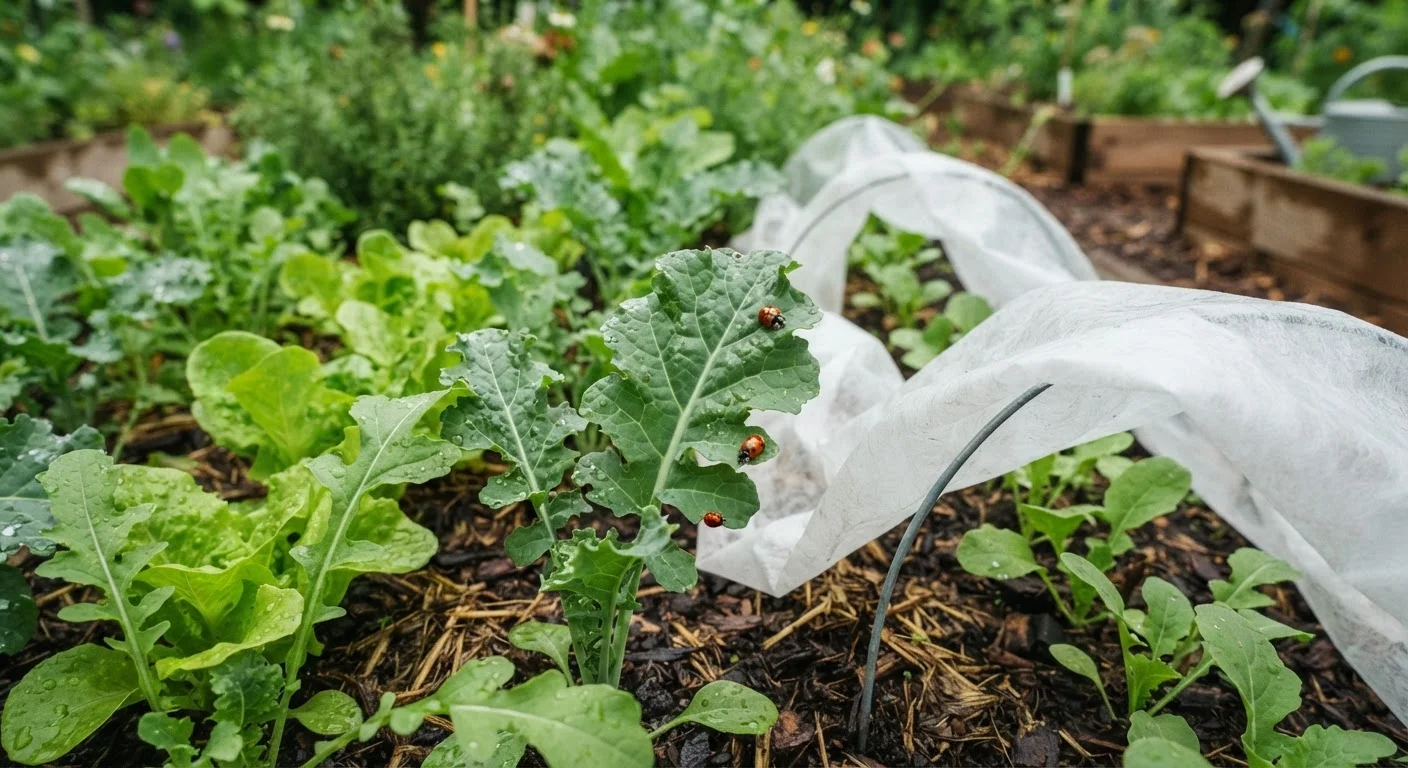
Cover vulnerable crops with floating row cover fabric at planting time.
Lightweight row cover (often sold as garden fabric or frost cloth) lets light and water through while physically excluding flying insects, moths, and butterflies that lay eggs on leaves. It's especially effective for brassicas, which are prime targets for cabbage moths and aphids.
Use copper tape or diatomaceous earth to deter slugs and snails.
Slugs and snails are responsible for enormous amounts of seedling damage, particularly after rain. Copper reacts with slug mucus and acts as a deterrent, while diatomaceous earth (food-grade) creates a scratchy barrier that discourages soft-bodied pests. Both work without toxins.
Install netting over fruit and brassica crops to block larger pests.
Birds, squirrels, and larger caterpillars can strip a plant quickly. Fine mesh netting provides a physical barrier that doesn't involve any chemistry and can be reused season after season.
Apply sticky bands around tree trunks to intercept crawling pests.
Some moths and other insects climb tree trunks to lay eggs in the canopy. Sticky bands wrapped around the trunk catch them before they reach leaves or developing fruit, providing season-long passive protection.
If you're growing edibles in a small space, container gardening naturally reduces ground-dwelling pest access and makes individual plant inspection easier.
Recruit Nature's Pest Controllers
Your garden is already home to a surprising number of predatory and parasitic insects. The goal is to attract and keep them, not accidentally eliminate them with broad-spectrum sprays.
Companion planting is one of the most effective ways to draw beneficial insects in while confusing or repelling harmful ones. Marigolds, dill, fennel, and yarrow are particularly well-known for attracting predatory insects. For a deeper look at which plants protect their neighbors, see our guide on companion planting.
~1,500
Aphids one ladybug can eat in its lifetime
University extension entomology resources commonly cite this figure to illustrate the pest-control value of a single beneficial insect.
Over 75%
Of pest insects controlled by natural enemies in undisturbed ecosystems
Research published in agricultural entomology literature suggests natural enemy populations suppress the majority of potential pest species when habitat is maintained.
Crop Rotation and Healthy Soil: Long-Game Strategies
Many damaging insects and soil-borne pathogens overwinter in the same spot where they fed the previous season. Moving plant families to different beds each year — a practice called crop rotation — breaks that cycle and reduces baseline pest pressure across the entire garden.
A simple three- or four-year rotation (moving nightshades, brassicas, legumes, and root vegetables to a different bed each season) can meaningfully reduce populations of soil-dwelling larvae and nematodes that target specific plant families. Strong, well-nourished plants also produce thicker cell walls and stronger chemical defenses, making them less attractive to pest insects overall. Prioritize building organic matter in your soil with compost rather than relying on synthetic fertilizers that push fast, soft growth — that lush, tender new growth is exactly what many pests target first.
If you're new to edible gardening and want low-maintenance crops that tend to resist pest pressure, our article on easy vegetables for first-time growers is a helpful starting point.
When Non-Chemical Methods Aren't Enough
Some pest situations — particularly large infestations or introduced invasive species — may eventually require additional intervention. If non-chemical methods aren't controlling a problem after several weeks, consider consulting your local cooperative extension service. They can confirm your pest identification and recommend the least-disruptive treatment options registered for your region.
The content on this site is for informational purposes only and is not a substitute for professional advice. Always consult a qualified professional for guidance specific to your situation.