

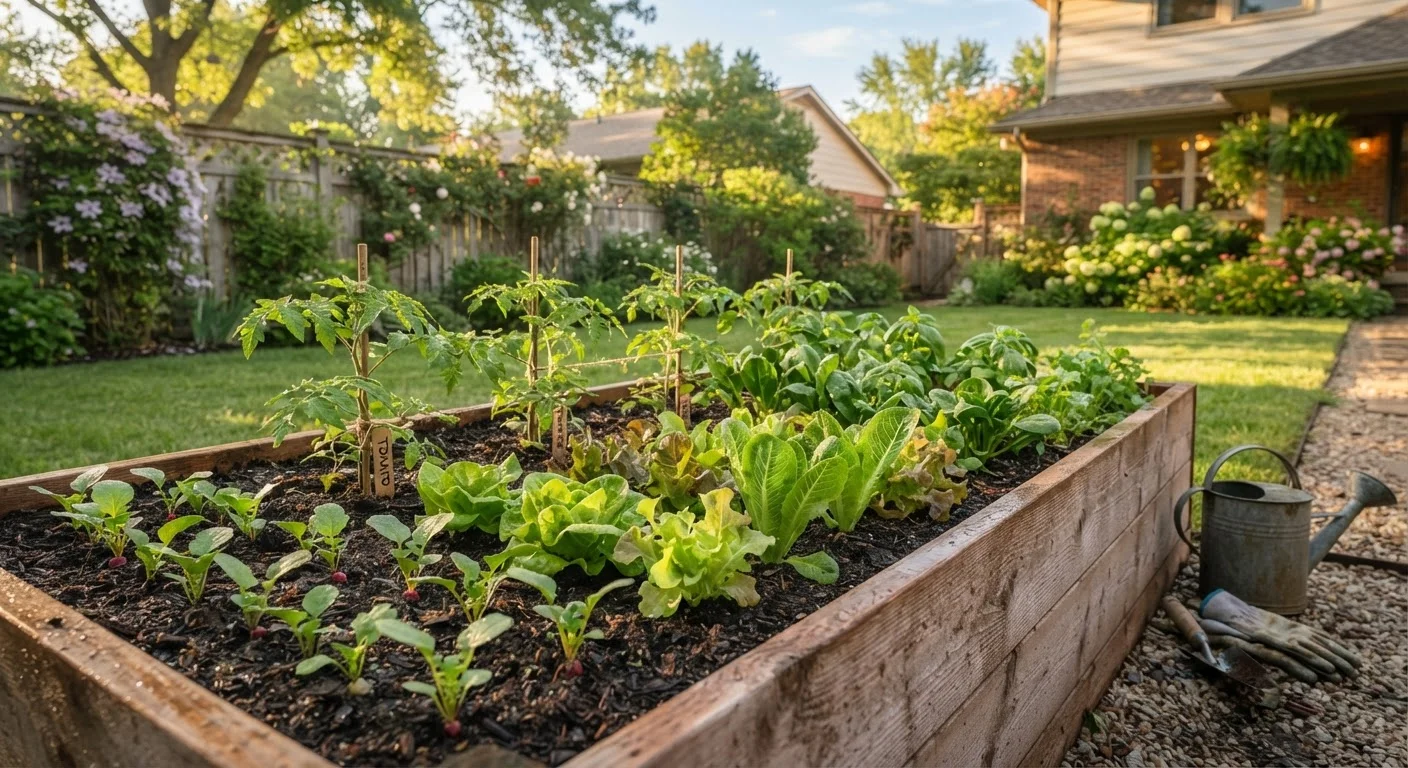
Why Vegetable Choice Matters for Beginners
Not all vegetables are created equal when it comes to ease of growing. Some require precise soil pH, careful pest management, or long growing seasons that test even experienced gardeners. Others are remarkably forgiving — they bounce back from inconsistent watering, tolerate a range of soil conditions, and reward modest effort with a satisfying harvest.
For first-time growers, picking the right vegetables can make the difference between a thriving garden and an early discouragement. Before you plant a single seed, it helps to understand your space and soil. Our guide to starting your first garden walks through sunlight, soil prep, and spacing essentials. Likewise, getting the ground ready before planting is worth the extra effort — see our garden bed prep checklist for a straightforward starting point.
The vegetables below are well-regarded by home gardeners across different U.S. climates for their resilience and relatively simple requirements. Each one offers something slightly different, so you can choose based on your space, taste preferences, and how much time you realistically have.
Radishes
Radishes are perhaps the fastest-maturing vegetable a home gardener can plant. Many varieties go from seed to harvest in as few as 25 to 30 days, which means new gardeners see results quickly — a powerful motivator for sticking with the hobby.
They prefer cool weather, making them ideal for spring or fall planting in most U.S. climates. Direct-sow seeds about half an inch deep in loose, well-drained soil with access to full sun. Thin seedlings to avoid crowding, which is one of the few mistakes that genuinely stifles a radish crop. They need consistent moisture but don't tolerate waterlogged soil. Radishes also do well in containers, so limited outdoor space is no barrier.
Radishes can go from seed to harvest in under a month — perfect for impatient beginners.
Lettuce
Lettuce is one of the most adaptable vegetables for beginning gardeners. It grows well in partial shade — useful for gardens that don't get all-day sun — and can be harvested continuously using the "cut-and-come-again" method, where you trim outer leaves and let the plant keep producing.
Loose-leaf varieties tend to be more beginner-friendly than head-forming types. Sow seeds shallowly (about an eighth of an inch deep) in cool weather and keep the soil evenly moist. Lettuce bolts (goes to seed and becomes bitter) in intense summer heat, so timing your planting for early spring or fall makes a meaningful difference. It's also an excellent container crop.
Lettuce thrives in partial shade and keeps producing when harvested leaf by leaf.
Green Beans
Bush beans are a classic beginner choice because they require no staking, produce prolifically, and are relatively unbothered by common pests. Direct sowing is the standard approach — beans generally don't like being transplanted — and they grow best in full sun with well-drained soil.
Plant seeds about an inch deep after your last frost date, when soil has warmed. Keep the soil consistently moist during germination. Once established, bush beans are reasonably drought-tolerant. They tend to produce a concentrated harvest over a few weeks, so successive planting (sowing a new batch every two to three weeks) extends your supply through the season.
Bush beans need no staking, grow fast, and produce a generous harvest with minimal fuss.
Zucchini
Zucchini has a well-earned reputation for being almost too productive — a running joke among gardeners is that neighbors disappear in August to avoid being handed bags of surplus squash. That productivity is actually reassuring for beginners: the plants are vigorous and forgiving of imperfect conditions.
Plant seeds or transplants in full sun after the last frost. Zucchini needs space — each plant can spread several feet — so container growing is less practical unless you have a very large pot. Water at the base rather than overhead to reduce the risk of powdery mildew, a common issue with squash. Harvest fruits when they're small to medium-sized for best flavor, and to encourage the plant to keep producing.
Zucchini's vigorous growth makes it one of the most reliably productive plants for new gardeners.
Cherry Tomatoes
Full-size tomatoes can be demanding — they're prone to blossom end rot, cracking, and various diseases. Cherry tomatoes are a more forgiving entry point. They're less sensitive to inconsistent watering, set fruit more reliably in variable conditions, and typically produce abundantly throughout the warm season.
Plant transplants (starting from seed indoors requires grow lights and careful timing) in full sun after your last frost date. Most cherry tomato varieties benefit from a simple cage or stake for support as they grow. Consistent watering, especially once fruit is forming, helps prevent the skin-splitting that happens when plants get uneven moisture. Compact or "patio" varieties work well in large containers.
Cherry tomatoes outperform full-size varieties for beginners, tolerating inconsistent watering far better.
Swiss Chard
Swiss chard is a leafy green that tolerates a wider range of growing conditions than many vegetables — it handles both cool springs and warm summers reasonably well, making it a versatile option across different U.S. regions. It's also nutritious and visually striking, with colorful stems in red, yellow, and white varieties.
Direct-sow seeds about half an inch deep in well-amended soil with at least four to six hours of daily sun. Thin plants to allow good airflow. Like lettuce, chard can be harvested by removing outer leaves, leaving the center to keep growing. It's relatively pest-resistant and generally requires only moderate, consistent watering to thrive.
Swiss chard handles both cool and warm seasons, making it one of the most adaptable beginner greens.
Building Confidence and Growing Further
Every vegetable on this list can be adapted to smaller spaces — raised beds, pots, and balconies all work well. If you're working without a yard, container gardening is a genuinely viable path for growing lettuce, radishes, herbs, and even compact tomato varieties.
Start Small for Better Results
New gardeners often overestimate how much time and space they can dedicate. Starting with two or three vegetable types in a small, manageable bed lets you focus attention where it counts. A well-tended four-by-eight-foot bed will consistently outperform a large, neglected plot. Add more variety in subsequent seasons once you understand how your specific conditions affect plant growth.
As your garden grows, so do the opportunities to work smarter. Pairing compatible plants can reduce pest pressure and improve yields — companion planting is a natural next step once you have one season under your belt. Feeding your soil with homemade compost is another low-cost way to keep vegetable beds productive; our guide to composting at home explains how to turn kitchen scraps into a useful soil amendment. And if seedlings have given you trouble in the past, it's worth reading about why seedlings fail before your next planting attempt.
First-season gardening is largely about observation — noticing what works in your specific conditions, what the local pests are interested in, and how your soil responds to amendments. Give yourself permission to learn gradually, and choose vegetables that reward that patience.
Local Conditions Vary Significantly
Planting dates, pest pressures, and soil conditions differ considerably across the United States. What works well in the Pacific Northwest may need timing adjustments in the Southeast or Great Plains. Your local cooperative extension service — typically associated with a state university — offers free, region-specific guidance on planting calendars, common pests, and variety selection tailored to your climate.
The content on this site is for informational purposes only and is not a substitute for professional advice. Always consult a qualified professional for guidance specific to your situation.