

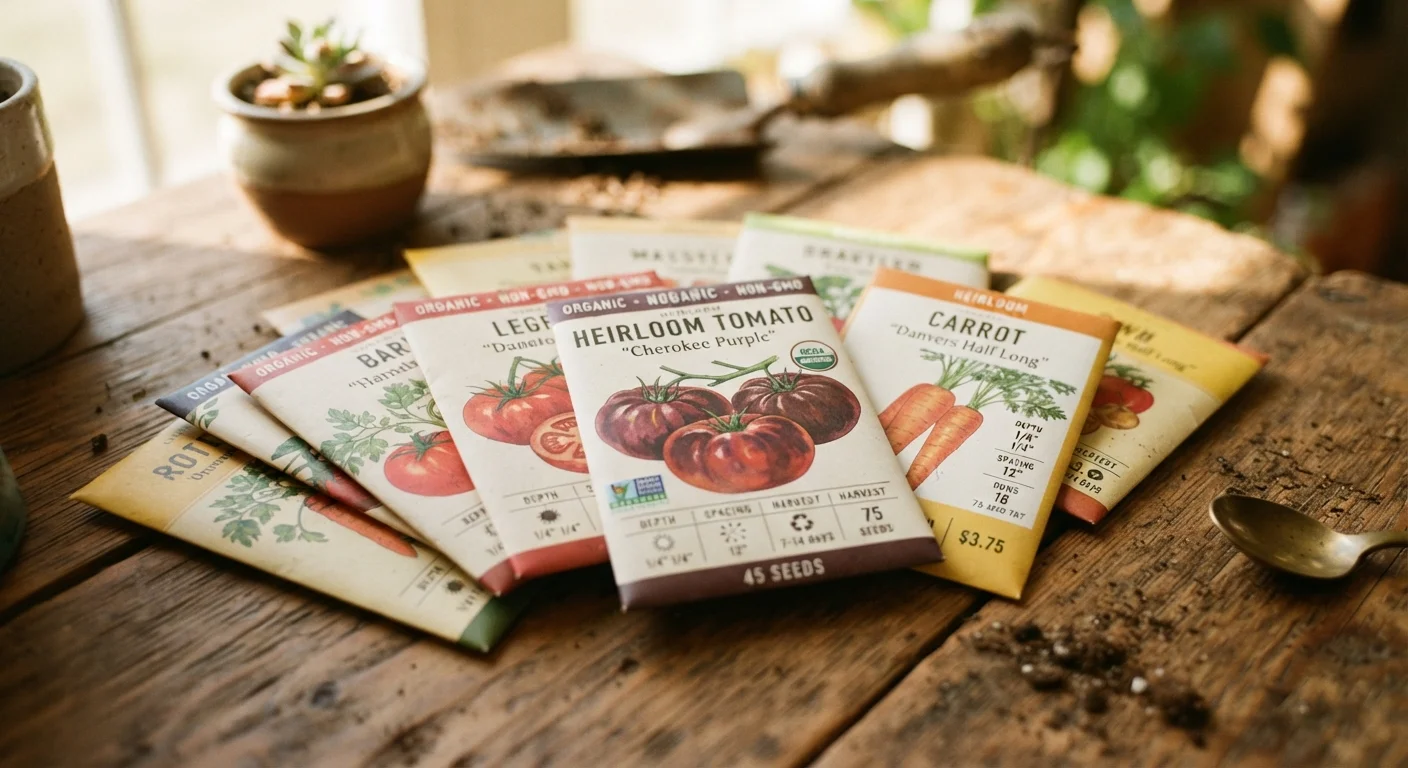
Why Seed Packet Labels Deserve a Second Look
Most gardeners glance at the photo on a seed packet and drop the rest into a drawer. That's a missed opportunity. The back of the packet is essentially a condensed growing manual — written in a shorthand that, once decoded, tells you exactly when, where, and how deep to plant for your specific situation.
This guide translates every common term, number, and symbol you'll find on a standard seed packet. Keep it handy the next time you're standing in the garden center or sorting your seed collection at the kitchen table. If you're just starting out, our beginner's garden guide covers the broader setup before you reach this stage.
| Packet front | Variety name, plant type, and a photo or illustration of the mature plant |
| Packet back — planting info | Depth, spacing, sun requirements, watering needs, and start/transplant timing |
| Days to maturity range | Typically 45–100 days depending on crop type |
| Seed viability window | Most vegetable seeds remain viable 2–5 years if stored cool and dry (University Cooperative Extension general guidance) |
| Lot/packed date | Usually printed as a year (e.g., "Packed for 2024") — use to gauge freshness |
| Germination rate | Listed as a percentage; federally regulated minimums apply to commercially sold vegetable seed (U.S. Federal Seed Act) |
Key Terms Decoded
Understanding the vocabulary is the foundation. Below are the most important terms you'll encounter.
Days to Maturity
The number of days from planting (or transplanting) until a crop is ready to harvest. This figure assumes average conditions and should be treated as an estimate rather than a firm deadline.
Hardiness Zone
A USDA-designated geographic area defined by average annual minimum winter temperatures. Your zone tells you which perennial plants can survive your local winters without protection.
Direct Sow
Planting seeds directly into outdoor garden soil rather than starting them in trays indoors. Crops like carrots, beets, and beans are typically direct-sown because they dislike having their roots disturbed.
Germination Rate
The percentage of seeds in a packet expected to sprout under ideal conditions. A packet rated at 85% germination means roughly 85 out of 100 seeds should sprout.
Thinning
Removing some seedlings after germination so the remaining plants have enough space to grow. Crowded seedlings compete for nutrients, so thinning — though counterintuitive — improves the overall harvest.
Transplant
Moving a seedling started indoors to its final outdoor growing location. Many warm-season crops, like tomatoes and peppers, are started indoors weeks before the last frost and then transplanted after conditions improve.
Open-Pollinated (OP)
Seeds produced through natural pollination by insects, wind, or other natural means. Plants grown from OP seeds reliably produce offspring with the same characteristics, making them suitable for seed saving.
F1 Hybrid
The first-generation offspring of two distinct parent plant varieties, selectively crossed to produce specific traits such as disease resistance or uniform fruit size. Seeds saved from F1 plants will not reliably reproduce the same traits.
Once you're comfortable with these terms, the rest of the packet falls into place quickly. For a deeper look at how zones translate to real winter survival, see our article on plant hardiness zones.
Numbers and What They're Actually Counting
Numbers on seed packets intimidate new gardeners because it's not always obvious what's being measured. Here's a plain-language breakdown:
- Days to Germination: How long before a sprout appears above soil — not a guarantee, just a typical range under ideal conditions.
- Days to Maturity: Counted from transplant date for starts, or from direct-sow date for crops like beans and carrots. It tells you when to expect your first harvestable produce.
- Planting Depth: Usually listed in inches (e.g., ¼", ½", 1"). A rule of thumb: plant seeds roughly two to three times as deep as the seed is wide, so small seeds stay near the surface.
- Spacing: Two numbers often appear — row spacing and plant spacing. For example, "12" apart, rows 24" apart" means individual plants need 12 inches of elbow room, with 24 inches between rows for air circulation and access.
- Seed Depth for Indoor Starts: Some packets list a separate, shallower depth for starting seeds in trays. Follow this number if you're not direct-sowing outdoors.
Misjudging spacing is one of the most common first-year mistakes — crowded plants compete for water, light, and nutrients. If your seedlings struggle before they even reach the garden, our article on why seedlings fail covers the most likely culprits.
2–5 years
Average viability of most vegetable seeds
According to Cooperative Extension guidelines, proper cool, dry storage significantly extends seed life beyond the printed packet date.
6+ hours
Daily sunlight required for 'full sun' crops
Most fruiting vegetables — tomatoes, peppers, squash — need at least six hours of direct sun to produce well.
6–8 weeks
Typical indoor head start before last frost
Warm-season crops like tomatoes and peppers are generally started indoors 6–8 weeks before the average last frost date for the grower's region.
Symbols, Abbreviations, and Fine Print
Beyond numbers, most packets use symbols and abbreviations that vary slightly by seed company but follow recognizable patterns:
- Full Sun / Part Shade / Full Shade: Sun icons indicate light needs. A solid sun means 6+ hours of direct sunlight daily; a half-shaded sun means 3–6 hours; a shaded circle means less than 3 hours.
- Direct Sow (DS) vs. Start Indoors (SI): DS means plant the seed directly in garden soil. SI means begin in seed trays weeks before your last frost date, then transplant.
- Last Frost Date Reference: Phrases like "sow 6–8 weeks before last frost" require you to know your local last frost date. Your local Cooperative Extension office publishes average dates by region.
- Hardiness Zone: A USDA zone number or range indicating where the plant reliably survives winter. Annual vegetables often skip this since they complete their life cycle in one season.
- F1 Hybrid: Seeds bred from two parent varieties for specific traits — typically higher yield or disease resistance. Seeds saved from F1 plants won't reliably reproduce the parent plant.
- OP (Open-Pollinated): Plants pollinate naturally. Seeds can be saved and replanted with predictable results season after season.
Planning your planting calendar around these details makes a measurable difference. Our seasonal gardening calendar can help you map out when to act on each packet's instructions throughout the year.
Seed Packets Are Estimates, Not Guarantees
Days to maturity, germination rates, and spacing recommendations are based on average conditions — your actual results will vary with soil quality, local climate, and care practices. Think of packet information as your best starting point, not a fixed contract. Adjust based on what you observe in your own garden each season.
The content on this site is for informational purposes only and is not a substitute for professional advice. Always consult a qualified professional for guidance specific to your situation.