

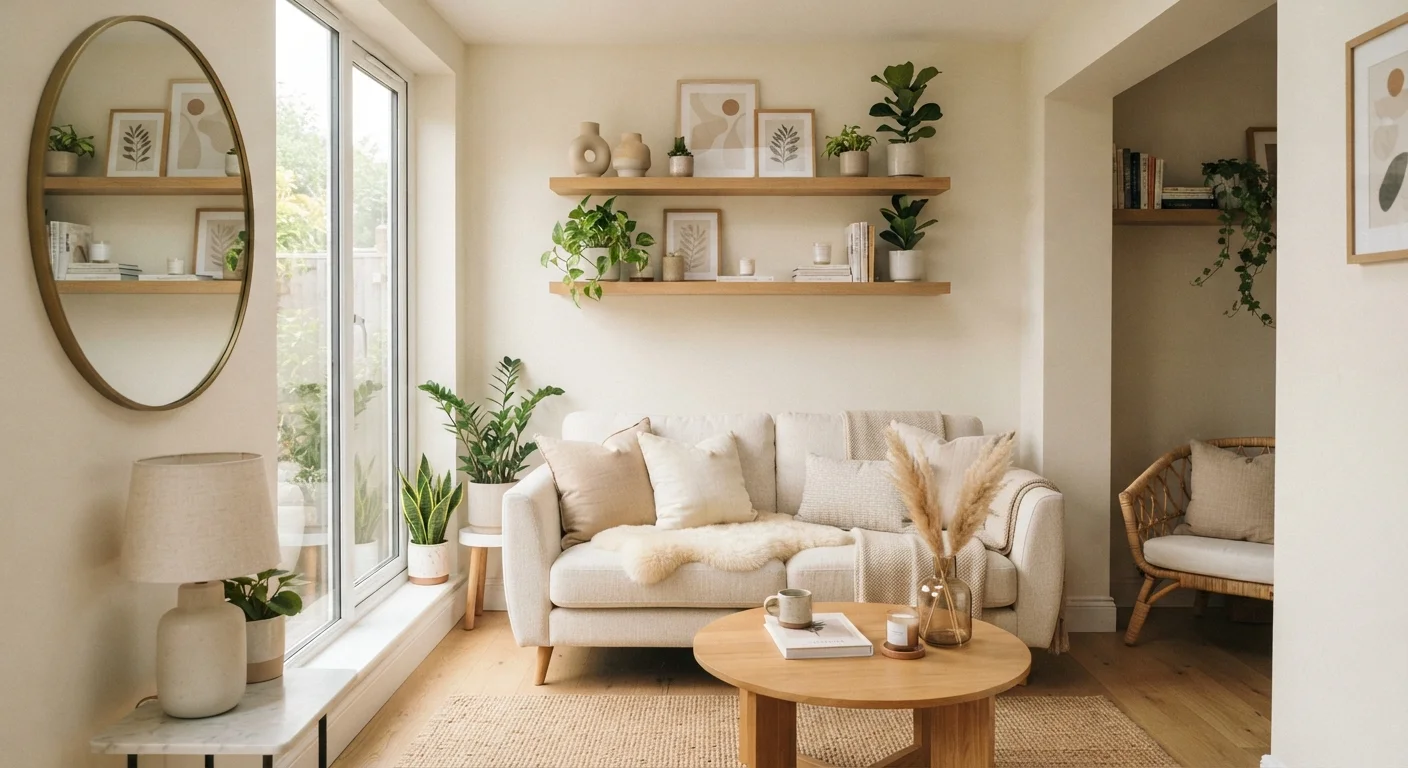
Why Small Rooms So Often Feel Cluttered
Most small living rooms don't feel small because of their actual square footage — they feel small because of how that space is used. Oversized furniture, too many objects competing for attention, poor lighting, and a lack of clear visual anchor points all compound to create that suffocating, storage-unit effect. The good news is that none of those problems require construction, major investment, or a professional decorator to fix.
If you're starting with a completely blank room and feeling unsure where to begin, the guide to approaching a bare room offers a logical sequence from anchor pieces to finishing touches. For renters working with restrictions on paint or drilling, renter-friendly decorating approaches covers what's possible without touching the walls.
The steps below address the most common culprits and give you practical, room-by-room adjustments you can act on today.
What you will need
Tools and Materials You'll Want on Hand
Decorating a small room well is mostly about decision-making, not buying things. The items below will help you plan and execute changes accurately — the most important of which is simply a measuring tape.
Measuring tape
Accurately measure the room and existing furniture before making any layout changes.
Graph paper or free room-planning app
Sketch furniture arrangements to scale before moving anything physically.
Painter's tape
Mark furniture footprints on the floor to visualize placement without lifting anything.
Full-length or oversized mirror
Reflect light and create the illusion of additional depth in a compact space.
Measure Before You Buy Anything
The most common small-room mistake is purchasing furniture without confirming it fits — not just in square footage, but in proportion to the room's height and layout. Measure the room, note doorways and traffic paths, and tape out furniture footprints on the floor before committing. Returning a sofa is a headache most people underestimate.
Step-by-Step: Making the Room Work
Follow these steps in order — layout decisions early in the process affect every choice that comes after. Rearranging furniture after you've already painted or bought a rug is frustrating and avoidable.
Start with a clear floor plan
Before rearranging a single cushion, sketch your room to scale. Use graph paper or a free room-planning app — even a rough hand-drawn layout helps. Mark windows, doors, outlets, and any fixed features like radiators or built-ins. Then map out furniture footprints using the same scale. The goal is to identify one clear traffic path through the room, typically 30–36 inches wide, without furniture blocking it.
If you haven't already thought through your overall decorating goals, the planning checklist is a useful starting point before spending anything.
Edit furniture ruthlessly — keep only what earns its place
In a small room, every piece of furniture competes for visual space. Remove anything that doesn't serve a clear function or offer genuine comfort. A side table that holds only a lamp might be replaced by a wall-mounted sconce. An armchair nobody sits in costs the room more than it contributes. Aim for fewer, better-chosen pieces rather than filling every corner.
Prioritize furniture with clean lines and legs — pieces raised off the floor allow light to pass underneath, which makes the room feel less heavy and congested.
Choose a light, cohesive color palette
Light, cool neutrals — soft whites, pale grays, warm creams — reflect more light and visually push walls outward. Painting trim and ceiling the same color as walls (or a shade lighter) eliminates hard visual stops that make a room feel boxed-in. This is one of the most impactful changes you can make with minimal cost.
That said, cohesive doesn't mean colorless. A single accent wall or well-placed textiles in a deeper hue can add personality without overwhelming the space. If you want to introduce pattern, the guide to using pattern without visual chaos explains how to do it without making a small room feel busier.
Use vertical space for storage and display
Floor space is the scarcest resource in a small room. Shift as much storage as possible upward. Tall bookshelves, wall-mounted shelves near the ceiling, and floating media consoles all free up floor area while giving the eye something to travel toward — which itself makes ceilings feel higher.
For a balanced take on what to store visibly versus behind closed doors, open shelving vs. closed cabinets walks through the real trade-offs. In a small space, hiding clutter is usually more important than showcasing it.
Anchor the seating area with one appropriately sized rug
A rug that's too small is one of the most common small-room mistakes. It fragments the floor visually and makes the furniture feel unrelated. Ideally, the front legs of all seating pieces should sit on the rug, unifying the arrangement into a single zone. In a very compact room, even getting just the front legs on works well.
Choose a rug with a simple pattern or solid color in a lighter tone to keep the floor plane open. Heavily patterned rugs in small spaces can feel busy quickly.
Layer lighting rather than relying on one overhead fixture
A single overhead light flattens a small room and makes it feel like a utility space. Instead, layer three types: ambient (overhead or ceiling-mounted), task (reading lamp, desk lamp), and accent (a small table lamp, LED strips behind shelving). Multiple light sources at varying heights add warmth and dimension that a single bulb simply can't provide.
If you're also setting up media or audio in the room, adding surround sound without wall damage offers compact-friendly options worth considering.
Avoid Pushing All Furniture Against Walls
It feels logical in a small room, but floating furniture slightly away from walls actually makes a space feel larger and more intentional. Furniture pressed flat against every wall creates a hollow, waiting-room effect rather than a cozy, livable one.
Common Missteps That Undermine Small Room Decor
Even well-intentioned choices can backfire in compact spaces. A few patterns worth watching for:
- Too many small accessories: A shelf crowded with small objects reads as clutter. Group items and edit down to the ones that genuinely matter.
- Blackout curtains hung too low: Hanging curtain rods at ceiling height — even if the window is smaller — draws the eye upward and makes ceilings feel taller. Curtains that stop at the window frame do the opposite.
- Ignoring the room's natural light path: Furniture blocking windows or casting deep shadows in the wrong places defeats any color or mirror strategy.
Borrow Light With Mirrors
Hanging a large mirror on the wall opposite a window reflects natural light deep into the room and creates the illusion of a second opening. Even a modestly sized mirror placed at eye level adds significant perceived depth without any construction.
If you've made changes and the room still feels off, common decorating missteps that are easy to fix identifies the recurring errors and walks through practical corrections.
The content on this site is for informational purposes only and is not a substitute for professional advice. Always consult a qualified professional for guidance specific to your situation.