

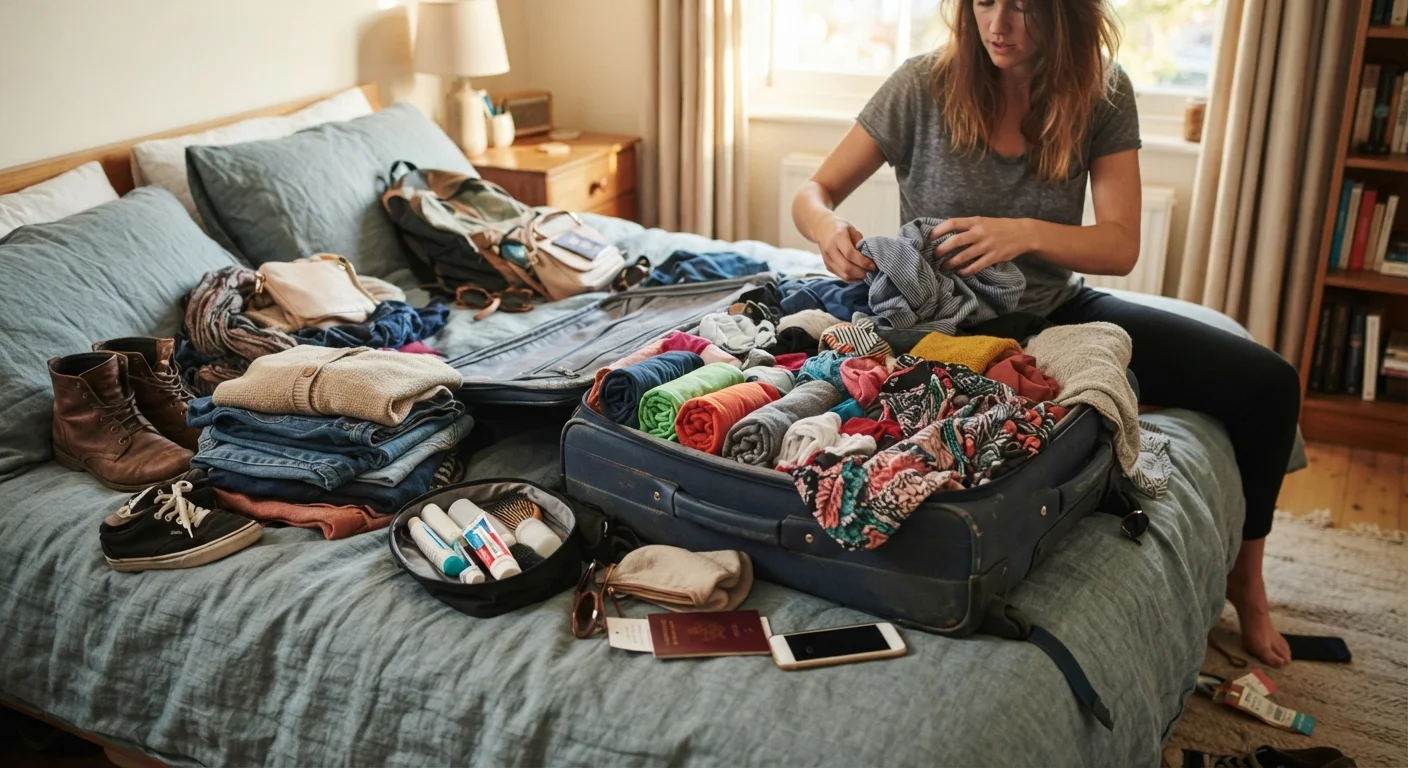
The Overpacking Trap (And Why Almost Everyone Falls Into It)
It starts with good intentions. You want to be prepared for every scenario — the surprise dinner, the rainy afternoon, the workout you swear you'll actually do. So you throw in one more outfit, one more pair of shoes, one more "just in case" item. By the time you zip up that bag, you've packed for a version of your trip that probably won't happen.
Overpacking isn't a character flaw — it's a planning habit. And breaking it doesn't require extreme minimalism. It just requires a more honest look at what you'll actually use. Smarter packing starts before you open the suitcase, and it begins with knowing which categories consistently bloat luggage without adding value.
Packing a full outfit for every single day of the trip.
Why it happens: Travelers mentally rehearse every day separately and assign a unique outfit to each, without accounting for how much clothing actually overlaps in real use.
Bringing a bulky, overloaded toiletry bag filled with full-size products.
Why it happens: People default to the same products they use at home without adapting for travel scale, often tossing in backups "just in case" something runs out.
Packing three or more pairs of shoes for a single trip.
Why it happens: Shoes feel essential for different scenarios — hiking, casual, dressy — but travelers overestimate how much their footwear will actually vary day to day.
Throwing in electronics and chargers for devices that rarely leave the hotel room.
Why it happens: Travelers pack tablets, e-readers, portable speakers, and backup chargers optimistically, imagining more downtime than most trips actually provide.
Overpacking "what if" clothing for weather or events that may not happen.
Why it happens: Uncertainty about the forecast or itinerary leads travelers to pack for worst-case scenarios, resulting in items that never leave the bag.
Lighter Alternatives That Actually Hold Up on the Road
Swapping heavy, redundant items for leaner choices isn't about sacrifice — it's about being more intentional. A few adjustments tend to make an outsized difference.
~50%
Clothes packed but never worn
Travel behavior surveys consistently suggest roughly half of packed clothing goes unworn on typical leisure trips.
23 lbs
Average checked bag weight
Industry data indicates the average checked bag weighs around 23 pounds, much of which is attributed to non-essential items.
On toiletries: Most hotels and lodges provide basics like shampoo and body wash. Beyond that, solid-bar formats for soap and shampoo, along with small reusable containers filled from larger bottles at home, can cut a toiletry bag's weight significantly. For over-the-counter items, consider whether your destination sells them locally rather than hauling a full pharmacy from home.
On clothing: Building around two or three neutral base pieces that layer and mix-and-match eliminates the need for a separate outfit for every day. Merino wool and similar performance fabrics resist odor, dry quickly, and pack small — qualities that make them genuinely worth considering for any trip longer than a weekend.
On shoes: A pair that works for walking all day and doubles as a dinner option is more useful than three specialized pairs that each get worn once. Shoes are the heaviest per-use item most travelers pack — one versatile pair goes surprisingly far.
Airline Baggage Fees Can Add Up Fast
Checked bag fees vary widely by airline and route, and overweight bag surcharges can be steep — sometimes exceeding the cost of the bag fee itself. Packing lighter isn't just about convenience; it can have a direct impact on what your trip costs. Always verify your airline's current weight limits and fee structure before you pack, as policies change.
For families navigating these decisions, packing for children introduces a different set of variables worth thinking through early. And if you're still deciding between carry-on and checked baggage, weighing those trade-offs by trip type can save real headaches at the airport.
The broader lesson: packing well is part of a solid trip plan. When packing goes sideways, the rest of the trip can unravel faster than expected.
The content on this site is for informational purposes only and is not a substitute for professional advice. Always consult a qualified professional for guidance specific to your situation.