

Our Verdict
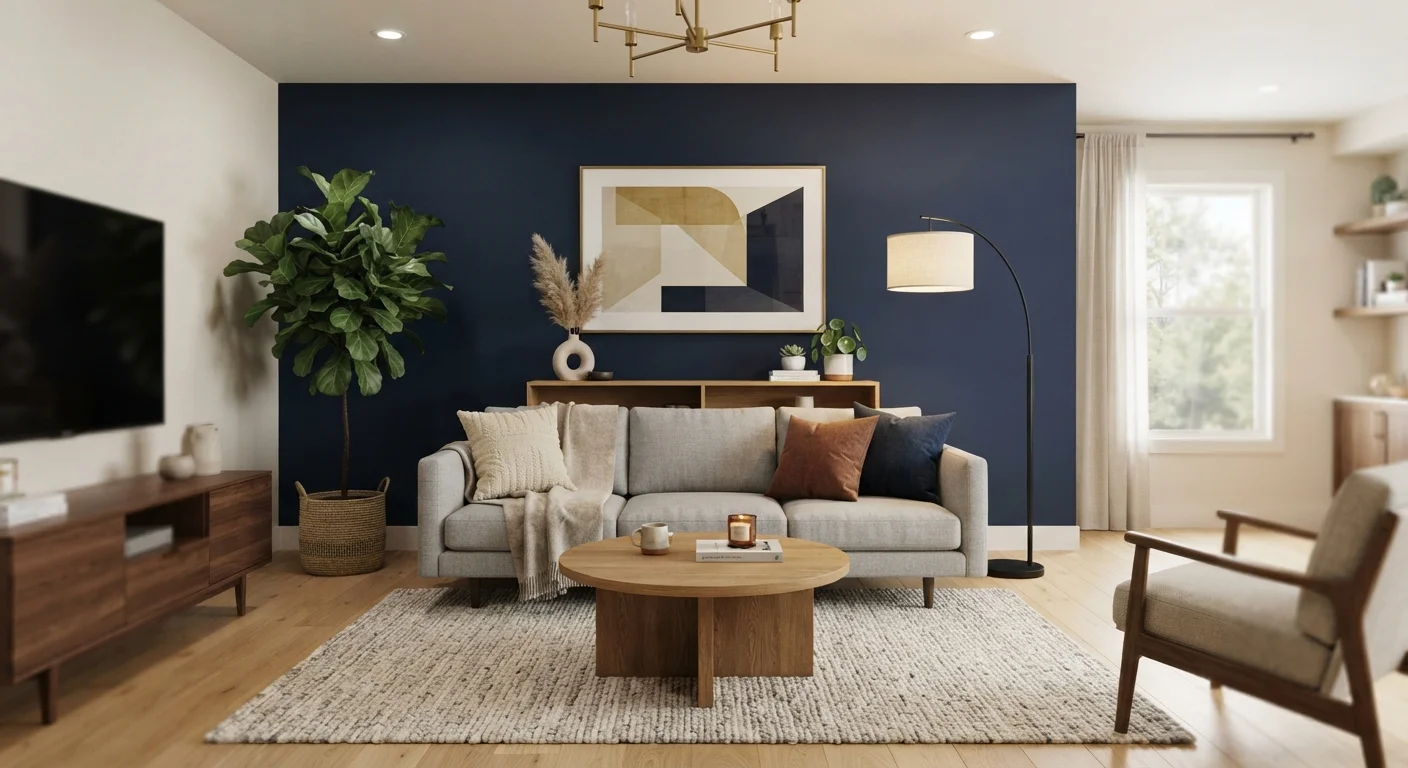
An accent wall is a genuinely useful decorating tool when it reinforces an existing focal point and suits the room's proportions. In rooms that lack a clear anchor, or that are already small and irregular, it tends to create confusion rather than character. Alternatives like layered lighting, gallery arrangements, or a well-chosen piece of furniture often achieve the same visual interest with more flexibility.
Homeowners with a clear focal wall — such as a fireplace surround or a bed headboard wall — who want to add depth without a full repaint or major investment.
What an Accent Wall Actually Does
An accent wall is simply one wall in a room treated differently from the others — a contrasting paint color, wallpaper, shiplap, brick veneer, or another material that draws the eye. The intention is to create a focal point, add depth, or introduce a color or texture the room otherwise lacks.
When it works, it works because it aligns with how the room is already organized. A wall that already holds visual weight — the wall behind a sofa, behind a bed's headboard, or flanking a fireplace — is a natural candidate. The accent treatment follows the eye rather than fighting it. Understanding focal points is central to this; the same principles that explain furniture arrangement also explain which wall deserves emphasis.
When it doesn't work, it's usually because the accent wall was chosen based on preference alone — the longest wall, the wall facing the door, or simply the most convenient one — rather than the one that actually anchors the room.
The Real Pros: When Accent Walls Earn Their Place
There's a reason accent walls have remained popular — used thoughtfully, they solve real decorating problems without requiring a full renovation.
Establishes a clear focal point in open rooms
In larger or open-plan spaces that can feel unfocused, a well-placed accent wall gives the eye somewhere to land and helps define distinct zones within the room.
Lower cost than repainting the entire room
Treating one wall instead of four significantly reduces the amount of paint, time, and effort required — a meaningful advantage when testing a bolder color or texture.
Easier to reverse than other design commitments
One wall can be repainted in a weekend, making accent walls one of the lower-risk ways to experiment with color or material before committing more broadly.
Adds depth in neutrally decorated rooms
In rooms with predominantly white or beige walls and minimal decor, a single contrasting wall introduces visual complexity without overwhelming the existing palette.
Frames furniture and architectural features effectively
When positioned behind a bed, sofa, or fireplace, an accent wall reinforces the furniture's role as the room's anchor and makes the arrangement feel more intentional.
In a room with otherwise neutral or builder-grade finishes, a single wall treated in a rich color or interesting texture can make the entire space feel more considered. It's also one of the more reversible decorating moves: repainting one wall costs far less in time and materials than repainting all four.
The Honest Cons: When Accent Walls Backfire
Accent walls get a bad reputation not because the concept is flawed, but because they're frequently applied in situations where they can't succeed.
Can make small rooms feel more cramped
A strongly contrasting wall in a small room advances visually, reducing the perceived size of the space — often the opposite of what the homeowner intended.
Dates quickly with trendy colors or materials
Accent walls tied to a specific color trend or material — shiplap, for example — can look dated within a few years, requiring repainting or removal to refresh the room.
Creates visual confusion without a clear focal point
If the chosen wall doesn't already anchor the room, the accent treatment draws attention to an arbitrary surface, making the room feel unbalanced rather than intentional.
Harder to furnish around than an all-neutral room
A bold or patterned accent wall significantly narrows the palette of furniture and decor that will work alongside it, limiting flexibility as tastes or needs change.
Complicates rooms with irregular layouts
In L-shaped rooms, rooms with multiple doorways, or spaces with angled ceilings, a single bold wall can visually fragment the room rather than unify it.
Small rooms are a particular problem. In a compact living room, a bold feature wall can visually chop the space and make it feel even more confined — the opposite of the intended effect. If you're working with limited square footage, it's worth reading through strategies for decorating small living rooms before committing to a single statement wall.
Accent Walls in Rental Spaces
If you're renting, always check your lease before painting any wall — even a single one. Many landlords require written approval for any paint changes, and some restrict color choices entirely. Removable wallpaper and peel-and-stick panels have become viable alternatives that can be taken down without damaging the original surface, though adhesion quality varies by brand and wall texture. Verify removal instructions carefully before committing.
Smarter Alternatives That Achieve the Same Effect
If you want to add visual interest to a room but an accent wall isn't the right fit, several alternatives accomplish the same goal with more precision and often more flexibility.
- Gallery walls: A curated arrangement of art, mirrors, and objects creates a strong focal point without permanently altering the wall color. It's also far easier to update over time.
- Lighting adjustments: A well-aimed picture light, floor lamp, or sconce draws attention to a wall or architectural feature just as effectively as paint. Layered lighting is often underused in rooms that feel flat or uninspired.
- Bold textiles: A large-scale area rug, statement curtains, or an upholstered headboard introduce color and pattern at furniture level — easier to change than a painted wall and effective at grounding a space.
- Architectural detail: Board-and-batten, wainscoting, or even a simple plate rail add dimension without relying on color contrast alone. These treatments work across all four walls and tend to age better than a single bold paint choice.
- Pattern through soft furnishings: Introducing pattern through pillows, throws, or a statement chair lets you test a color story before making permanent decisions. For guidance on mixing patterns without visual chaos, see how to bring pattern into a room.
How to Decide: A Practical Framework
Before reaching for a paint sample, ask yourself three questions:
- Does this room already have a focal point? If the answer is yes — a fireplace, a large window, a built-in — the wall behind or adjacent to it is your candidate. If no natural focal point exists, an accent wall won't create one; it will just add a competing element.
- Is the room well-proportioned? Rooms that are roughly square, or that have standard ceiling heights, handle accent walls more gracefully than narrow, low-ceilinged, or irregularly shaped rooms.
- Have I sorted the fundamentals first? Paint is a surface decision, and surface decisions should come last. If the furniture layout, lighting, and traffic flow aren't working, adding a bold wall won't fix them. Use a room planning checklist before spending anything on materials.
If your answers point away from an accent wall, that's useful information — not a limitation. The alternatives outlined here can deliver the same visual impact with more flexibility and, often, at lower cost.
The content on this site is for informational purposes only and is not a substitute for professional advice. Always consult a qualified professional for guidance specific to your situation.